China's Deadliest Mine Disaster in 16 Years Claims 90 Lives
Beijing, Saturday, 23 May 2026.
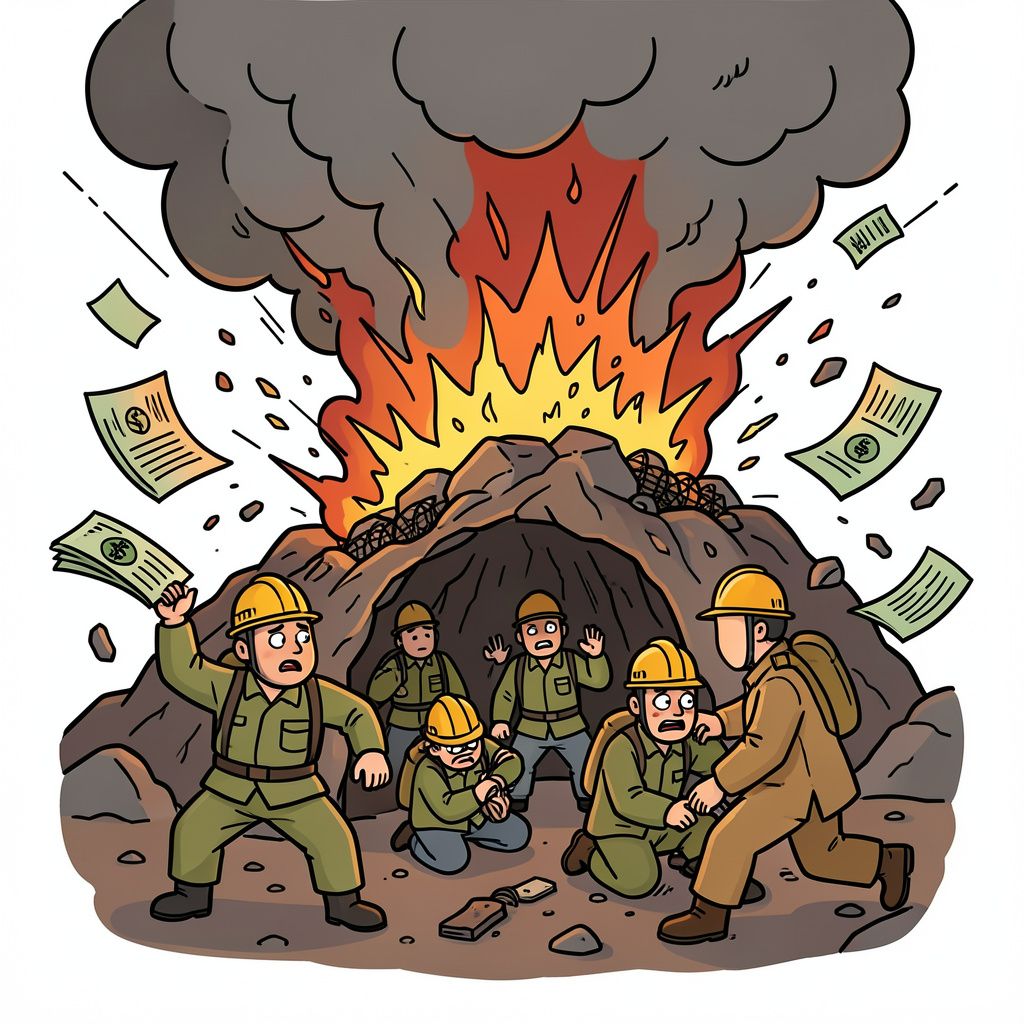
Friday’s gas explosion at a Shanxi coal mine killed 90 workers, marking China’s deadliest mining disaster in 16 years and threatening to disrupt global energy markets through impending safety crackdowns.
The Incident and Immediate Response
On Friday evening, May 22, 2026, at exactly 19:29 local time, a massive gas explosion tore through the Liushenyu coal mine in Qinyuan County, Shanxi Province [2][3][5]. At the time of the blast, 247 workers were on duty underground [1][2][3][4][5]. While initial reports early Saturday indicated eight fatalities and 38 trapped miners, the casualty count surged dramatically as rescue operations advanced [4][5]. State media confirmed that 90 individuals have died, with nine still missing as of Saturday afternoon [2][3][4]. This staggering loss of life marks China’s deadliest mining disaster since 2009, significantly surpassing the 2023 Inner Mongolia mine collapse that claimed 53 lives [1][2].
Rescue Efforts and Challenges
Rescue efforts have been extensive but fraught with logistical challenges. The Chinese Ministry of Emergency Management dispatched 345 personnel across six specialized rescue teams, supplemented by an additional 400 to 500 local responders conducting underground operations [1][2]. By 6:00 CST on Saturday, 201 workers had been brought safely to the surface, representing an evacuation rate of approximately 81.377 percent of the on-duty shift [2][5]. However, rescuers continue to face severe operational hurdles, including dangerous water accumulation and significant discrepancies between the mine’s official blueprints and its actual physical layout [1]. Over 100 individuals were taken to hospitals, with dozens remaining hospitalized for exposure to toxic fumes after carbon monoxide levels reportedly ‘exceeded limits’ [1][2][4]. Injured miner Wang Yong described a harrowing escape, noting the smell of sulfur before witnessing colleagues collapse from the poisonous gas [1].
A History of Ignored Warnings
The disaster brings intense scrutiny to the operational history of the Liushenyu mine and its operator, the Shanxi Tongzhou Group [2][5]. In 2024, the Chinese National Mine Safety Administration officially listed the facility as a ‘severe safety hazard’ [1]. Despite this alarming regulatory flag, operations continued, and the Tongzhou Group subsequently received two administrative penalties in 2025 specifically for safety violations [1]. In the immediate aftermath of Friday’s explosion, authorities detained several executives responsible for the mine’s management [1][2][3].
Political Response and Accountability
The political response from Beijing has been swift and uncompromising. Chinese President Xi Jinping ordered authorities to ‘spare no effort’ in search-and-rescue operations and the medical treatment of the injured [3][6]. He further mandated a thorough investigation into the blast’s root causes, emphasizing that those responsible must face strict legal accountability [2][3][4][6]. Premier Li Qiang echoed these directives, insisting on the accurate and timely release of public information and rigorous accountability for the systemic safety failures [3][6].