Kazakhstan Secures Direct Ocean Access with New Cargo Terminal in Iran
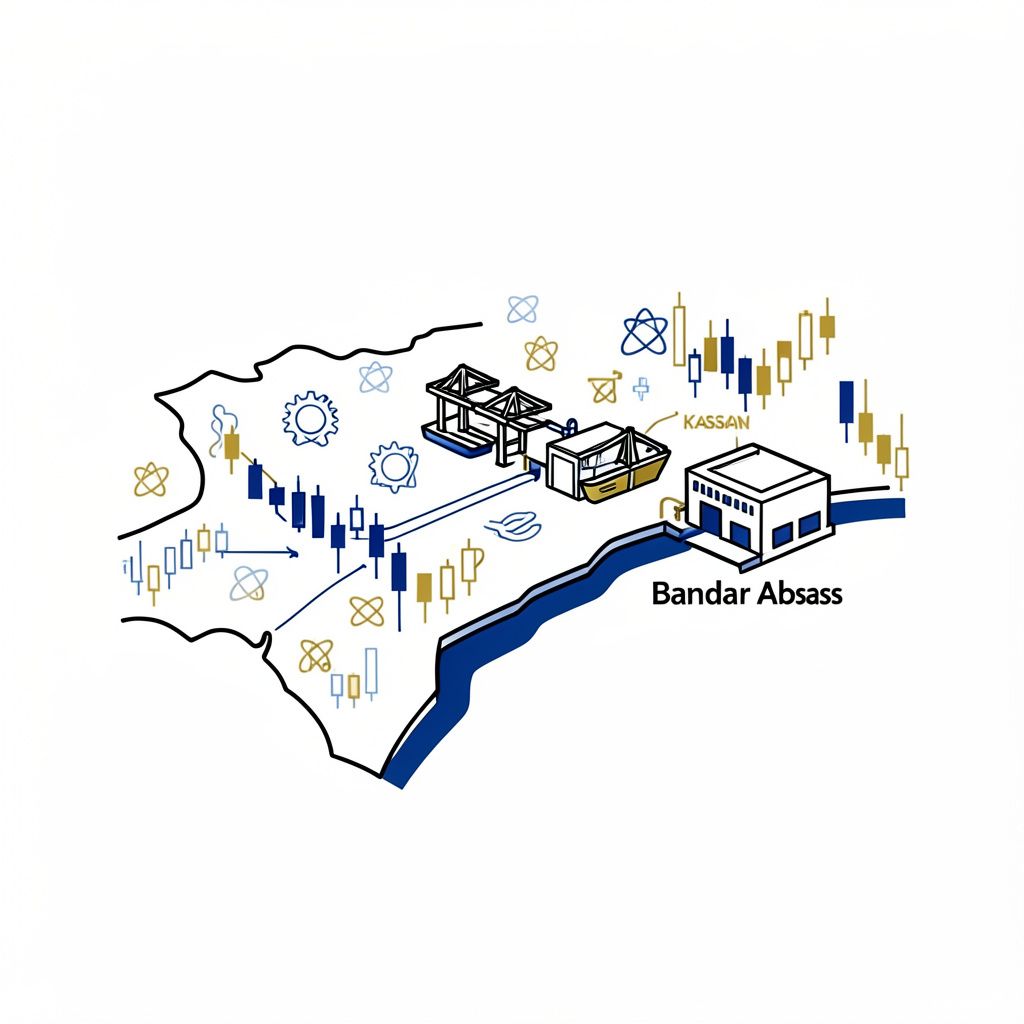
Bandar Abbas, Wednesday, 8 July 2026.
Kazakhstan has secured a 27-year lease at Iran’s Bandar Abbas port to build a terminal, gaining vital direct access to the Persian Gulf and global shipping lanes.
The Mechanics of the Deal
The newly formalized agreement, signed in Tehran under a Build-Operate-Transfer (BOT) model, marks a significant milestone in Central Asian logistics [1]. Under the terms of this deal, Kazakhstan’s Ministry of Trade has secured a land plot at the Shahid Rajaee Port, which stands as one of Iran’s largest and most active maritime hubs within the Bandar Abbas port complex [1]. This strategic allocation provides Kazakhstan with a dedicated footprint to construct and operate its own cargo terminal, allowing the landlocked nation to directly manage its trade flows to the Persian Gulf and beyond [1][GPT].
Constructing and Operating the Terminal
The lease agreement spans a total duration of 27 years, structured to ensure both rapid development and long-term utility [1]. The first 2 years of this term will be exclusively dedicated to the construction of the terminal infrastructure, which leaves a subsequent operational period of 25 years under Kazakh administration before the facility is eventually transferred back to Iran [1]. This long-term horizon provides Kazakh exporters with a stable, predictable window to establish trade operations and build robust logistics networks without the risk of sudden operational disruptions [1][GPT].
Geopolitical Realities and the INSTC
This infrastructure initiative is progressing despite ongoing geopolitical complexities, notably the lingering tensions between the United States and Iran [2]. For landlocked Kazakhstan, the economic necessity of securing direct maritime access has superseded these international diplomatic frictions [2][GPT]. By establishing this terminal, Kazakhstan aims to significantly bolster its role within the International North–South Transport Corridor (INSTC), a multi-modal transit network designed to link Central Asian economies directly with the Middle East, India, and global ocean trade routes [1][GPT].
Enhancing Regional Trade Connectivity
Ultimately, the establishment of a national terminal at Bandar Abbas is expected to transform Kazakhstan’s domestic logistics capacity and broaden its foreign trade horizons [1]. This development occurs alongside other regional efforts, such as trade deals between Uzbekistan and Afghanistan, which reflect a broader push for economic security and connectivity across Central Asia [3]. By bypassing traditional overland bottlenecks, the project creates direct pathways for Kazakh agricultural and industrial exports, representing a crucial step in Central Asia’s broader strategy to diversify its trade corridors and secure economic resilience [1][GPT].