Rising Economic Confidence Coexists with Support for Tariff Limits
Washington, Monday, 2 March 2026.
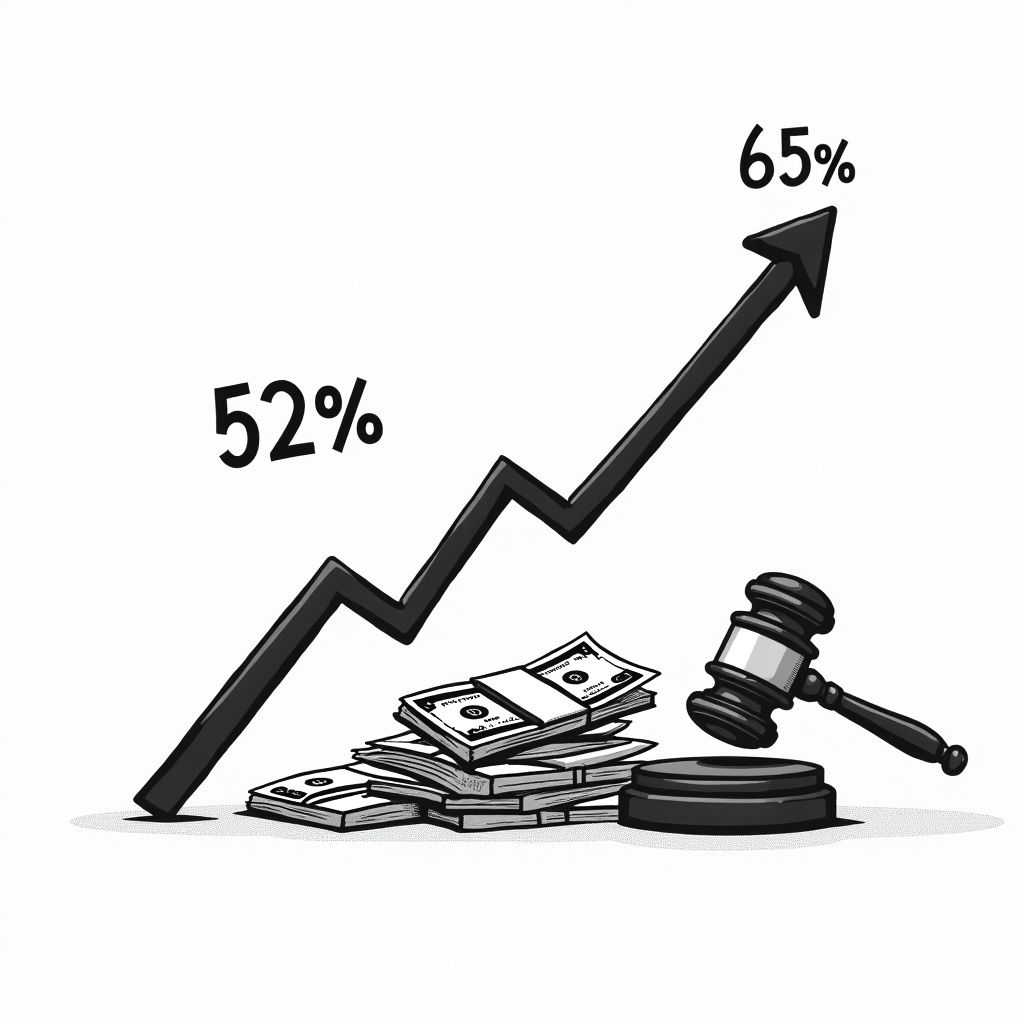
While 52% of voters report improved economic conditions, 65% back the Supreme Court’s restriction on executive tariff powers, signaling a distinct preference for market stability over unilateral trade intervention.
Economic Optimism versus Trade Policy Reality
Data released today, March 2, 2026, from the February Harvard CAPS / Harris poll suggests a decoupling of macroeconomic sentiment from specific trade interventions. While 52% of voters now believe the economy is in better shape than it was under the Biden administration—a 5-point increase since January 2026—this optimism does not translate into blanket support for President Trump’s protectionist measures [1]. The survey, conducted between February 25 and 26, 2026, indicates that 51% of voters view the current U.S. economy as strong, marking an 8-point rise from November 2025 [1]. Mark Penn, Co-Director of the poll, observes that Americans remain “single-mindedly focused on the economy,” noting that the long-term trend shows room for public opinion to shift as conditions improve [1]. However, the administration faces a critical messaging challenge: 56% of voters oppose the President’s new 15% global tariff introduced following the Supreme Court’s ruling [1].
Constitutional Checks and Market Principles
The electorate’s preference for institutional checks is becoming increasingly pronounced. The Harvard CAPS / Harris data reveals that 65% of voters agree with the recent Supreme Court decision limiting the executive branch’s power to impose tariffs in non-emergency scenarios [1]. This skepticism extends to previous policies as well; 51% of voters oppose the tariffs imposed in 2025, with 54% stating that those measures went too far [1]. Beyond trade, the ideological baseline of the electorate leans heavily toward market freedom, with 76% of Americans affirming support for free enterprise over socialist policies [1]. This sentiment provides a favorable backdrop for the Republican party, which currently holds a 4-point messaging edge among likely voters heading into the midterms, despite the generic congressional ballot being tied [1].
Diverging Approval Metrics and Foreign Policy Risks
While the President’s State of the Union address garnered a 60% favorable rating among viewers [3], broader approval metrics present a more fragmented reality. The Harvard CAPS / Harris poll places President Trump’s overall approval at 46%, with his highest marks in fighting crime (51%) and lowest in trade policy (43%) [1]. In contrast, a separate Reuters/Ipsos survey conducted from February 28 to March 1, 2026, paints a starker picture, showing an overall approval rating of just 38% [2]. The Ipsos data highlights deep partisan divides, particularly on the economy, where 77% of Republicans approve of the President’s performance compared to only 6% of Democrats [2]. Furthermore, foreign policy remains a volatile variable; while the Harris poll shows rising support (59%) for intervention in Venezuela [1], the Ipsos survey indicates that 56% of Americans believe President Trump is “too willing” to use military force, with only 27% approving of the recent U.S. military strikes against Iran [2].