Global Trade Fractures as Economic Nationalism Creates a Zero-Sum Economy
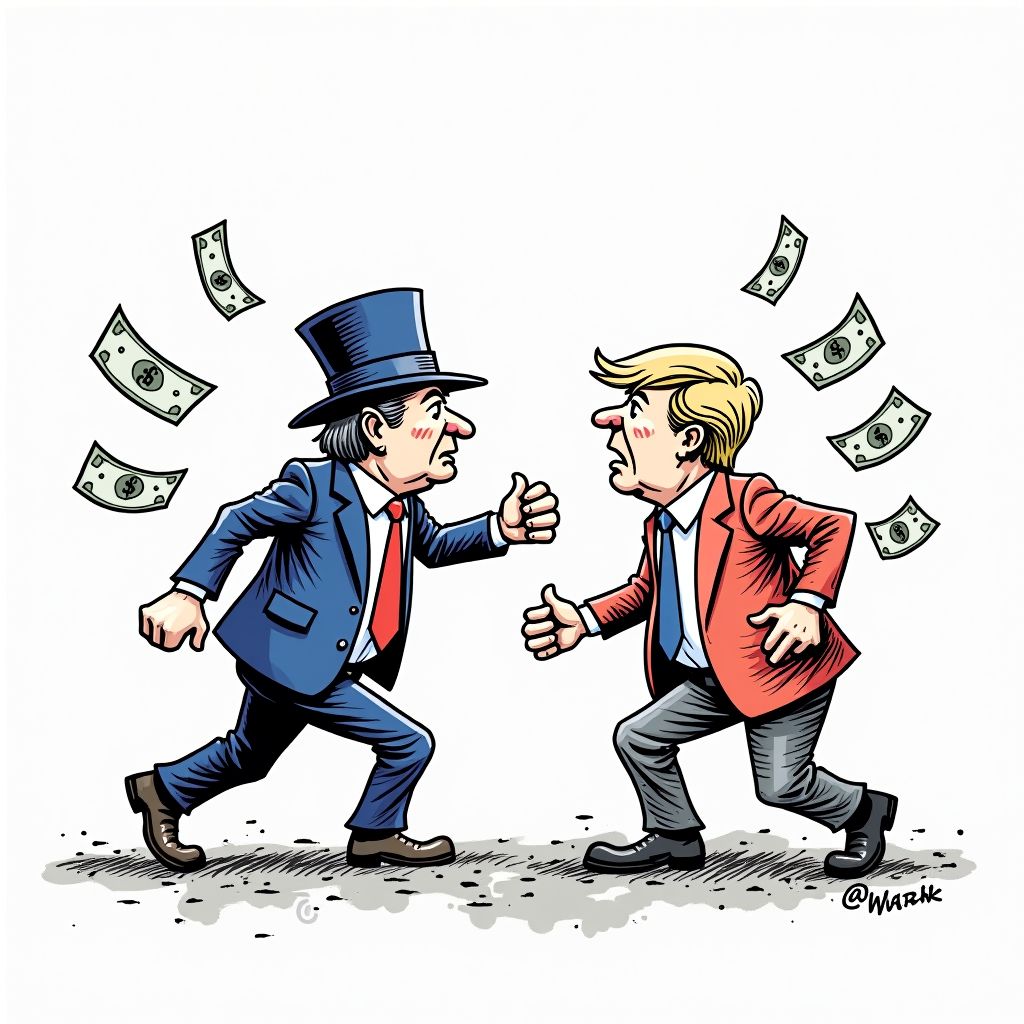
Hong Kong, Sunday, 8 February 2026.
As the EU retaliates with €93 billion in tariffs following the US ultimatum on Greenland, a new analysis confirms the global economy has definitively shifted into a volatile zero-sum game.
The Greenland Spark and the Return of Tariffs
The current geopolitical standoff, sparked by what analysts are calling the “Greenland Episode,” marks a dangerous escalation in transatlantic relations. Following a United States ultimatum issued on January 17, 2026, to purchase Greenland for its strategic rare earth elements like neodymium and praseodymium, the European Union responded with a suspension of the Transatlantic Trade Framework [5]. The economic fallout has been swift and quantifiable. By January 21, the EU had announced €93 billion ($107.7 billion) in retaliatory tariffs targeting American technology and agriculture [5]. As of February 1, the U.S. countered with a 10% import duty on goods from eight key European nations, with threats to raise this figure to 25% by June if a mineral rights agreement is not reached [5]. This tit-for-tat protectionism has rattled markets, with the VIX “fear gauge” spiking 22% in the two weeks leading up to February 5, reflecting investor anxiety over a prolonged trade winter [5].
A Tectonic Shift to Zero-Sum Economics
These recent hostilities are symptomatic of a broader structural transformation described as a “tectonic shift” away from the globalization consensus that defined the late 20th century [1]. According to a new analysis released on February 7, 2026, the global economy has transitioned into a zero-sum game where nations increasingly view trade surpluses as a direct threat to sovereignty rather than a mutual benefit [1]. This aligns with the views of economic historian Marvin Suesse, who argues that modern economic nationalism is not a collective pathology but a rational response to perceived international inequities, where states are trapped between the urge for isolation and the need for expansion [1]. The shift is evident beyond the Atlantic; in September 2025, the U.S. imposed blanket tariffs on most imports, prompting China to remove all tariffs on African imports in a strategic pivot to secure new alliances [4].
Resource Sovereignty and Inflationary Pressures
The race for resource control is intensifying the fragmentation of global markets. The “Greenland Episode” itself was driven by U.S. national security concerns regarding access to critical minerals, a move the EU condemned as “resource imperialism” [5]. This trend is mirrored in the energy sector, where Canada is reevaluating its export strategies to safeguard national sovereignty. Data shows that over the past 15 years, the Canadian economy lost nearly US$50 billion by selling the majority of its oil and natural gas at a discount to the United States [6]. With the energy sector contributing over $85 billion to Canada’s GDP in 2025, diversification has become a fiscal imperative [6]. However, this splintering of supply chains comes at a cost. The trade war is contributing to “sticky inflation,” with U.S. core inflation currently sitting at 3.2% and European services inflation near 4.5% [5]. Corporations are already feeling the pinch; German automaker BMW projects a $1.1 billion hit due to the new trade barriers [5].
Seeking Safe Harbours in a Fragmented World
As major powers engage in economic warfare, smaller nations and alternative blocs are positioning themselves as “safe harbours” against volatility. The Commonwealth, which excludes the primary geopolitical antagonists—the U.S., China, and Russia—has seen its intra-bloc trade grow by nearly US$300 billion between 2015 and 2022, reaching US$854 billion [4]. Furthermore, intra-Commonwealth investment now totals US$1.7 trillion, creating tens of thousands of jobs across Africa, the Pacific, and Asia between 2021 and 2023 [4]. Despite these pockets of resilience, the broader outlook remains precarious. Experts warn that the rise of techno-nationalism risks splintering the world into incompatible standards, suppressing innovation, and fueling global inflation [1]. As the June 2026 deadline for increased U.S. tariffs approaches, the global economy stands at a decisive crossroads between a negotiated “Strategic Pivot” and a debilitating economic decoupling [5].