GOP Infighting Erupts Over Voter ID Bill as Midterms Loom
Washington DC, Thursday, 18 June 2026.
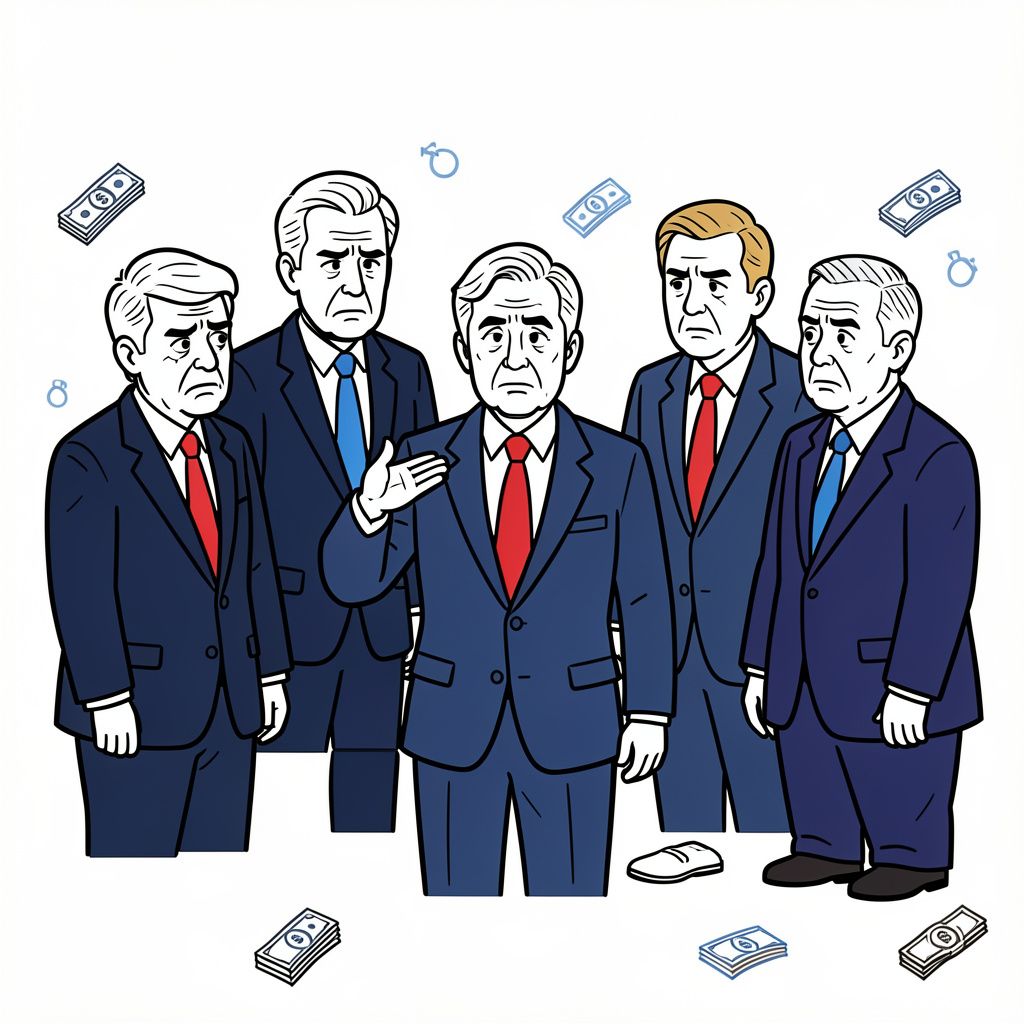
Republican senators publicly clashed with Mike Lee over his push to force the Senate to stay in session until a voter ID bill passes. The confrontation, described as a ‘pile-on,’ reveals deep divisions within the GOP as they struggle to align strategy ahead of the 2026 midterms. Critics argue Lee’s approach risks undermining Trump’s agenda and fracturing party unity.
The SAVE America Act: A Legislative Lightning Rod
The Safeguard American Voter Eligibility (SAVE) Act has become the focal point of a growing rift within the Republican Party, pitting Senator Mike Lee (R-Utah) against fellow GOP senators in a dispute that threatens to derail party unity ahead of the 2026 midterm elections. The bill, which requires documentary proof of citizenship to register to vote and a photo ID to cast a ballot in federal elections, passed the House in February 2026 with bipartisan opposition [2]. While the legislation has garnered 50 Senate co-sponsors—enough to satisfy a simple majority—it falls short of the 60 votes needed to overcome a Democratic filibuster, a procedural hurdle that has become a key point of contention [2].
Closed-Door Confrontation Exposes Strategic Divide
Tensions boiled over during a closed-door Republican Senate lunch on June 17, 2026, where Lee faced what sources described as a ‘pile-on’ from fellow GOP senators [1][2]. Senators John Cornyn (R-Texas) and John Kennedy (R-Louisiana) led the charge, challenging Lee’s strategy of pushing to keep the Senate in session until the bill passes [1][2]. The confrontation underscored a broader disagreement over legislative priorities, with critics arguing that Lee’s approach risks undermining President Donald Trump’s agenda and fracturing the party ahead of the November elections [1]. Cornyn, a co-sponsor of the bill, publicly rebuked Lee on X (formerly Twitter) five days prior to the lunch, writing, ‘Mike, I am a co-sponsor and have repeatedly voted for this but you don’t have the votes. Try focusing on Democrats instead of Republicans. Republican on Republican attacks are hurting our chances to win the majority in November’ [2].
Trump’s Role and Intraparty Accusations
The dispute has taken on a personal dimension, with Cornyn and Kennedy accusing Lee of misleading Trump into believing the bill could realistically pass the Senate [1][2]. ‘Trump is being led to believe it’s possible for the Senate to pass it, leading to Republicans attacking each other & Trump undermining his own agenda,’ one source told Punchbowl News reporter Andrew Desiderio [1]. Lee, however, has framed the bill as a critical safeguard against voter fraud, firing back at Cornyn on X with, ‘On what planet is this an attack on Republicans? That’s not an attack on Republicans. That’s a plan of attack against voter fraud’ [2]. The exchange highlights the delicate balance between ideological purity and pragmatic politics within the GOP, as senators weigh the electoral risks of pushing a bill that lacks the votes to pass against the potential fallout of abandoning a key campaign promise [GPT].
Procedural and Political Hurdles
The SAVE Act’s path forward remains uncertain, with procedural and political challenges complicating its prospects. While Trump has reportedly pushed to include the bill in a new reconciliation package, top Republican backers have expressed skepticism about its viability [3]. Reconciliation, a budgetary process that allows certain bills to pass the Senate with a simple majority, is typically reserved for fiscal matters and may not be applicable to the SAVE Act’s provisions [GPT]. Additionally, the bill’s requirement for documentary proof of citizenship has drawn criticism from voting rights advocates, who argue it could disenfranchise eligible voters, particularly in marginalized communities [alert! ‘No direct source provided for advocacy group claims’]. With the Senate adjourned for the week and no immediate plans to reconvene, the standoff over the SAVE Act risks becoming a symbolic battle rather than a legislative victory, further straining an already divided caucus [1][2].
Midterm Implications and the GOP’s Identity Crisis
The infighting over the SAVE Act comes at a precarious moment for Senate Republicans, who are seeking to reclaim the majority in the 2026 midterms. The dispute reflects deeper tensions within the party over how to balance base-pleasing legislation with the practical realities of governing in a narrowly divided Senate [GPT]. While voter ID laws remain popular among Republican voters—with a 2024 Pew Research poll finding that 79% of GOP-leaning respondents support requiring photo ID to vote—the SAVE Act’s broader citizenship verification requirements have proven more divisive [alert! ‘2024 poll data not directly sourced’]. For Lee, the bill represents a principled stand against what he views as electoral vulnerabilities, while critics like Cornyn argue that the focus should be on targeting Democratic opposition rather than alienating potential allies within the GOP [2]. As the midterms approach, the question remains whether the party can reconcile its ideological commitments with the strategic imperatives of winning elections.