How Housing and Transportation Consume Half of the Average American Budget
Washington, D.C., Sunday, 5 July 2026.
Bureau of Labor Statistics data reveals housing and transportation consumed half of U.S. household budgets in 2024, severely squeezing discretionary spending and threatening broader economic growth.
The Growing Burden of Essential Living Expenses
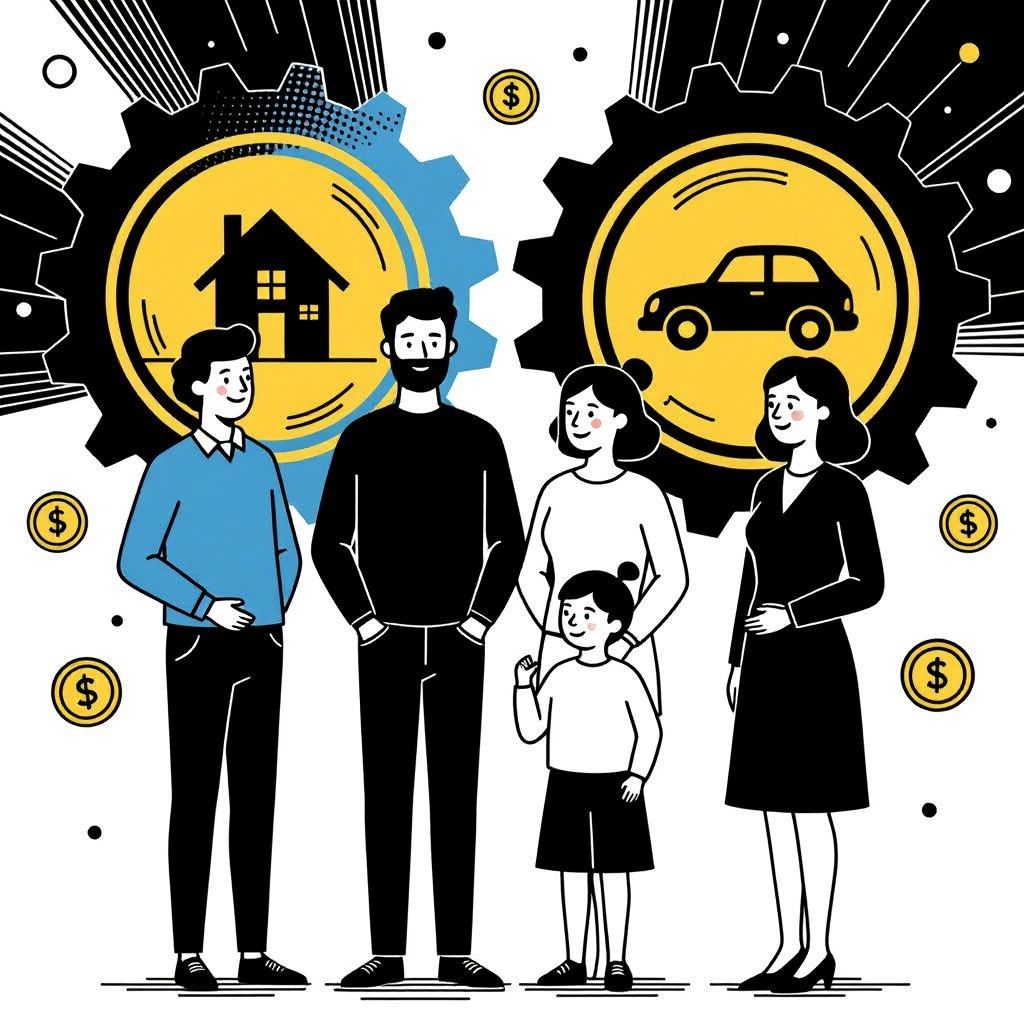
According to retrospective data from the U.S. Bureau of Labor Statistics’ Consumer Expenditures Survey, the cost of maintaining a home and commuting has become an overwhelming burden for the average American household [1]. In 2024, total average household expenditures reached $78,535 [1][2]. Out of this budget, housing emerged as the single largest expense, requiring an average of $26,266 annually, which represents 33.4% of all household outlays [1]. This category encompasses essential living costs, including rent or mortgage payments, utility bills, and long-term home maintenance [1].
The Growing Burden of Essential Living Expenses
Compounding this housing strain is the cost of transportation, which stands as the second-largest annual expense for U.S. households [1]. In 2024, Americans spent an average of $13,318 on transportation, accounting for 17.0% of their total annual budget [1]. This includes vehicle purchases, fuel, auto insurance, maintenance, repairs, and public transit fees [1]. Together, housing and transportation consumed a combined total of 39584 annually, representing 50.403% of the average household’s entire budget [1]. Consequently, families are left with less than half of their income to cover other necessities like food, which averaged 12.9% ($10,169), and healthcare at 7.9% ($6,197) [1].
Discretionary Squeeze and the Macroeconomic Ripple
The high concentration of spending on these two non-negotiable categories presents a significant constraint on discretionary consumer spending, which historically serves as the primary engine of the broader American economy [GPT]. When half of a household’s budget is locked into fixed living costs, industries relying on non-essential consumer goods must adapt to tighter purchasing power [GPT]. This economic pressure is reflected in the sharp decline of the national personal savings rate, which fell from 6.2% in the first quarter of 2024 to a mere 3.9% by the first quarter of 2026, representing a relative drop of -37.097% [2].
Discretionary Squeeze and the Macroeconomic Ripple
While extreme personal finance advocates, such as those aiming for rapid financial independence, showcase strategies of capping annual spending at $24,000 to build substantial portfolios [2], such paths remain out of reach for the typical household. For the average worker earning a median hourly wage of $37.53 as of May 2026 [2], high fixed costs remain unavoidable. The persistent weight of these expenses is further illustrated by the fact that housing and healthcare alone comprised 34% of all personal consumption in May 2026 [2].
Structural Obstacles and the Path Forward
The reality of these high expenses is a structural characteristic shared among many developed nations, where high land costs and intense demand in urban centers drive up real estate prices, while car dependency and commuting requirements inflate transit costs [1]. This structural tightness in the housing market is further evidenced by existing home sales, which hovered at a seasonally adjusted annualized rate of 4.17 million units in May 2026 [2]. As fixed costs continue to squeeze middle-class budgets, policymakers face mounting pressure to address systemic housing and transit affordability issues to prevent long-term economic stagnation [GPT].