AI Boom Threatens to Reignite Global Inflation in 2026
New York, Monday, 5 January 2026.
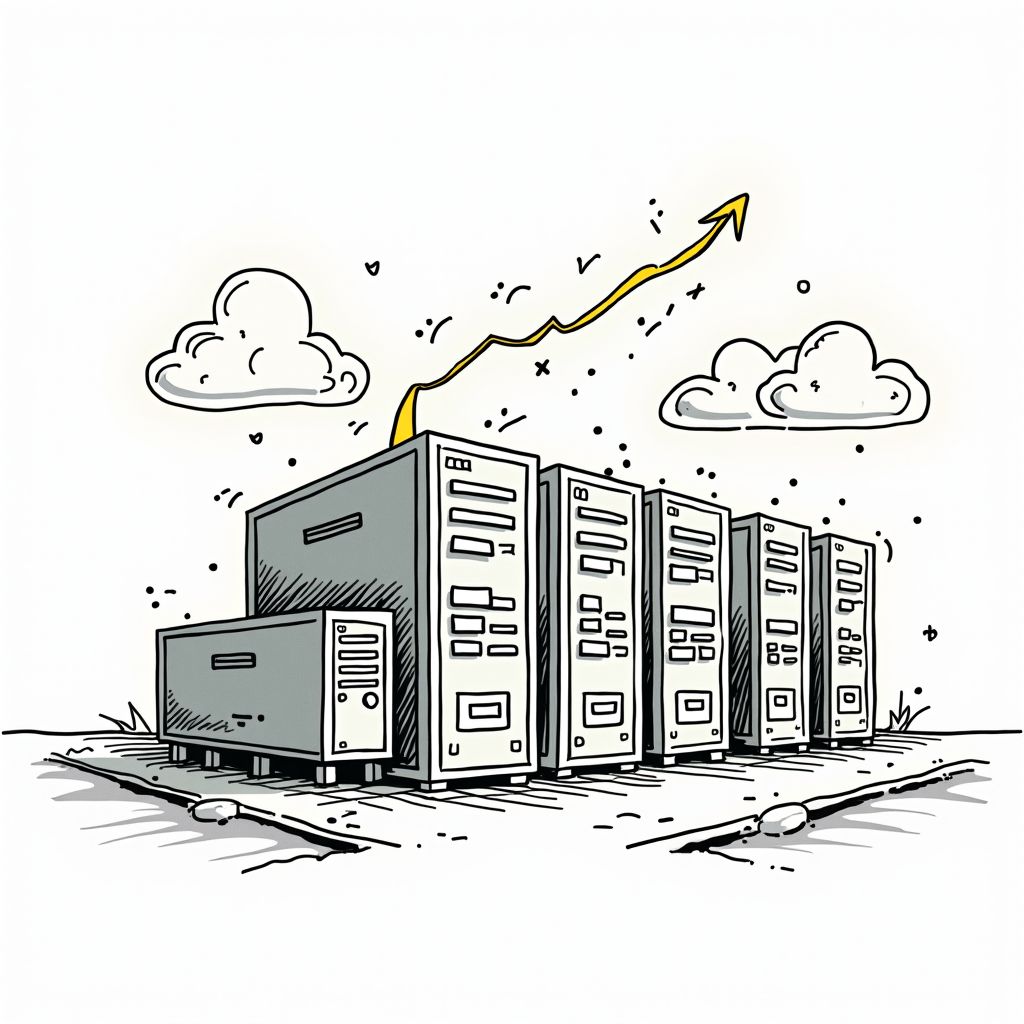
With data center spending projected to hit $4 trillion, investors warn surging energy costs could force central banks to halt rate cuts, threatening market stability this year.
The Hidden Cost of the Rally
As global markets rally on artificial intelligence optimism in early 2026, a significant economic contradiction is emerging. While U.S. stock indexes posted double-digit gains throughout 2025 [1][2], analysts now identify AI-driven inflation as the year’s most “overlooked risk” [1]. The euphoria surrounding the technology sector may be masking a resurgence in price pressures driven by the very infrastructure required to sustain it. Despite U.S. Treasury investors seeing their best annual performance in five years in 2025, inflation remains stubbornly above the Federal Reserve’s 2% target [1][3].
The Mechanics of AI Inflation
The core of the issue lies in the physical demands of the digital revolution. Hyperscalers such as Microsoft, Meta, and Alphabet are engaged in a multi-trillion-dollar race to construct new data centers, a process that is aggressively driving up the costs of energy and semiconductors [1][2]. Deutsche Bank projects that capital expenditure for AI data centers alone could reach $4 trillion by 2030 [2][3]. This surge in demand is not merely a corporate expense; it is a macroeconomic force capable of sustaining inflation well above central bank targets. Andrew Sheets, a strategist at Morgan Stanley, notes that costs are rising rather than falling due to inflation in both chip and power sectors, predicting that U.S. consumer prices could remain above the Fed’s target through late 2027 [2][3].
Supply Chain Warning Signs
Tangible warning signs of this inflationary pressure emerged late last year. On December 11, 2025, Oracle’s shares plunged after the company revealed soaring spending, followed the next day by a drop in Broadcom’s stock due to warnings of squeezed profit margins [1]. Furthermore, HP Inc. anticipates pressure on prices and profits in the latter half of 2026, driven specifically by the surge in memory chip costs [1]. These are not isolated incidents but indicators of a broader trend where the “AI frenzy” hides an inherent inflation bomb that could cut off the cheap capital flows currently supporting high tech valuations [4].
Monetary Policy at a Crossroads
The resurgence of inflation poses a direct threat to market stability, potentially forcing central banks to halt rate-cutting cycles. Trevor Greetham of Royal London Asset Management warns that a “pin that pricks the bubble” will likely arrive in the form of tighter money, stating he would not be surprised to see inflation booming worldwide by the end of 2026 [1]. This sentiment is echoed by Julius Bendikas at Mercer, who notes that the resurfacing of inflation risk is what “keeps us awake at night” [1]. Broader economic data supports the view of a heating economy; as of late 2025, wages had grown 30% since 2019, outpacing the 26% increase in the CPI price level over the same period—a real wage growth gap of 4 percentage points [5]. Additionally, AI-related investment-grade issuance doubled year-over-year, jumping from 7% in 2024 to 14% in 2025 [5]. While the International Monetary Fund projects steady global growth of 3.3% for 2026, this outlook remains constrained by “sticky inflation” [6].
Sources
- www.reuters.com
- www.technology.org
- cio.economictimes.indiatimes.com
- longbridge.com
- www.apolloacademy.com
- www.linkedin.com