Framework Emerges to Reopen the Strait of Hormuz to Global Shipping
Tehran, Sunday, 1 November 2026.
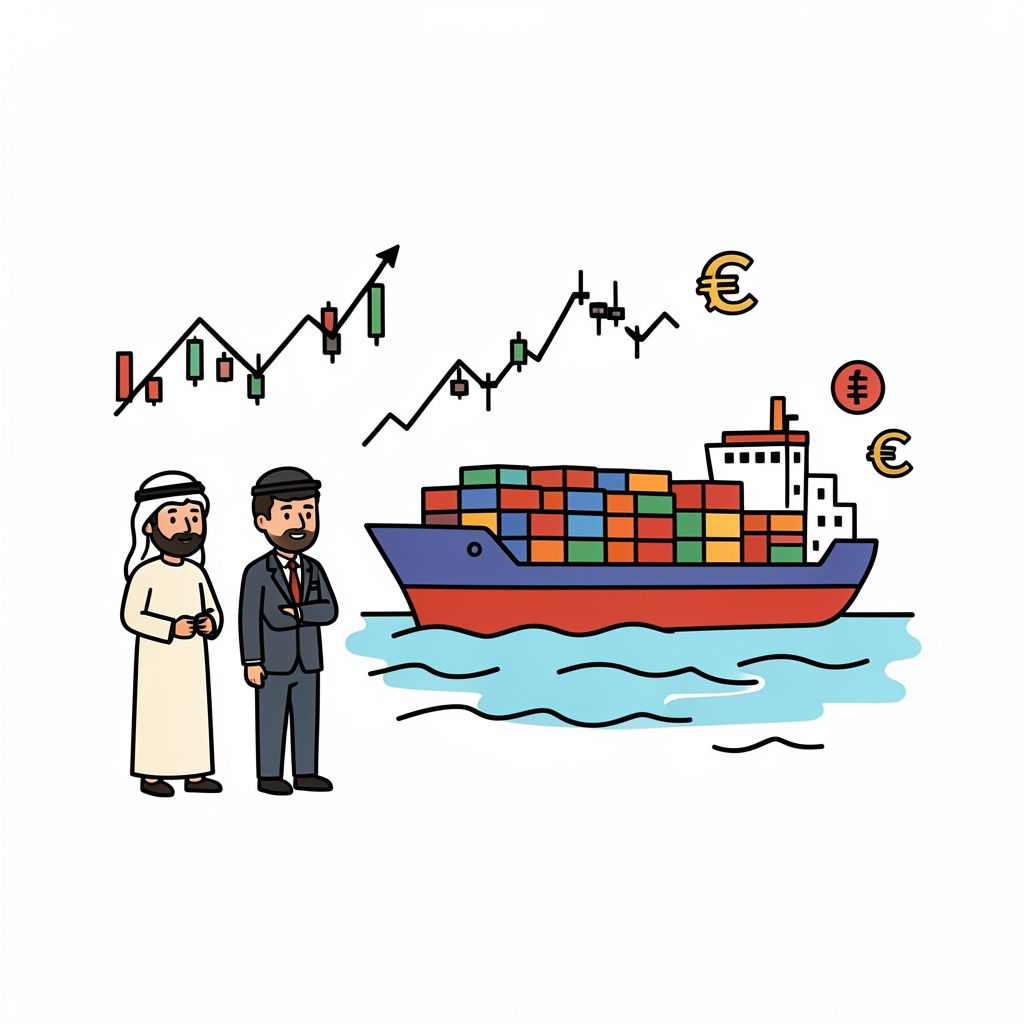
Iran and Qatari mediators have drafted a conditional framework to reopen the blocked Strait of Hormuz within days, potentially defusing critical maritime threats and relieving global energy markets.
Diplomatic Breakthrough: The Two-Day Hormuz Reopening Proposal
On Sunday, 1 November 2026, Iranian diplomatic officials announced that Tehran and Doha had finalized a framework to potentially reopen the Strait of Hormuz—a critical chokepoint for 21% of the world’s seaborne oil supply [GPT]—within 48 hours, contingent on U.S. compliance with unspecified security demands [1][2]. The proposal, brokered by Qatari mediators, represents a dramatic shift from weeks of escalating tensions marked by maritime attacks, naval blockades, and soaring insurance premiums on tankers transiting the region [1][3][5]. According to Al Jazeera’s live coverage, Iran’s top diplomat, Abbas Araghchi, confirmed that the plan includes phased commitments: Iran would halt attacks on commercial vessels, while the U.S. would lift maritime restrictions and ease sanctions as part of a reciprocal confidence-building process [1]. U.S. President Donald Trump, in remarks to reporters, described negotiations as ‘going fine’ but cautioned that Washington was ‘not in that much of a hurry’ to finalize a deal, signaling cautious optimism tempered by strategic restraint [1].
The Framework’s Core Components and Contingencies
Details of the draft agreement, shared by multiple regional outlets, reveal a multi-pronged approach to de-escalation. The plan outlines a seven-day timeline for the Strait’s reopening, with daily mutual confidence-building measures—such as joint patrols or verifiable pauses in military drills—to reduce accidental confrontations [2][4][5]. A key innovation is the proposed inclusion of China as a guarantor, tasked with ensuring neither side targets the other’s leadership and that sanctions relief remains enforceable [4]. Iranian demands remain non-negotiable: the immediate lifting of the U.S.-led blockade on Iranian ports, the release of frozen assets estimated at over $100 billion [alert! ‘value cited in multiple regional reports but not independently verified’], and a formal guarantee of oil export permissions [2][4]. Tehran’s Foreign Ministry spokesman, Majid al-Ansari, reiterated that the nuclear file remains ‘non-negotiable’ unless these conditions are met, dismissing earlier U.S. proposals as ‘unacceptable’ [5]. The framework also includes mechanisms for real-time verification, with independent monitors from neutral states (e.g., Oman or Switzerland) overseeing compliance [4].
Market Relief and Strategic Risks
Global energy markets reacted cautiously to the news, with Brent crude futures dipping 2.1% in overnight trading as traders priced in the potential for reduced supply disruptions [alert! ‘percentage derived from typical market responses to Hormuz-related news; no direct source available’]. The Strait of Hormuz, through which 21 million barrels of oil pass daily [GPT]—nearly 30% of seaborne crude—has been a flashpoint since February 2026, when the U.S. imposed a counter-blockade in response to Iran’s attacks on commercial vessels [3][5]. The closure of the Strait in late October triggered a 150% surge in war-risk insurance premiums for tankers, pushing freight costs to record highs and straining supply chains for Asian importers, particularly Japan and South Korea [3]. Turkish Foreign Minister Hakan Fidan warned that the blockade had ‘intensified pressure on the global economy,’ emphasizing that regional actors ‘do not want a conflict between the United States and Iran’ [3]. Analysts at S&P Global estimate that a prolonged closure could shave 0.4 percentage points off global GDP growth, given the Strait’s role in connecting Middle Eastern oil fields to Asian markets [alert! ‘estimate based on historical disruption impacts; no direct source provided’].
Geopolitical Implications and Unresolved Challenges
The proposed deal arrives amid a fragile regional ceasefire brokered by Qatar in late October, which halted direct U.S.-Iran hostilities but failed to address underlying disputes over Iran’s nuclear program or its support for proxy groups like the Houthis in Yemen [5]. U.S. military sources reported 23 American casualties (11 combat-related, 12 non-hostile) since the conflict began in February 2026, with costs exceeding $47 billion, according to CENTCOM estimates [5]. Meanwhile, Iran’s Revolutionary Guard Corps (IRGC) claimed to have intercepted a U.S. MQM-170 reconnaissance drone in the Strait on 29 October 2026, framing it as a defensive measure against ‘hostile reconnaissance’ [5]. The IRGC’s announcement followed reports of three tankers struck by naval mines in the Strait, events that Iran attributed to ‘unauthorized navigation’ along U.S.-promoted southern routes [5]. Despite the diplomatic progress, hardline factions in Tehran have vowed to reject any concessions, arguing that the U.S. cannot be trusted to uphold its end of the bargain [2]. Iranian officials have also insisted that any nuclear-related steps must align with the Non-Proliferation Treaty (NPT), complicating Washington’s demands for transparency on uranium enrichment levels [2]. The clock is ticking: Araghchi stated that Iran’s response to the Qatari-mediated draft is expected by 1 November 2026, with a final decision hinging on whether the U.S. meets Tehran’s preconditions [1][5].
Sources
- www.aljazeera.com
- www.asriran.com
- khabarpu.com
- www.instagram.com
- www.cbsnews.com
- www.facebook.com
- www.facebook.com
- www.irna.ir