Russian Flag Returns to Paralympic Podium Marking Major Shift in Sports Diplomacy
Milano, Sunday, 8 March 2026.
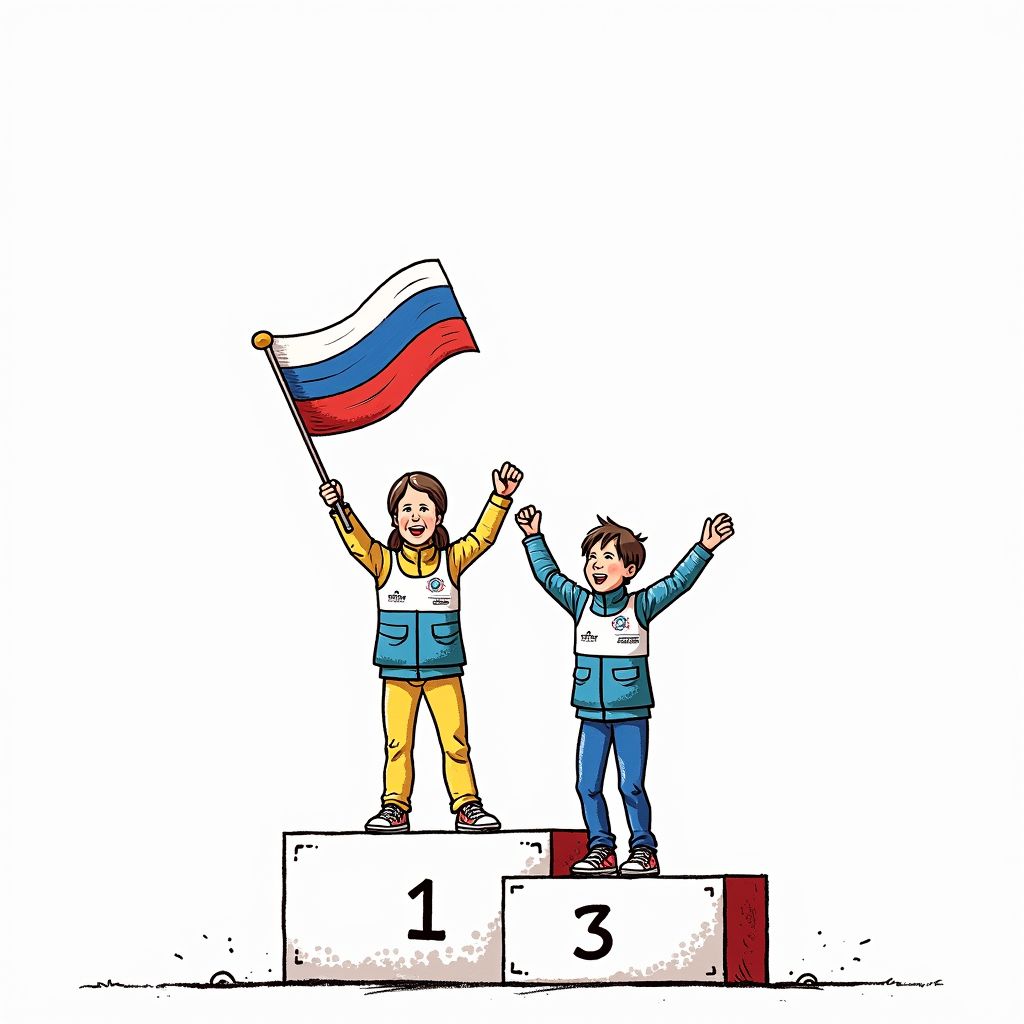
For the first time since the 2014 Sochi Games, the Russian flag has officially returned to the Winter Paralympics podium, marking a pivotal and controversial moment in international sports diplomacy at Milano Cortina 2026. Following a twelve-year absence driven by state-sponsored doping scandals and geopolitical sanctions, Russian athletes Varvara Voronchikhina and Aleksei Bugaev secured bronze medals in alpine skiing under their national colors. This reinstatement by the International Paralympic Committee represents a significant deviation from recent exclusionary policies, normalizing Russian participation despite ongoing geopolitical tensions. The diplomatic breakthrough was immediately contrasted by fierce competition on the snow; while Russia celebrated its symbolic return, Ukrainian athletes responded with a dominant performance, topping the medal table with multiple golds after boycotting the opening ceremony. This juxtaposition underscores the complex, high-stakes intersection of athletic achievement and international relations defining the 2026 Games.
From Boycott to Biathlon Dominance
As detailed in our previous coverage regarding the record participation and geopolitical tensions defining the launch of the Milano Cortina 2026 Games, the atmosphere in Northern Italy has been charged with diplomatic friction. Following Friday’s opening ceremony—which was boycotted by Ukraine and seven other nations—the focus shifted on Saturday, March 7, from ceremonial protest to athletic response [1][2]. While the reinstatement of the Russian flag generated headlines, Ukrainian athletes channeled their opposition into a dominant performance in the Nordic events, topping the medal table on the first day of competition with a total of six medals in para biathlon, including three golds [1][2].
A Controversial Return to the Podium
The return of Russian national symbols to the Paralympic stage, permitted after the International Paralympic Committee (IPC) lifted its suspension in September 2025, materialized swiftly on the slopes [2]. On Saturday, Russian athletes Varvara Voronchikhina and Aleksei Bugaev both secured bronze medals in their respective standing downhill alpine skiing events [1][2]. Voronchikhina, competing in the women’s event, finished 2.47 seconds behind Sweden’s Ebba Aarsjoe [1]. For the Russian delegation, these medals represented more than athletic achievement; they marked the end of a ban dating back to the 2014 Sochi Games regarding state-sponsored doping [1][2]. Voronchikhina expressed relief at the reinstatement, stating, “It’s a really long time when we were without the flag… I’m very happy because it’s [the] first medal for me” [1]. Similarly, Bugaev emphasized his satisfaction in being able to “win the medal for my country, for Russia” rather than as a neutral participant [1][2].
Ukraine’s “Gold Rush” Response
In a stark juxtaposition to the Russian narrative, the Ukrainian team—who remained in Tesero during the opening ceremony in protest of Russia’s involvement—delivered a commanding performance in para biathlon [1]. On Saturday, March 7, Ukraine executed a clean sweep in the men’s visually impaired sprint, with Oleksandr Kazik, Iaroslav Reshetynskyi, and Anatolii Kovalevskyi claiming all three podium spots [1]. Additionally, Taras Rad secured gold in the men’s sitting sprint, while Oleksandra Kononova won gold in the women’s standing sprint [1]. The emotional weight of the victories was palpable; Kononova dedicated her win to her nation, remarking, “I’m really happy that today I have a gold medal so we will have the anthem of Ukraine here” [1]. This surge of victories placed Ukraine at the top of the medal table immediately following the boycott, effectively countering Russia’s symbolic return with sporting dominance [1][2].
Global Milestones and Emerging Rivalries
Beyond the geopolitical headlines, Day 1 of the Games witnessed significant historical milestones. Team USA’s Oksana Masters claimed her 10th Paralympic gold medal in the women’s sitting sprint biathlon, bringing her career total to 20 medals across both summer and winter games [4]. Masters expressed shock at her victory, noting that her preparation had been hampered by recent surgery and infection [4]. Meanwhile, Austria’s Aigner family continued their legacy of success; siblings Veronika and Johannes Aigner both won gold in the visually impaired downhill skiing events [4]. In team sports, China demonstrated the strength of its developing winter sports program, remaining unbeaten in wheelchair curling mixed doubles with a 12-2 victory over Estonia and defeating the USA 12-7 in the mixed team round robin [4]. As the Games continue through March 15, the competition schedule remains intense, with the snowboard cross finals set for today, Sunday, March 8 [3][4].