Deadly Ambush in Post-Assad Syria Signals Persistent ISIS Threat
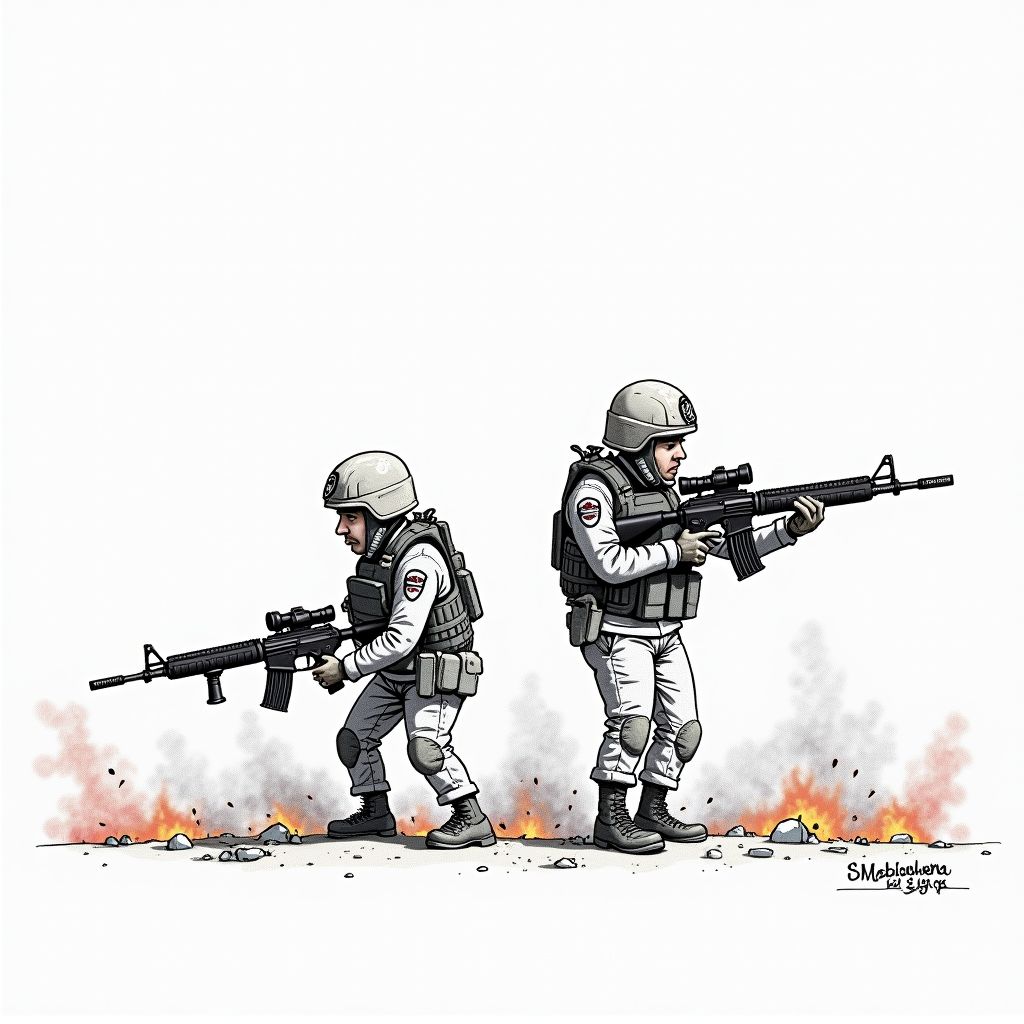
Palmyra, Saturday, 13 December 2025.
On December 13, 2025, a lethal ambush by a lone ISIS gunman in Palmyra, Syria, resulted in the deaths of two U.S. service members and a civilian interpreter, marking the first American combat casualties since President Trump’s return to office. While the attacker was neutralized by partner forces, this incident exposes significant security vulnerabilities just one year after the collapse of the Assad regime. Despite the political transition and the lifting of U.S. sanctions, the attack underscores the resilient nature of ISIS in central Syria. Defense Secretary Pete Hegseth and President Trump have vowed severe retaliation, signaling an aggressive posture against terror remnants. For observers, this tragedy serves as a stark reminder that the region remains volatile, posing ongoing risks to reconstruction efforts and necessitating a sustained counterterrorism footprint to prevent a broader resurgence of instability.
Details of the Ambush in Palmyra
U.S. Central Command confirmed that on December 13, 2025, two U.S. service members and one civilian employee were killed during an ambush in Palmyra, Syria [5]. The attack, carried out by a lone ISIS gunman, also left three other American service members injured [1][5]. According to Defense Secretary Pete Hegseth, the assailant was subsequently killed by partner forces during the skirmish [2]. In addition to the American casualties, two members of the Syrian security forces were wounded in the engagement and were evacuated alongside U.S. personnel to the al-Tanf base [4]. The identities of the fallen Americans are currently being withheld pending next-of-kin notification, a standard protocol maintained for 24 hours after families are informed [5].
Operational Context and Recent Activity
The ambush occurred as the soldiers were concluding a “key leader engagement,” a mission designed to support ongoing counterterrorism operations in the region [2]. This incident highlights the continued operational tempo of the approximately 2,000 U.S. troops stationed in Syria, who are primarily focused on preventing an ISIS resurgence in the northeast [3]. Since October, U.S. forces have advised and assisted in 22 operations against ISIS alongside partner forces, resulting in the death of five operatives and the capture of 19 others [1]. Despite these tactical successes, the ambush in Palmyra—a city ISIS famously seized and desecrated in 2015—demonstrates the group’s lingering lethality [4].
A Volatile Anniversary
The timing of this attack is particularly significant, occurring just days after the one-year anniversary of the ouster of former dictator Bashar al-Assad on December 8, 2024 [4]. While the fall of the Assad regime led to the lifting of U.S. sanctions and a diminishment of threats from Iranian-backed militias and Russian troops, the security vacuum remains a critical concern [1][4]. Syrian President Ahmed al-Sharaa reportedly expressed that he is “extremely angry and disturbed” by the attack, with reports emerging that the Syrian Interior Ministry had previously warned of a potential ISIS assault in the Badia region—a warning that Syrian officials claim the U.S.-led coalition did not take seriously [2][3].
Washington’s Response and Historical Significance
The deaths mark the first U.S. combat casualties in Syria since 2019, a gap of 6 years, when four Americans were killed in a suicide bombing in Manbij [2]. It also represents the first combat loss of life for the U.S. military since President Donald Trump returned to the Oval Office [2]. President Trump condemned the incident as an “ISIS attack against the U.S., and Syria,” vowing that “there will be very serious retaliation” [2]. Defense Secretary Hegseth reinforced this stance with a stark warning to those targeting Americans, stating they would be hunted and “ruthlessly” killed [1]. Prior to this event, there had been 10 U.S. military deaths in Syria, with the most recent non-hostile death recorded in February 2022 [2].