Delta Air Lines Confronts Widespread Flight Disruptions Amid Technical Failures and Staffing Shortages
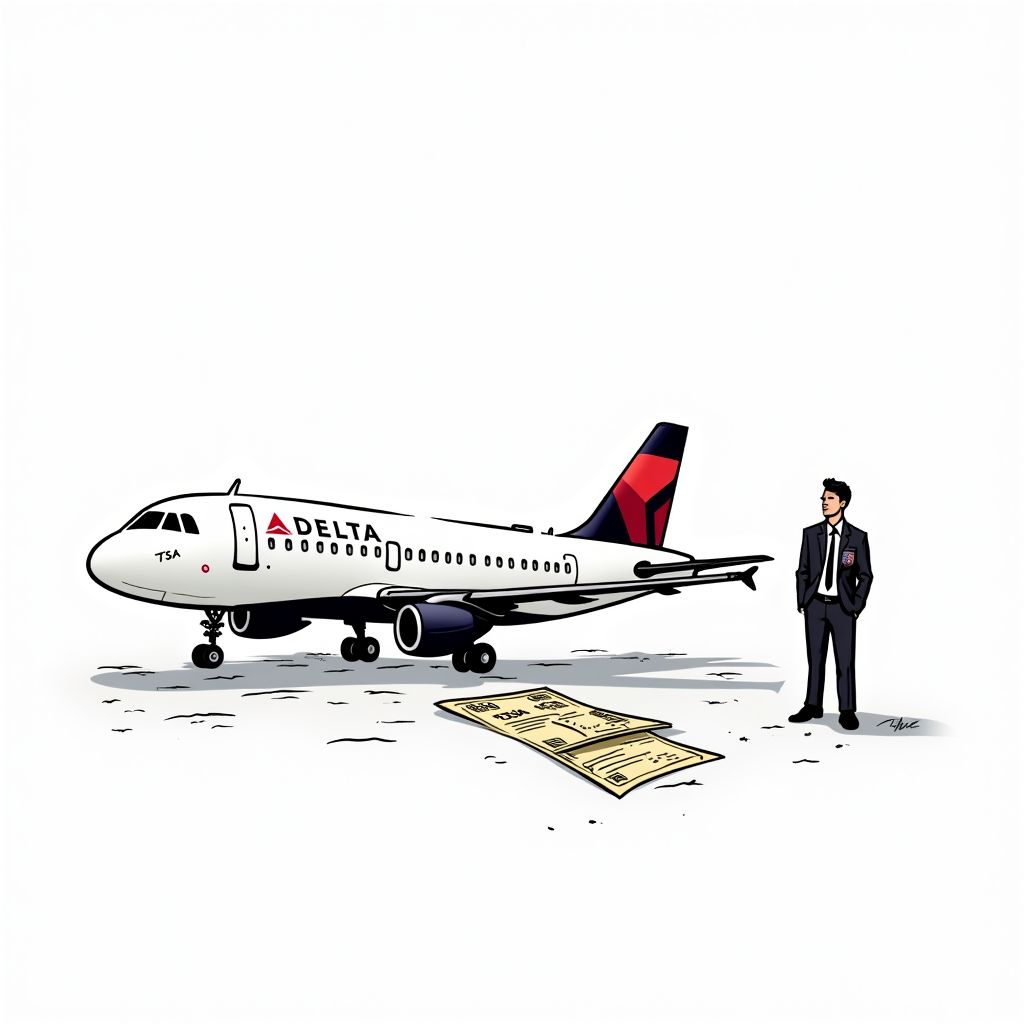
Atlanta, Sunday, 22 March 2026.
Leading U.S. carriers in weekend cancellations, Delta navigates a severe operational crisis fueled by mid-air emergencies and crippling TSA staff shortages, threatening short-term efficiency and investor confidence.
Mid-Air Emergencies Exacerbate Fleet Pressures
On March 21, 2026, Delta Air Lines Flight DL1182, a Boeing 717-200 traveling from Atlanta to Tallahassee, was forced to make an emergency landing back in Atlanta shortly after takeoff due to an unspecified technical issue [1]. The aircraft failed to reach a stable cruising altitude and returned to the hub, concluding its brief operation at an operational timestamp of 13:52 UTC with a safe landing at a ground speed of 1 m/s [1]. While Delta has not disclosed the precise cause of the diversion, the event triggered immediate passenger rebooking and a rigorous inspection protocol by ground operations teams [1].
Systemic Bottlenecks and Surging Cancellations
Beyond mechanical hurdles, Delta (NYSE: DAL) is currently navigating a severe logistical nightmare heavily influenced by systemic labor shortages [GPT][2][3]. On Saturday, March 21, 2026, Delta recorded 57 flight cancellations—the highest among all U.S. carriers, representing 23 more cancellations than second-place Spirit Airlines [2]. Delta also recorded 509 flight delays globally that same day [2]. The disruption heavily impacted Delta’s primary hub, Hartsfield-Jackson Atlanta International Airport, which had anticipated processing nearly 350,000 passengers between March 19 and March 22, 2026 [2]. By Saturday, the Atlanta hub alone registered 51 cancellations, 226 departing delays, and 158 arrival delays [2].
Political Gridlock Amplifies Travel Chaos
The operational strain is further complicated by political friction. On March 21, 2026, President Donald Trump threatened to deploy Immigration and Customs Enforcement (ICE) agents to U.S. airports if a resolution to overhaul airport security was not reached [2]. In response to the escalating crisis, Delta CEO Ed Bastian, alongside nine other airline executives, issued a joint statement through Airlines for America demanding an end to the shutdown [2]. Bastian publicly condemned the situation, stating it was “inexcusable” that frontline security agents were being used as “political chips,” while noting that over 90% of the American public supports paying these essential workers [2].
Margin Threats Amid Surging Fuel Costs
From a financial perspective, Delta’s operational inefficiencies are colliding with severe macroeconomic headwinds. A primary concern for the airline’s profitability is the recent surge in energy costs; the ongoing war in Iran has driven jet fuel prices up by 60% to $3.99 per gallon [3]. While Delta and American Airlines executives have maintained bullish forecasts for spring and summer travel demand, they have simultaneously warned investors that these escalating costs pose a significant threat to profit margins [3].