Middle East Oil Shocks and Rising Power Bills Drive Surge in Home Solar Adoption
Riyadh, Sunday, 13 September 2026.
A Saudi pipeline attack pushing crude oil over $104 per barrel alongside rising US electricity rates is driving households and businesses toward home solar and electric vehicles for energy independence.
Geopolitical Supply Shocks
Global energy markets faced significant turbulence following drone attacks on Saudi Arabia’s East-West oil pipeline on 10 September 2026 [5]. The incident, which caused injuries and infrastructure damage, forced the temporary shutdown of the 1,200 km pipeline that typically transports 4 million to 5 million barrels per day [6]. This volume represents approximately 5% of global oil supply, creating an immediate supply shock that drove Brent crude prices above $104 per barrel by 11 September 2026 [1]. Regional instability was further compounded when Houthi forces seized Perim Island in the Bab el-Mandeb strait on 11 September 2026, threatening a critical shipping route linking Europe and Asia [6].
Geopolitical Supply Shocks
Iraq confirmed on 12 September 2026 that the drones originated from its territory, leading to the dismissal of a senior military commander in the Maysan province [5]. President Donald Trump stated on 12 September 2026 that Iran was probably responsible, though Tehran denied direct involvement [6]. The International Energy Agency reported that Saudi crude supply had fallen to its lowest level in over 30 years due to the combination of attacks and shipping constraints [5]. Market analysts noted that buffers preventing severe price spikes have basically been worn away, leaving economies exposed to further volatility [1].
Domestic Utility Rate Surges
Concurrent with geopolitical tensions, US electricity prices have reached approximately $0.20 per kilowatt-hour in 2026, a significant increase from roughly $0.13 per kilowatt-hour in 2020 [1]. This price trajectory represents a percentage increase of 53.846 over the six-year period [1]. The Energy Information Administration projects wholesale power prices will increase by 23% in 2025 and an additional 8.5% in 2026, driven largely by natural gas costs and demand from data centers [1]. Data centers and crypto mining now account for roughly two-thirds of projected electricity sales growth for 2026, straining grid infrastructure [1].
Domestic Utility Rate Surges
Grid strain caused by AI data centers and utility-passed costs for new generation infrastructure is accelerating residential adoption of solar and battery storage systems [1]. Residential electricity rates are projected to approximately double over the current decade, prompting households to seek alternatives [1]. EnergySage reports that utilizing its platform to compare pre-vetted installers results in consumer savings of 20% to 30% compared to independent procurement [1]. The trend indicates a shift where energy independence has gotten personal, following reports on grid strain caused by data centers in May 2026 [1].
The Shift to Distributed Energy
Decision-makers are increasingly treating distributed solar generation and battery storage as strategic operational hedges against severe power grid volatility [1]. Electric vehicles with bidirectional charging capabilities, such as the Ford F-150 Lightning and Tesla Cybertruck, are being utilized for home backup power [1]. PG&E launched an expanded vehicle-to-everything program on 3 September 2026, offering up to $17,000 in incentives to encourage adoption [1]. Commentary from industry observers suggests that every home on grid power alone is exposed to whatever rate the utility and its regulators decide on next [3].
The Shift to Distributed Energy
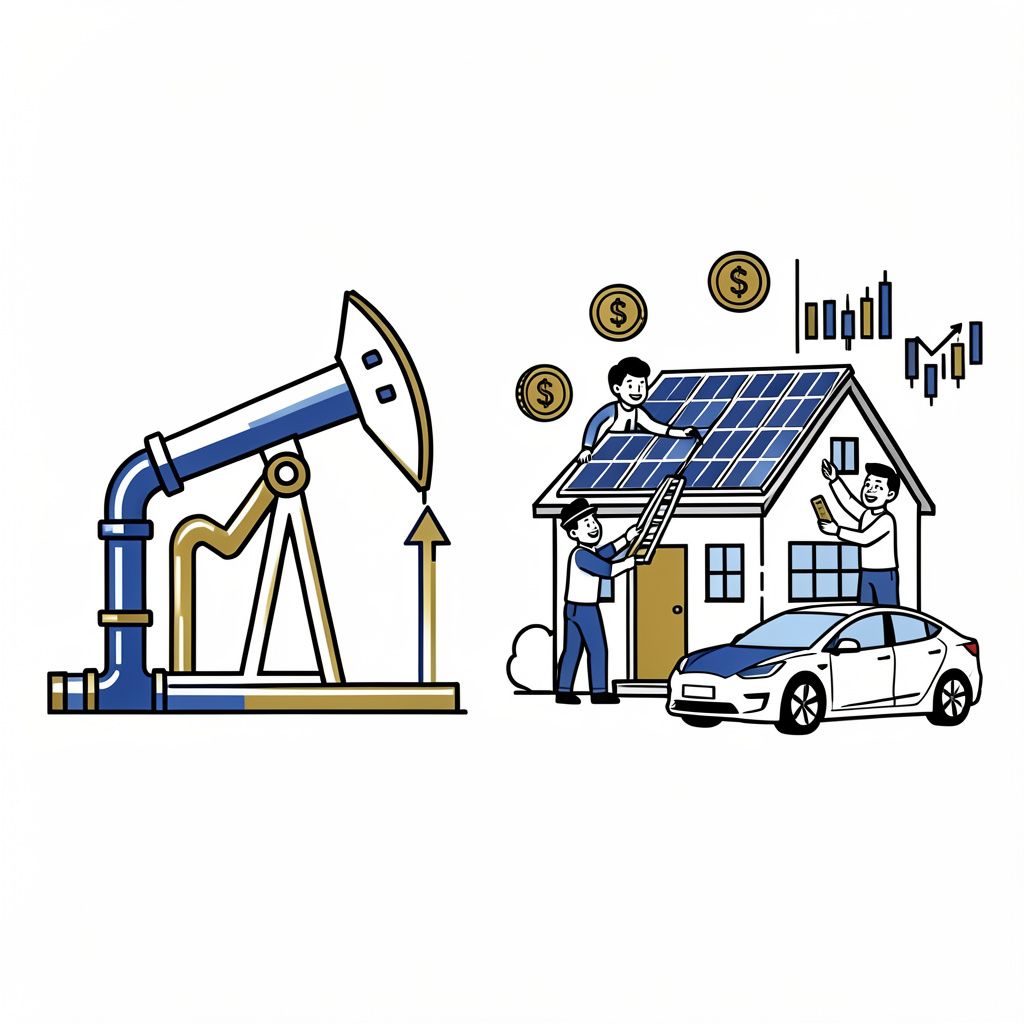
The value of an electric vehicle and home solar is that together they turn energy from something done to you into a set of choices you get to make [3]. When oil spikes, consumers can charge on sun, and when rates jump, they can pull from their battery [3]. This optionality is worth more in a volatile market than in a calm one, and the market is not going to be calm [3]. Corporate leadership is re-evaluating enterprise energy resilience, moving beyond sustainability initiatives to operational security [1].
Strategic Resource Implications
Battery energy storage systems are identified as the world’s fastest-growing power technology by the International Energy Agency, primarily utilizing Lithium-ion chemistries [2]. Global battery energy storage systems deployment reached 112 GW in 2025, a 48% year-over-year increase, with China accounting for 54% of this new capacity [2]. Installations are projected to reach 158 GW in 2026, representing a 41% growth rate [2]. Lithium demand is forecast to rise threefold between 2021 and 2026, with battery energy storage systems emerging as a key driver distinct from automotive demand [2].
Strategic Resource Implications
Lithium market dynamics are highly concentrated, with Australia, Chile, China, and Zimbabwe producing over 80% of global supply [2]. As of 31 May 2026, the lithium spot price gained 52.31% year-to-date and rose 206.58% over the preceding 12 months [2]. Energy storage is no longer optional in today’s world; it is essential to a reliable power system [2]. The convergence of supply shocks and demand growth suggests lithium is now a strategic asset in the race for energy security [2].