Rising Job Stress Forces Nearly Half of Workers to Cancel Vacations
New York, Friday, 21 August 2026.
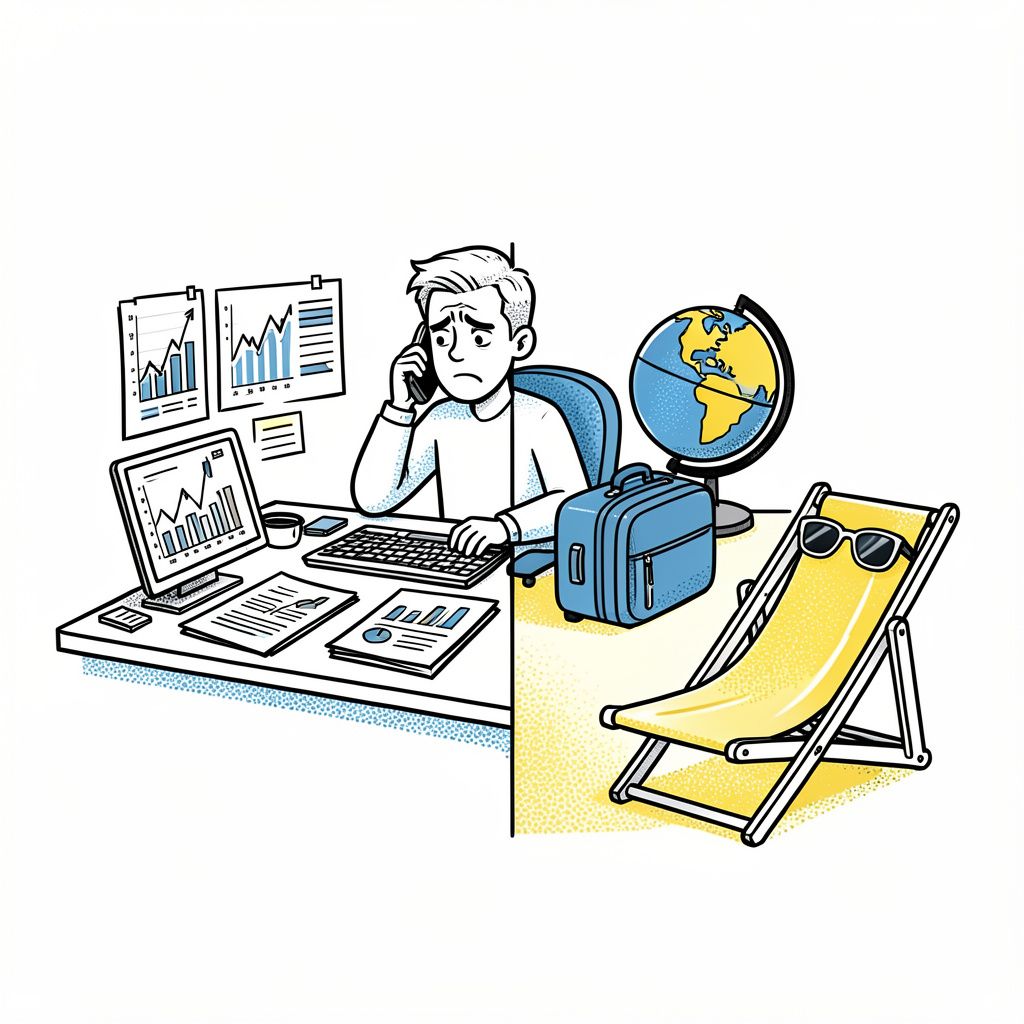
A new August 2026 survey reveals 48% of American workers shortened or canceled vacations due to job stress, while 74% continue working during their time off.
Vacation Disruption and Digital Tethering
A comprehensive survey conducted online by Centiment from July 1, 2026, to July 9, 2026, reveals that 48% of employees canceled or cut a vacation short within the past year due to work demands [1]. The study, which sampled 1,035 working U.S. adults, indicates a significant correlation between workplace culture and leisure time, with results carrying a ±3% margin of error [1]. This trend suggests a systemic issue where labor productivity may be compromised by insufficient rest, as nearly half of the workforce feels compelled to prioritize immediate job responsibilities over planned recovery periods [1]. Furthermore, the boundary between work and leisure continues to blur, with 74% of employees checking work messages while on vacation [1]. Among those who remain connected, 40% check messages at least once per day, indicating a persistent digital tether that prevents full psychological detachment from the workplace [1].
Demographic Stressors and Economic Consequences
Demographic analysis highlights disparities in stress levels, with 48% of parents with children under 18 reporting elevated pre-vacation stress compared to 36% of non-caregivers [1]. This represents a 12 percentage point difference in stress prevalence between caregivers and non-caregivers, underscoring the compounded pressure on working parents [1]. The economic implications are substantial; research from Texas A&M University cited in March 2026 links travel to improved heart health and higher productivity, suggesting that canceled vacations may lead to long-term health costs and reduced output [1]. Broader commentary supports this, with observations that unused vacation days contribute to burnout, and new research indicates 85% of employees skip lunch breaks entirely [2][3]. As 68% of workers express willingness to consider therapy for stress management, the data points to a critical juncture for corporate labor retention and economic stability in the latter half of 2026 [1].