UK Faces Pressure to Raise Import Taxes on Popular Chinese Electric Vehicles
London, Saturday, 3 October 2026.
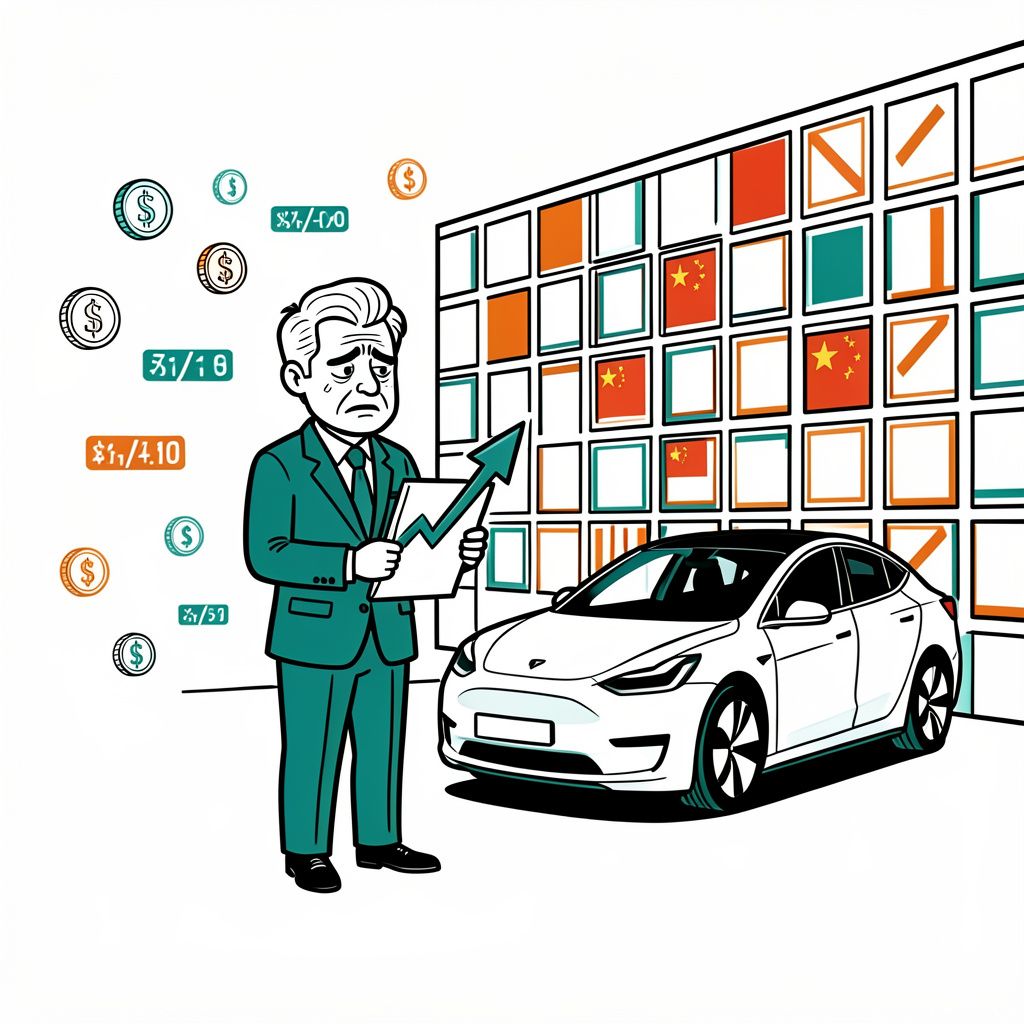
With Chinese brands capturing 23 percent of British sales in September 2026, European leaders are urging London to raise tariffs or face exclusion from vital regional manufacturing programs.
Trade Policy Divergence
As of October 2026, the United Kingdom faces significant economic pressure to align its tariff policies on Chinese electric vehicles with European Union regulations [1]. European Union officials have communicated to Prime Minister Andy Burnham that closer alignment on trade policy towards China is necessary to avoid discriminatory treatment under the bloc’s proposed “Made in Europe” rules [1]. The EU has imposed countervailing duties ranging from 7.8 percent to 35.3 percent on Chinese battery electric vehicles following an anti-subsidy investigation in 2024 [1]. In contrast, Britain has retained a standard tariff regime that is less punitive, currently imposing a standard 10 percent import tariff on Chinese-manufactured vehicles [5]. This divergence has sparked intense debate regarding whether London can leverage its independent trade stance into tangible concession agreements with Beijing [1].
Trade Policy Divergence
The European Union is concerned that lower UK tariffs could allow Chinese vehicles to enter the European market through Britain, effectively bypassing bloc restrictions [2]. EU officials have suggested that joining the EU customs union would provide a broader solution to the differences in trade policy [2]. This issue has become a focal point in online communities and economic forums, where the potential for automakers to revisit production locations is being actively discussed [3]. The timing of this pressure coincides with China’s accelerating car export machine, with electric vehicle exports rising 33 percent year on year to more than 284,000 units in August 2026 alone [1].
Market Performance
Chinese manufacturers have capitalized on the UK’s distinct tariff environment, capturing a significant share of the domestic market. In September 2026, Chinese brands accounted for 23 percent of new car sales in the UK [6]. The Jaecoo 7, manufactured by Chery Automobile Co., regained its spot as the UK’s bestselling new car in September 2026 with 10,813 registrations [7]. This model, often dubbed the “Temu Range Rover” due to its pricing, starts at around 30,000 pounds [6]. Year-to-date registrations for the Jaecoo 7 reached 39,473 units by the end of September 2026, trailing only the Ford Puma [7].
Market Performance
Electric vehicles accounted for 58.4 percent of new UK registrations in September 2026, with battery electric vehicles hitting a 28.3 percent market share [7]. This surge occurs despite the UK government’s Electric Car Grant providing 3,750 pounds for new fully electric passenger cars priced below 37,000 pounds [7]. The Society of Motor Manufacturers and Traders estimates an additional 265,000 battery electric vehicle registrations are required in the fourth quarter of 2026 to meet the annual mandate [7]. Tesla Inc. continues to recover from its slump last year, accounting for 4.5 percent of the UK new-car market in September with almost 16,000 sales [6].
Industrial Implications
The tariff dispute is connected to Britain’s efforts to secure treatment similar to EU companies under the bloc’s proposed “Made in Europe” policies [2]. The EU is proposing the Industrial Accelerator Act, which would classify EVs from manufacturers like Nissan, Range Rover, and Bentley as “Made in Europe,” provided the UK adopts additional import tariffs on Chinese vehicles [5]. In exchange for UK tariff alignment, the EU is reportedly prepared to treat these manufacturers favorably under the proposed act [5]. The UK government maintains that it makes trade decisions independently based on the country’s economic interests [2].
Industrial Implications
Simultaneously, the UK is seeking Chinese investment in its automotive sector, including plans involving Chinese automaker Chery and Nissan’s Sunderland facility [2]. Chery International UK is exploring a partnership to utilize Line 1 at the Nissan plant in Sunderland for domestic vehicle production [5]. Victor Zhang, UK managing director of Jaecoo and Omoda, stated that tariffs come and go but won’t change their investment in the UK [6]. This potential assembly partnership is intended to circumvent international trade barriers and secure local content status [6].
Strategic Outlook
Policy analysts warn that unless London can turn its independent tariff policy into real bargaining power with Beijing, it will lose more by being shut out of an integrated European industrial framework [1]. Social media discussions highlight the uncertainty, with economic commentators noting that if policies diverge, dealers may eventually see changes in model availability or pricing [4]. The UK has not agreed to adopt the EU’s additional Chinese EV tariffs as of October 3, 2026 [2]. The outcome of these negotiations will likely determine the accessibility of Chinese technology and investment in the British automotive sector for the foreseeable future.
Sources
- amp.scmp.com
- ev.com
- www.reddit.com
- www.instagram.com
- www.pistonheads.com
- www.latimes.com
- www.thenationalnews.com