UK Economy Misses 2025 Growth Forecasts as Construction Sector Hits Four-Year Low
London, Thursday, 12 February 2026.
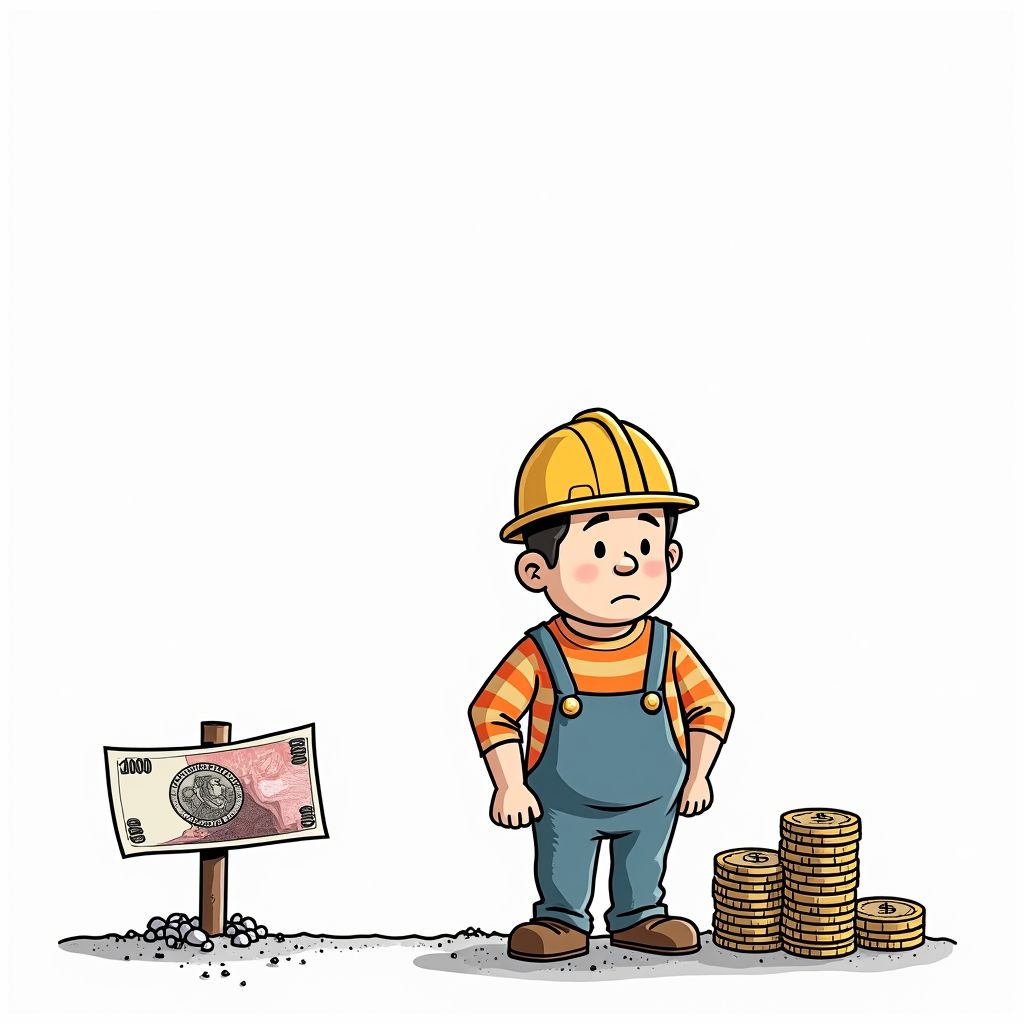
The UK economy expanded by 1.3% in 2025, missing expectations as the fourth quarter stalled. While manufacturing grew, the dominant services sector flatlined and construction plummeted 2.1%—its worst performance in four years—highlighting the fragility of the recovery.
Stagnation Signals Economic Fragility
The Office for National Statistics (ONS) confirmed on Thursday that the United Kingdom’s Gross Domestic Product (GDP) grew by just 0.1% in the final three months of 2025 [1][2]. This sluggish finish brought the annual growth rate for 2025 to 1.3% [2][4]. While this figure represents an improvement over the 1.1% expansion recorded in 2024, it notably missed the 1.5% forecast set by the Office for Budget Responsibility (OBR), falling short by 0.2 percentage points [5]. The data reveals a stark divergence across key sectors: the services industry, which accounts for approximately 80% of the UK’s economic output, showed zero growth in the fourth quarter [2][5]. In contrast, while manufacturing provided a boost, the construction sector plummeted by 2.1%, registering its worst quarterly performance in more than four years [1][4]. Furthermore, business investment contracted by 2.7% in the final quarter, suggesting that uncertainty continues to weigh heavily on corporate expenditure [5].
Political Headwinds and Policy Responses
The release of these figures has intensified the political debate surrounding the Labour government’s economic management. Chancellor Rachel Reeves acknowledged the challenge on Thursday, stating that while the government has “created the conditions for growth,” there is “absolutely” more work to be done [1]. Prime Minister Keir Starmer maintained that the economy is growing, though he conceded the need to further ease cost of living pressures [2]. However, the opposition has seized on the slowdown; Conservative leader Kemi Badenoch declared the country is “stuck in the slow lane,” while the British Chambers of Commerce warned of a “persistent low growth trap” [2]. Compounding the government’s difficulties, leaked messages from March 2025—revealed this week—showed Health Secretary Wes Streeting admitting to Lord Mandelson that the administration had “no growth strategy at all” [6].
Monetary Policy and Market Dynamics
The economic stagnation presents a complex dilemma for the Bank of England, which voted to maintain interest rates at 3.75% during its meeting on February 5, 2026 [1][5]. Despite the sombre GDP data, financial markets have demonstrated resilience; the FTSE 100 index surged to a record high of over 10,500 points on February 12, 2026 [3]. Additionally, household balance sheets appear to be stabilizing despite high borrowing costs. UK Finance reported a 4% decrease in homeowner mortgage arrears in the fourth quarter of 2025, with buy-to-let arrears falling by 9% [3]. Internationally, the UK’s fourth-quarter growth of 0.1% lagged behind its continental peers, with Germany and France recording growth of 0.3% and 0.2% respectively [2].
Outlook for 2026
Looking ahead, the economic trajectory for 2026 appears constrained. The Bank of England has lowered its growth forecast for the year to 0.9% and raised its unemployment rate prediction to 5.3% [1]. Private sector analysis aligns with this cautious outlook; KPMG chief economist Yael Selfin forecasts 1% growth for 2026 [6]. The National Institute of Economic and Social Research (NIESR) predicts a modest 0.3% expansion in the first quarter of 2026 [3]. However, there are tentative signs of consumer optimism, with economist Lord O’Neill noting that retail sales data for January 2026 was “surprisingly stronger than people expected” [2]. Speculation is now mounting that the central bank may cut interest rates as early as March 2026 to stimulate momentum [1][3].