Twin Cities Coalitions Mobilize for Historic Rent Strike Amid Economic Disruption
Minneapolis, Wednesday, 18 February 2026.
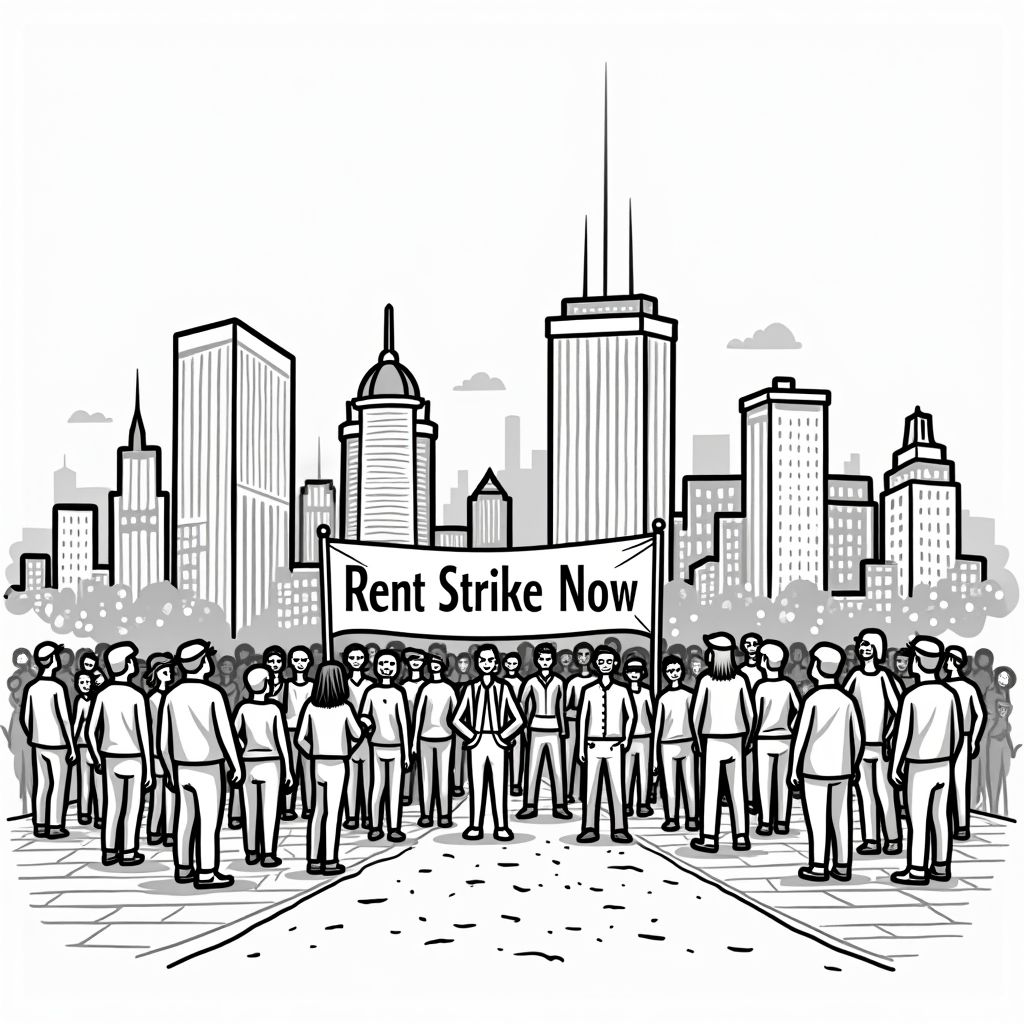
In response to federal operations linked to an estimated $81 million in local business losses, Twin Cities unions are organizing the largest U.S. rent strike in a century to demand immediate economic relief.
Quantifying the Financial Impact
The economic logic underpinning the strike relies on the disparity between rental obligations and the broader financial contraction caused by the federal presence. A survey estimates that Minneapolis businesses suffered an $81 million loss in January attributed to the disruption caused by immigration enforcement [2]. Conversely, the tenant unions project that if 10,000 members withhold payment, it will result in a monthly economic disruption of $15 million [2][3]. This figure sharply contrasts with the estimated $3 million in unpaid rent currently owed monthly by low-income immigrant households, suggesting the strike is designed to leverage economic pressure five times greater than the immediate debt to force a political resolution [3].
Federal Operations vs. Local Commerce
The friction between federal enforcement and local commerce has extended into municipal governance. On February 17, a Minneapolis City Council committee voted 11-2 to advance an investigation into the liquor license renewals for the Canopy by Hilton and Depot Renaissance Hotel, facilities that housed federal agents during the operation [4]. This follows reports of deceptive enforcement tactics, including agents posing as civilians to detain residents, such as the February 12 arrest of Jesus Flores in Brooklyn Park [5]. To mitigate the commercial fallout, the City Council is moving to finalize a small business aid package on February 19, which was recently bolstered by a 40 percent increase from the original proposal to a total of $7 million [4].
Legislative Stalemates and Legal Realities
Despite the escalating economic pressure, the path to a state-sanctioned moratorium remains blocked. Governor Tim Walz’s office confirmed on February 9 that the executive branch lacks the legal authority to unilaterally halt evictions [1]. This leaves participating tenants in a precarious legal position; while Minneapolis requires a 30-day notice for eviction filings, the standard across the rest of Minnesota is only 14 days, and rent strikes currently lack statutory protection [3]. Consequently, the unions are structuring the strike as a series of escalating tests, requiring a mass authorization vote once pledge thresholds are met to ensure collective safety in numbers [3].