Putin Retreats to Bunkers Amid Coup Fears, Raising Global Market Concerns
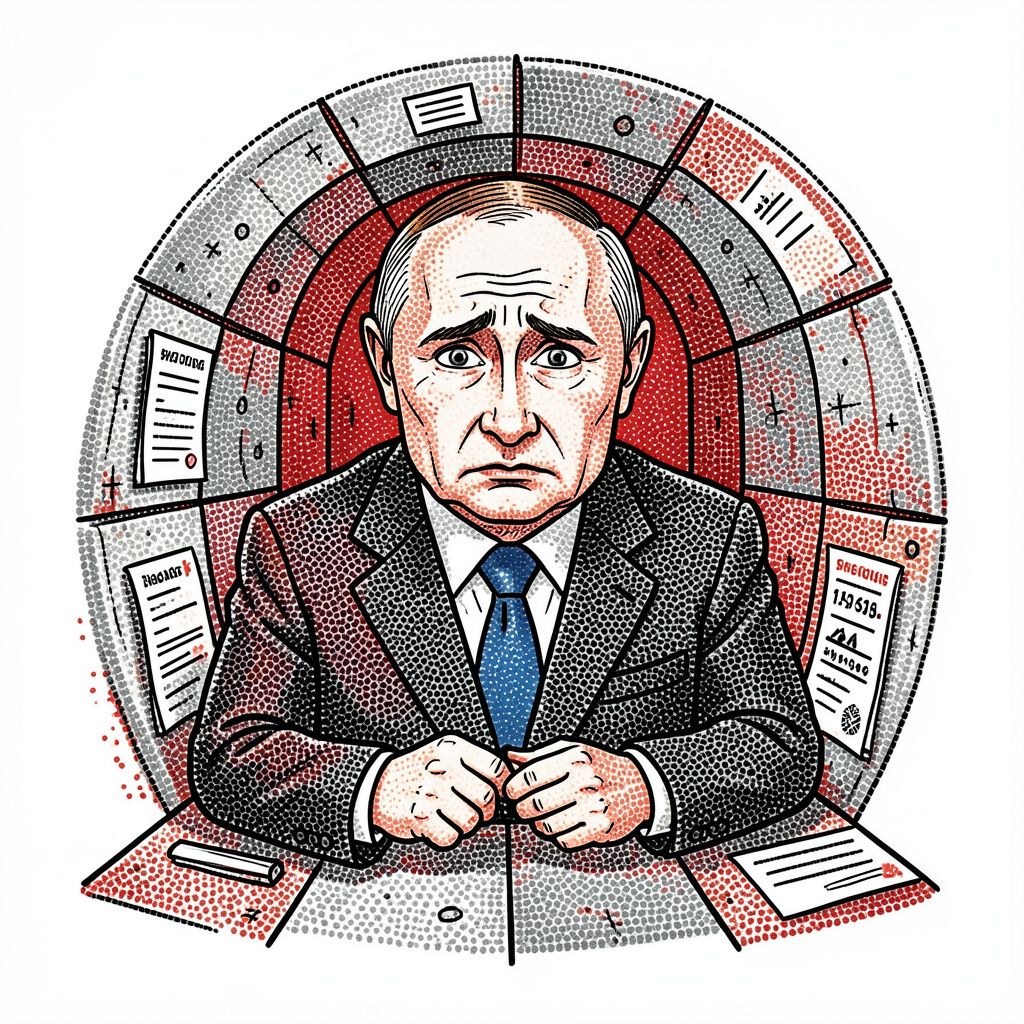
Moscow, Monday, 4 May 2026.
Amid rising assassination and coup fears, President Putin has retreated to fortified bunkers and placed staffers under home surveillance, signaling severe political instability that threatens global energy markets.
Unprecedented Security and Paranoia
Since the invasion of Ukraine in 2022, Russian President Vladimir Putin has increasingly relied on fortified bunkers, often retreating to facilities in Krasnodar for weeks at a time [1][2]. However, European intelligence reports obtained in early May 2026 reveal a dramatic escalation in personal security measures driven by mounting fears of assassination and internal overthrow [1][2]. The Kremlin has ceased the president’s visits to his traditional residences in the Moscow region and Valdai [1][2]. Internally, the paranoia has permeated Putin’s inner circle; close staffers, including cooks, bodyguards, and photographers, are now barred from using public transportation and face strict bans on internet-enabled devices [1][2]. Furthermore, surveillance systems have been installed directly inside the homes of these aides to monitor for any signs of betrayal [1][2].
Fractures in the Military High Command
The catalyst for this severe security overhaul traces back to a brazen attack in the capital late last year [1]. On December 22, 2025, Lieutenant General Fanil Sarvarov was assassinated in Moscow, an event that deeply rattled the Russian military establishment [1][2]. Three days later, Putin convened an emergency meeting with key security personnel where military and intelligence leaders traded intense blame [1][2]. During the session, Chief of the General Staff Valery Gerasimov vehemently criticized Federal Security Service (FSB) Director Alexander Bortnikov for a lack of foresight that left top officers vulnerable, while Bortnikov deflected by citing severe resource constraints [1]. In response, Putin expanded the mandate of the FSO to cover 10 additional senior commanders and demanded immediate strategic solutions [1].
Macroeconomic Ripples of Kremlin Instability
For global financial markets, the extreme fortification of the Russian state signals severe internal fragility that could precipitate sudden macroeconomic shocks [GPT]. Russia remains a cornerstone of the global energy matrix, and any abrupt transition of power or breakdown in military command could severely disrupt oil and natural gas supply chains [GPT]. The domestic strain is exacerbated by catastrophic military attrition, with intelligence estimating Russian losses at 30,000 dead and injured every month [1]. Over a standard fiscal quarter, this translates to an unsustainable 90000 personnel casualties, draining the labor force and straining the national economy [1][GPT]. Acknowledging the heightened threat environment, Kremlin spokesman Dmitry Peskov recently stated that all necessary measures are being taken to minimize danger [1].