US and Iran Agree on Guiding Nuclear Principles in Geneva Amidst Strait of Hormuz Tensions
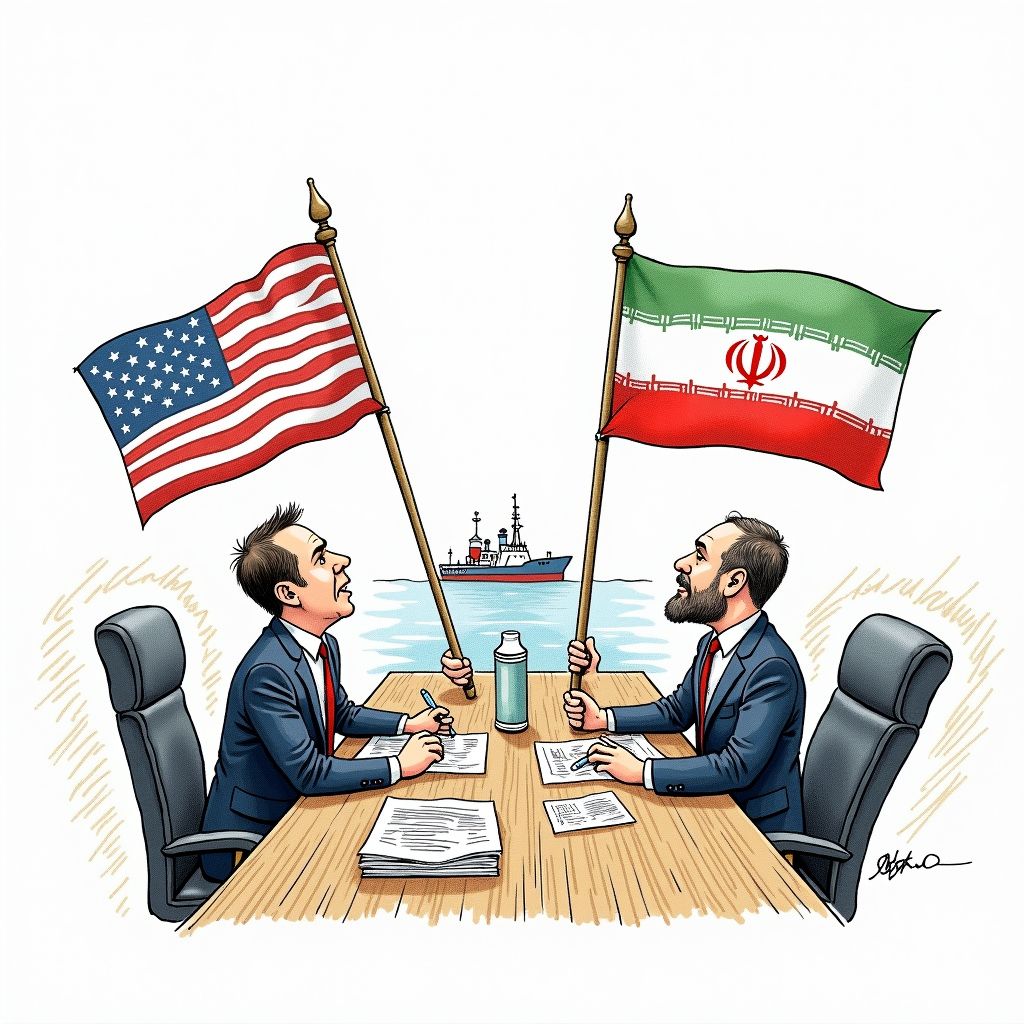
Geneva, Wednesday, 18 February 2026.
While envoys established guiding nuclear principles in Geneva, the geopolitical backdrop intensified as Iran temporarily closed sections of the strategic Strait of Hormuz for military drills.
Geneva Talks Yield Progress
Indirect talks between the U.S. and Iran, facilitated by Oman, took place in Geneva on Tuesday, February 17, 2026, focusing on Tehran’s nuclear program [1][3]. These discussions, led by U.S. special envoy Steve Witkoff and Jared Kushner, resulted in what Iranian Foreign Minister Abbas Araghchi described as ‘good progress’ compared to previous sessions [1][4]. Both sides reached a ‘general understanding on a set of guiding principles’ to move forward and begin drafting a potential agreement [1][6]. However, a U.S. official cautioned that ‘there are still a lot of details to discuss,’ and Iran is expected to present detailed proposals within the next two weeks [3][4].
Military Posturing and Regional Tensions
Adding to the tensions, the Islamic Revolutionary Guard Corps (IRGC) initiated live-fire naval drills in the Strait of Hormuz on Monday, February 16, 2026, leading to a temporary closure of parts of this critical oil transit route [1][3][7]. As previously reported [https://wsnext.com/49fab7d-Strait-of-Hormuz-Nuclear-negotiations/], these drills initially had a muted impact on oil markets, but the underlying geopolitical risk remains a concern [GPT]. The U.S. has also been increasing its military presence in the Middle East, deploying a second aircraft carrier strike group and positioning over 50 fighter jets in the region [4]. Furthermore, Iranian Supreme Leader Ayatollah Ali Khamenei warned on February 17, 2026, that Iran possesses the capability to sink a U.S. warship [1][3].
Stumbling Blocks and Future Steps
Despite the progress in Geneva, significant disagreements persist [1][3]. Iran seeks relief from U.S. sanctions, particularly those restricting oil sales, while insisting on maintaining its sovereignty [1]. The U.S., on the other hand, demands that Iran halt uranium enrichment and is pushing to include discussions about Iran’s missile program, a point of contention for Tehran [1][3]. According to Iranian state television, both sides will now work on draft agreements, exchange texts, and schedule a third round of negotiations [4]. Omani foreign minister Badr Albusaidi, who mediated the talks, noted ‘good progress towards identifying common goals and relevant technical issues’ [3][4].
Geopolitical Implications and Domestic Unrest
The broader geopolitical context includes the U.S.’s aim to curb Iran’s ballistic missile capabilities and its support for regional militias [6]. Simultaneously, Iran faces internal challenges, including ongoing protests and arrests [7]. Mostafa Tajzadeh, for instance, received a new 14-month sentence for propaganda [7]. As the U.S. continues its military buildup in the region, the interplay between diplomatic efforts and military posturing will likely remain a key factor influencing the trajectory of these negotiations [3][7].
Sources
- www.aljazeera.com
- www.youtube.com
- www.bbc.com
- www.axios.com
- www.youtube.com
- www.nytimes.com
- www.theguardian.com