Kazakhstan Faces Oil Export Crisis as Pipeline Vulnerabilities Threaten Growth
Astana, Friday, 7 August 2026.
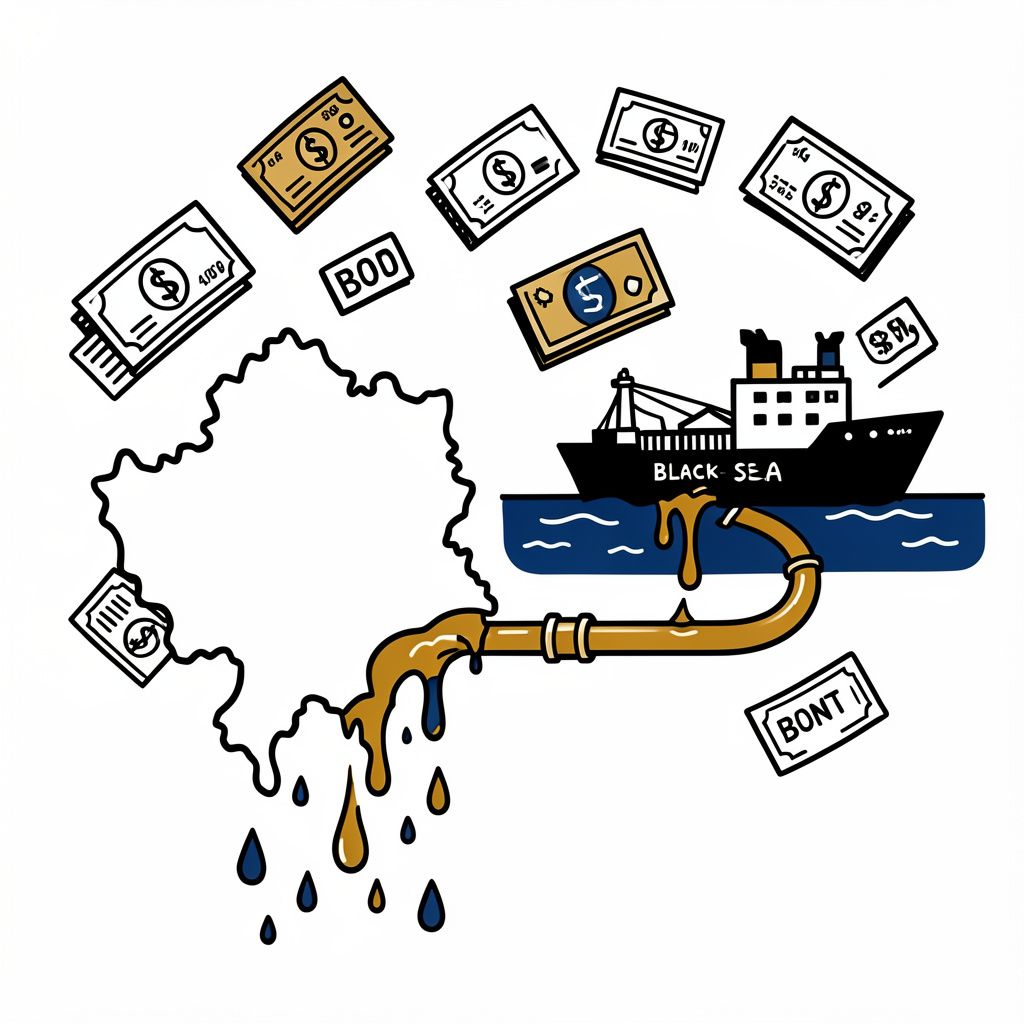
Repeated Black Sea pipeline disruptions cut Kazakhstan’s July 2026 oil production by 14 percent, exposing how vulnerable the landlocked nation remains to external transit routes despite expanding output.
Production Volatility and Export Dependence
In late July 2026, operations at the Caspian Pipeline Consortium (CPC) terminal on Russia’s Black Sea coast were suspended multiple times, causing Kazakhstan’s daily oil and gas condensate production to drop from an average of 2.16 million barrels in June 2026 to approximately 1 million barrels [1]. This disruption represents a significant contraction, calculated as 53.704 percent reduction in daily output during the peak of the crisis [1]. Over 80% of Kazakhstan’s oil exports transit via the CPC system to Novorossiysk, Russia, highlighting the severity of bottlenecks in this corridor [1]. During the shutdown, production at the Chevron-led Tengiz field fell from approximately 925,000 barrels per day to 406,000 barrels per day to prevent storage overflow [1]. In 2025, Kazakhstan exported approximately 78.7 million tonnes of oil, with over 82% transported via the CPC, indicating that expansion at the Tengiz field has intensified reliance on this single export route rather than reducing it [1].
Infrastructure Bottlenecks and Transit Risks
The Caspian Pipeline Consortium has repeatedly suspended operations in early August 2026 because of safety concerns and a lack of tankers following drone attacks [3]. Shipowners have become reluctant to take on CPC voyages because of the threat of drone attacks, and loadings from the pipeline have been disrupted since the middle of last month [3]. Russia’s Foreign Ministry accused Ukraine of attacking oil tankers during loading at the Caspian Pipeline Consortium terminal at Novorossiysk, though Kyiv has not claimed responsibility [3]. Landlocked Kazakhstan relies heavily on Russian ports to export crude by sea, meaning that pipeline and loading disruptions can force production cuts [3]. In July, when attacks on tankers intensified, Kazakhstan’s oil output fell by 14 per cent from June according to trading sources [3]. August-loading CPC Blend cargoes were offered at nearly $4 a barrel below dated Brent this week, compared with a premium to dated Brent just a few weeks ago [3].
Diversification Efforts via Georgia
Following drone attacks that hit the CPC terminal, Kazakhstan is rerouting crude, with 20,000 tons of Tengiz crude headed to Georgia’s Batumi Port in early August 2026 [4]. This volume is bound for tankers across the Black Sea to Türkiye, serving as a real-time test of energy corridor resilience [4]. Tengizchevroil plans to export about 100,000 tonnes of oil by rail to Georgia’s Black Sea port of Batumi in August [3]. Meanwhile, Georgia’s sole oil refinery, located in the Black Sea port of Kulevi and operated by Black Sea Petroleum, is transitioning away from Russian crude oil [2]. The facility received Kazakh crude in early July 2026, with a full switch to Kazakh and Libyan feedstock scheduled for August–September 2026 [2]. The Kulevi refinery, which launched in October 2025, has an annual capacity of 1.2 million tonnes and processed over 650,000 tonnes in the first half of 2026 [2].
Investment Climate and Future Outlook
ExxonMobil Holdings Corp. has conditioned a potential $80 billion joint investment to expand the western Kashagan oil field on the resolution of a $150 billion dispute with the Kazakh government [6]. The proposal involves an equal joint venture with state-owned KazMunayGas National Co. to produce up to 600,000 barrels per day, contingent upon political approval [6]. Broader market context shows oil prices edged lower on Wednesday on revived expectations of a de-escalation in Iran war hostilities that could restore shipping traffic in the Strait of Hormuz [5]. Disruption has spread to the Caspian Pipeline Consortium, the main export route for Kazakh crude oil, which has repeatedly suspended operations this week because of safety concerns [5]. Industrial expert Alona Lebedieva notes that the country is investing in expanding production faster than it is developing independent export routes [1]. The country’s main constraint may not be a shortage of oil, but a shortage of routes that it is able to control [1].