U.S. Proposes $300 Billion Fund for Iran—What’s the Catch?
Washington, Tuesday, 16 June 2026.
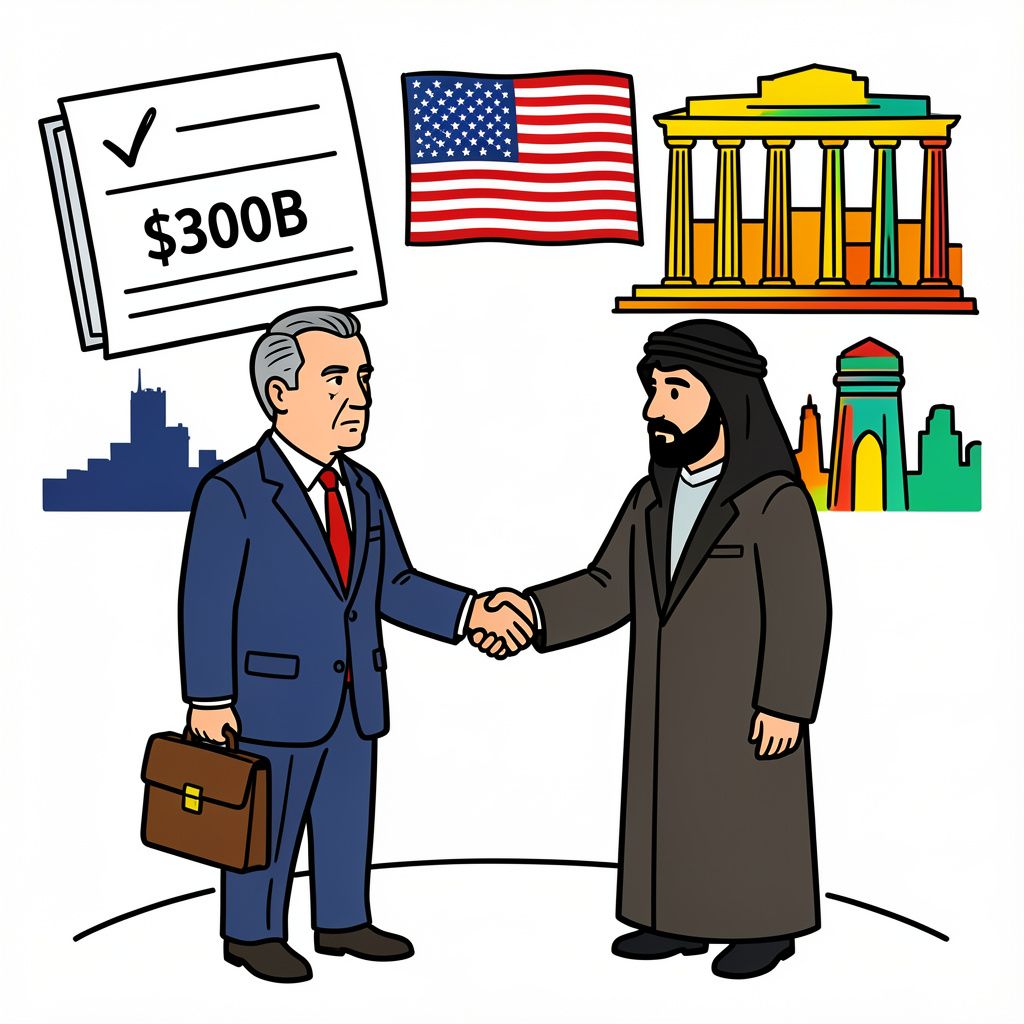
A potential $300 billion U.S.-backed fund to rebuild Iran could reshape Middle East geopolitics—but only if Tehran meets strict conditions. The unprecedented financial package, equal to Iran’s entire annual GDP, hinges on nuclear concessions, sanctions relief, and regional stability. Critics warn of risks, while supporters see it as a path to ending years of conflict. Here’s why this deal could redefine global energy markets and U.S. foreign policy.
The $300 Billion Question: What Does Iran Need to Do?
The proposed $300 billion reconstruction fund for Iran is not a blank check. According to U.S. Vice President JD Vance, Iran must meet several critical conditions to access the funds, which would be disbursed as investments rather than direct cash transfers [1]. The most significant requirement is Iran’s abandonment of its nuclear weapons program. Tehran must surrender its stockpile of enriched uranium, allow routine inspections of its nuclear facilities, and commit to never pursuing or purchasing nuclear weapons [1][4]. These conditions mirror those of the 2015 Joint Comprehensive Plan of Action (JCPOA), though former President Barack Obama has expressed skepticism that the current deal is ‘significantly different’ from its predecessor [1].
Sanctions Relief and Economic Reopening
The U.S. has tied sanctions relief to Iran’s compliance with its obligations under the memorandum of understanding (MOU) signed electronically on Sunday, 14 June 2026 [2][4]. The blockade on Iran’s ports, in place for 63 days as of 14 June 2026, has cost the country approximately $500 million per day, totaling 31500 million in lost revenue [2]. The U.S. has pledged to gradually lift the blockade, contingent on Iran’s adherence to the deal’s terms, which include reopening the Strait of Hormuz to toll-free maritime traffic [2][4]. However, discrepancies remain: while U.S. officials claim the strait will be permanently reopened, Iran has stated that free passage is only guaranteed for a 60-day negotiation period [1].
Regional Stability and Counterterrorism
Beyond nuclear concessions, Iran must demonstrate a commitment to regional stability. The U.S. has stipulated that funds from the $300 billion reconstruction package cannot be used to support terrorism or destabilize neighboring countries [3]. This condition addresses long-standing concerns about Iran’s backing of groups like Hamas and Hezbollah. Senior U.S. officials have emphasized that Iran must ‘behave like a normal country’ to receive full sanctions relief and reintegrate into the global economy [2]. The phased nature of the sanctions relief means Iran could recoup up to $14 billion per month in lost revenue if it meets its obligations [2].