Why the Appalachian Natural Gas Boom Failed to Deliver Local Jobs
Pittsburgh, Friday, 21 August 2026.
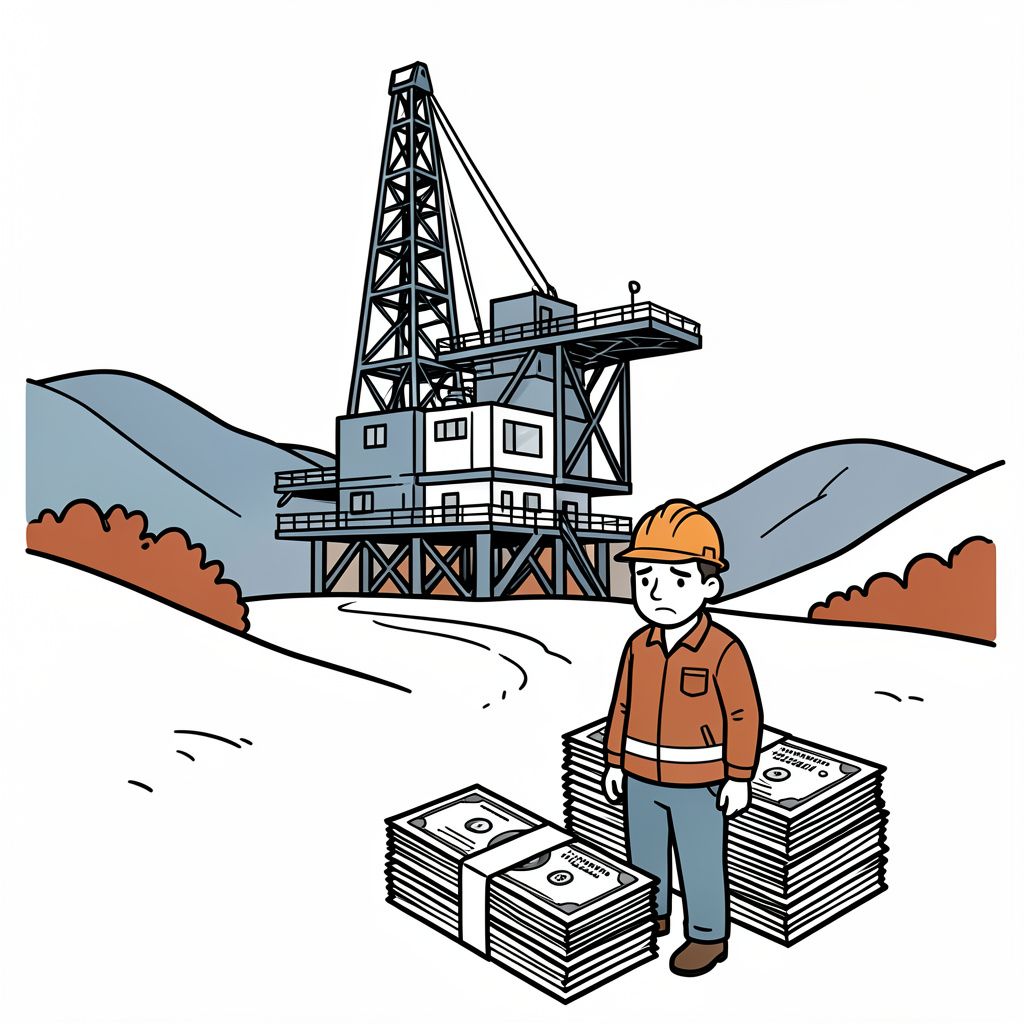
Despite producing one-third of U.S. natural gas, Appalachian shale counties face job stagnation and depopulation due to the energy sector’s highly capital-intensive, low-employment structure.
The Production Paradox in Appalachia
Despite accounting for approximately one-third of total U.S. natural gas output, the Marcellus Shale region is experiencing a disconnect between production volumes and local economic health [1]. A 2026 report from the Ohio River Valley Institute (ORVI) indicates that while the ‘Frackalachia’ tri-state region produces roughly 37 billion cubic feet of gas daily, host communities face stagnant employment rates and persistent depopulation [1]. Visual Capitalist projections confirm that Appalachia is expected to lead all U.S. natural gas-producing regions in 2026, with output reaching 37.0 Bcf/d [4]. This surge in extraction capacity has not translated into broad-based prosperity, as regions of high drilling intensity experienced weaker job growth and lower income growth compared to national averages over the last two decades [1].
The structural nature of the industry limits its ability to stimulate local economies, according to senior researcher Sean O’Leary [1]. Data spanning twenty years to the start of the shale gas fracking boom shows an industry that contributes to gross domestic product but fails to raise wages or stem population losses [1]. Political leaders from both major parties in Pennsylvania have supported the shale gas industry for the past 20 years, framing it as an economic development driver despite evidence suggesting it has failed to deliver promised benefits [1]. The industry’s failure to contribute meaningfully to job and income growth is described as structural rather than cyclical [1].
Employment Decline and Capital Intensity
Employment figures within the Pennsylvania gas sector highlight the severity of the downturn, with the industry currently employing approximately 16,000 people, down from a peak of 30,000 in 2012 [1]. This represents a significant contraction in the labor force, calculated as a -46.667 percent decrease from the 2012 peak [1]. Between 2018 and 2022, the industry shed 10,000 jobs despite rising production, and an additional 3,000 jobs were lost between 2022 and August 20, 2026 [1]. The most gas-reliant counties in Pennsylvania saw only 1% job growth between 2008 and 2025, underscoring the lack of correlation between extraction activity and local hiring [1].
The capital-intensive nature of shale gas extraction further dilutes its economic impact on employment [1]. Pennsylvania’s gas sector generates only one job per USD$1 million of GDP, significantly lower than the broader state economy, which generates six jobs per USD$1 million of GDP [1]. Analysis indicates the Pennsylvania shale gas industry is neither a major employer nor a growing one, and lacks a viable path to becoming a significant job creator [1]. In contrast to the gas sector, Walmart employs 60,000 people and the University of Pittsburgh Medical Center employs 100,000 in the state, dwarfing the energy sector’s contribution [1].
Community Perspectives and Industry Response
Local reactions to the industry’s performance remain divided, with some officials defending the economic benefits received over the last two decades [3]. Matt Henderson, chairman of a local township board of supervisors in Lycoming County, argues that residents have benefited from jobs, good wages, and investment in local communities such as hotels and diners [3]. Henderson points to $148 Million paid in Impact Fees to Lycoming County as evidence of tangible benefits funding parks, trails, and roads [3]. He characterizes the ORVI as an advocacy organization focused on opposing fossil fuel use, funded by multi-billion dollar foundations [3].
Conversely, industry groups like the Marcellus Shale Coalition have been getting out into communities across Pennsylvania to connect with people and local leaders who see the natural gas industry’s impact firsthand [2]. They maintain that Pennsylvania’s natural gas story is equally about production as it is about the people, communities, and opportunities that make up the industry [2]. However, experts note there is more apprehension and less hope for prosperity associated with new industrial projects compared to how residents felt about fracking at the outset [1]. Most residents feel like bystanders, worried that their quality of life and property value will suffer without receiving any benefit or having any say [1].
Future Economic Drivers and Risks
As the natural gas sector stabilizes at lower employment levels, Pennsylvania is currently experiencing rapid growth in data center construction, which experts warn may repeat the economic failures of the shale gas era [1]. Similar to the gas boom, data centers are highly capital-intensive with low labor intensity and lack royalty payments to landowners [1]. These facilities are generating political tension in Pennsylvania due to their massive consumption of energy, land, and water, which is causing electricity costs to soar [1]. Data centers seem to invite skepticism from both Democrats and conservatives, mirroring the eventual fatigue seen with drilling [1].
In summary, Pennsylvania’s shale gas industry is not currently a major employer, it’s not a growing one, nor does it have any apparent route to becoming one [1]. The region continues to produce unprecedented output, yet the economic metrics for host communities remain stagnant relative to national trends [1]. Policymakers and strategists are now evaluating long-term resource investments with heightened scrutiny regarding job creation potential [1]. The timeline for economic recovery in these counties remains uncertain as reliance on capital-intensive extraction persists [1].