Rising Borrowing Costs Push US Mortgage Rates Past Seven Percent
Washington, Thursday, 10 September 2026.
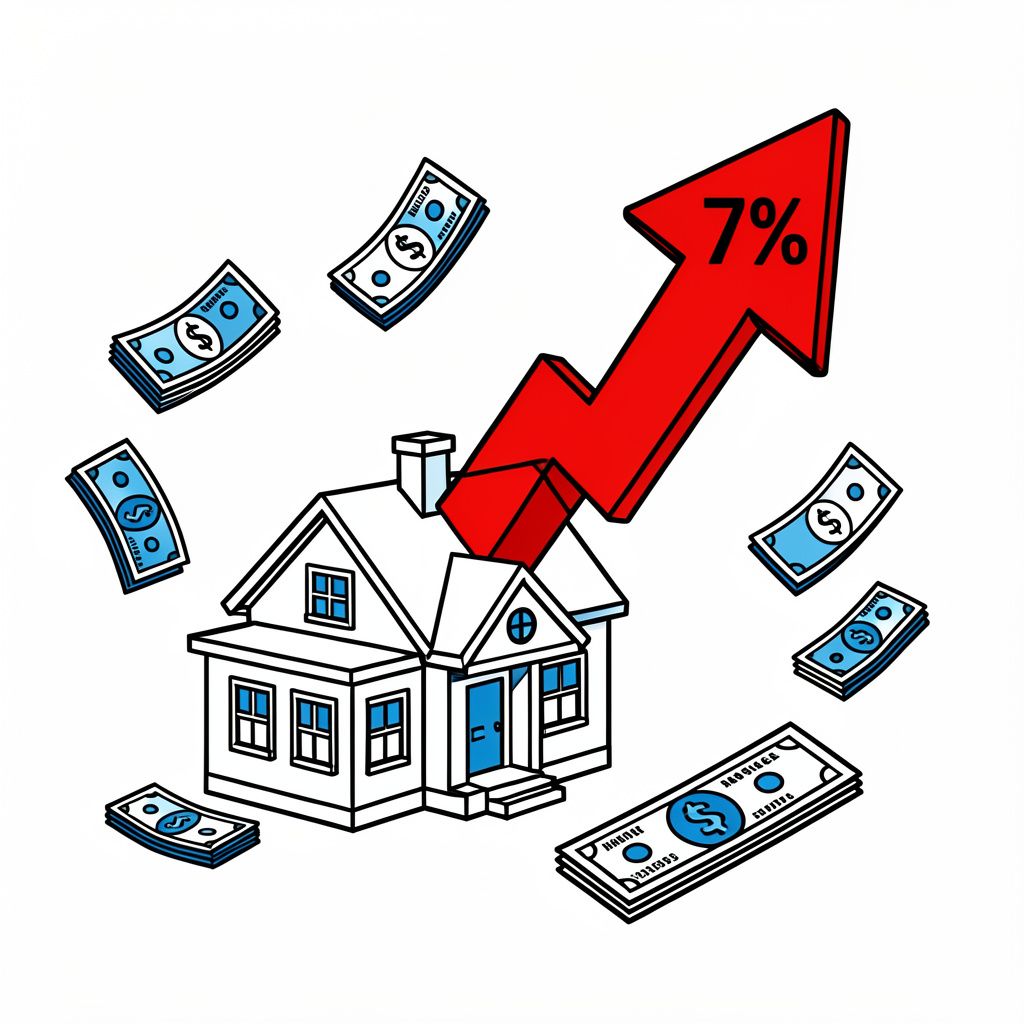
Driven by surging oil prices and geopolitical tensions, 30-year fixed mortgage rates crossed 7% today, deepening severe affordability challenges and driving existing US home sales down further.
Existing Home Sales Contract Amid Price Hikes
Existing US home sales fell 2% in August 2026 to a seasonally adjusted annual rate of 3.98 million units [1]. This marks the third consecutive monthly decline and falls short of the 4 million unit expectation [1]. The median sales price for existing homes rose 1.6% year-over-year in August 2026 to $429,100 [1]. This price point represents an all-time high for the month of August since data tracking began in 1999 [1]. Inventory reached 1.62 million unsold homes at the end of August 2026, a 3.2% increase from July 2026 [1]. August 2026 inventory represents a 4.9-month supply at the current sales pace, the highest level in over 10 years [1].
Understanding Rate Variations Across Lenders
While Freddie Mac’s weekly survey reported an average 30-year fixed mortgage rate of 6.76% as of September 10, 2026, this data lags behind real-time market movements [7]. Mortgage News Daily indicates that the average top-tier 30-year fixed rate reached 7.07% on Thursday, September 10, 2026 [3]. The difference between the daily index and the weekly survey is 0.31 percentage points [2][7]. Zillow Home Loans reported slightly higher figures, listing 30-year fixed mortgage rates at 7.125% as of the same date [4]. The discrepancy arises because Freddie Mac’s survey averages rates over five business days ending the previous day [3]. U.S. News reported the average interest rate on a 30-year fixed purchase mortgage reached 7.002% as of Sept. 10, 2026 [5].
Geopolitical and Economic Drivers
Mortgage rates have been rising since the start of the Iran war in late February 2026 [2]. On September 9, 2026, the U.S. Department of the Treasury announced a buyback program that disappointed market expectations regarding volume [5]. Consequently, bond yields and mortgage rates spiked following the announcement [5]. Oil prices surged higher, reaching $100 per barrel on September 9, 2026, fueling inflation concerns [5]. The 10-year Treasury yield hit 4.92% on Thursday, September 3, 2026, contributing to elevated borrowing costs [1]. July 2026 inflation data showed a 3.4% annual consumer price index [5].
Impact on Homebuyers and Market Outlook
For a buyer purchasing a $430,000 home with a 20% down payment, the monthly payment of principal and interest would be $244 higher today than it was at the end of February [2]. First-time buyers comprised 30% of home purchases in August 2026, remaining below the historical average of approximately 40% [1]. Lawrence Yun, NAR chief economist, noted that home sales and mortgage rates move in the opposite direction [1]. Federal Reserve officials are expected to raise interest rates in the coming months as inflation remains above the 2% target [5]. Mortgage points are optional fees, typically equal to 1% of the total loan amount, used to lower the interest rate [4].
Sources
- www.theguardian.com
- www.cnbc.com
- www.mortgagenewsdaily.com
- www.zillow.com
- money.usnews.com
- www.bankrate.com
- freddiemac.gcs-web.com