China Projects Record 9.5 Billion Trips as Lunar New Year Travel Rush Tests Economic Sentiment
Beijing, Tuesday, 10 February 2026.
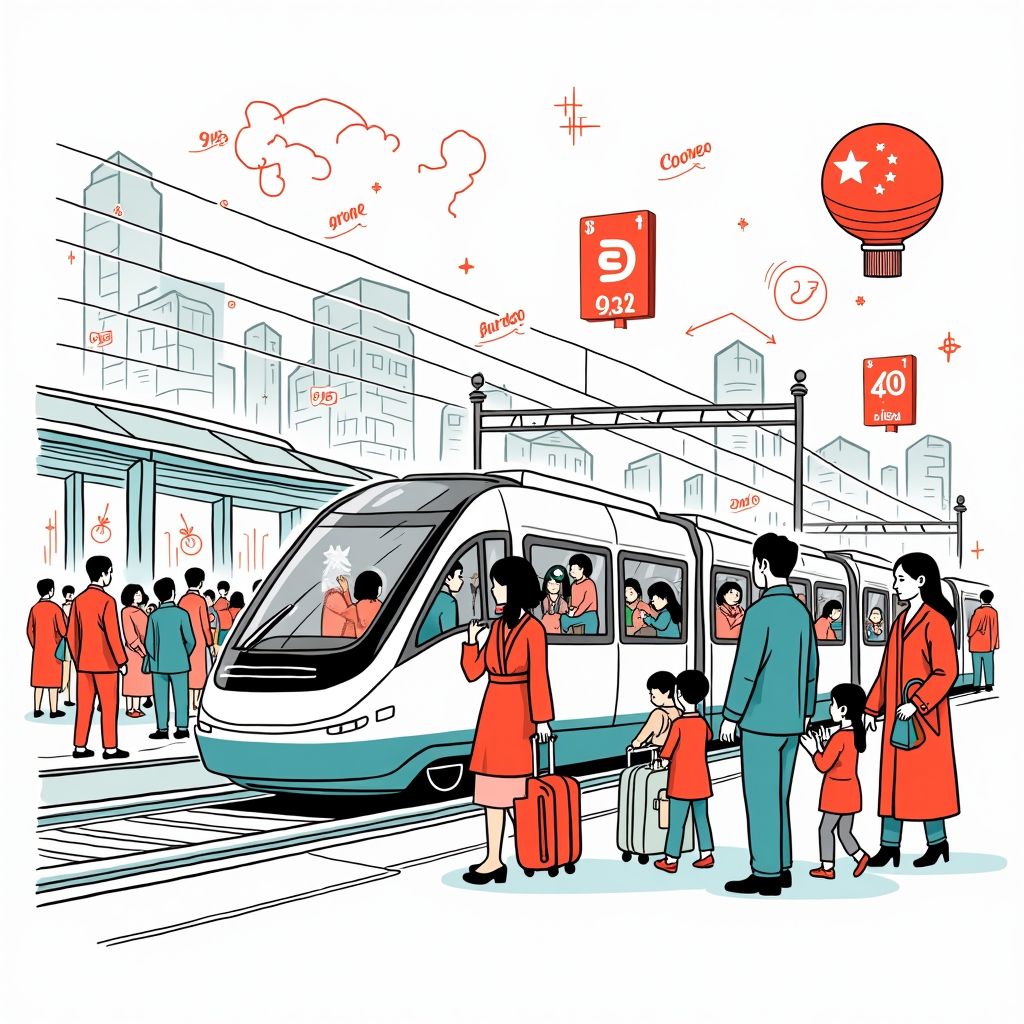
As the 2026 Lunar New Year approaches, China has initiated the world’s largest annual human migration, projecting a staggering 9.5 billion passenger trips over the 40-day period. This record-breaking volume serves as a critical barometer for consumer confidence and service sector recovery within the world’s second-largest economy. In a significant structural shift, self-driving is expected to account for 80% of these journeys, while the railway system has already logged over 1 billion trips. This unprecedented mobility highlights both the resilience of traditional family reunions and the evolving economic landscape facing Chinese households.
Economic Pressures and Strategic Fares
While the aggregate projection of 9.5 billion trips suggests robust mobility, the breakdown of these figures reveals a population navigating economic headwinds. Of the total anticipated journeys, approximately 540 million will be conducted via rail and 95 million by air, leaving the vast majority to road transport [1]. For many workers, the choice of transport has become a calculation of necessity rather than comfort. Liu Zhiquan, a construction worker in Beijing, exemplifies this cost-conscious approach. Despite the availability of high-speed rail that could complete the 1,242-mile journey to Chengdu in nine hours, Liu opted for a conventional train taking over 30 hours to save more than half the fare, noting that earning money has become increasingly difficult in the current economic climate [1].
The Dominance of Road Travel and Aviation Shifts
A distinct structural shift in this year’s travel season is the overwhelming preference for private transport, with self-driving trips expected to constitute 80 percent of the total volume [3]. This reliance on personal vehicles is reflected in navigation data; within the first six days of the travel rush, the BeiDou satellite positioning system supported navigation for a cumulative distance of 28.3 billion kilometers [3]. The surge in road traffic has placed significant pressure on infrastructure, particularly for electric vehicles. At the G72 Quannan Expressway’s Lingli service area in Guangxi, daily peak traffic has reached 33,000 vehicles, with charging stations handling 1,000 sessions per day during high-demand periods [2].
New Consumption Patterns and Regional Hotspots
The traditional narrative of returning home is increasingly blending with leisure travel, fostering a trend of “micro-vacations” centered around transport hubs. Data indicates that cross-city ride-hailing demand has risen by 23 percent, with trips to tourist attractions surging by 75 percent [2]. Families are leveraging the high-speed rail network not just for transit but as a tourism corridor; for example, travelers in Hunan are utilizing the proximity of scenic spots like the Liuye Lake and Wild Zoo, located within 20 minutes of railway stations, to turn family reunions into sightseeing opportunities [2].