Trump Leverages Trade Tariffs on European Allies to Force Greenland Sale
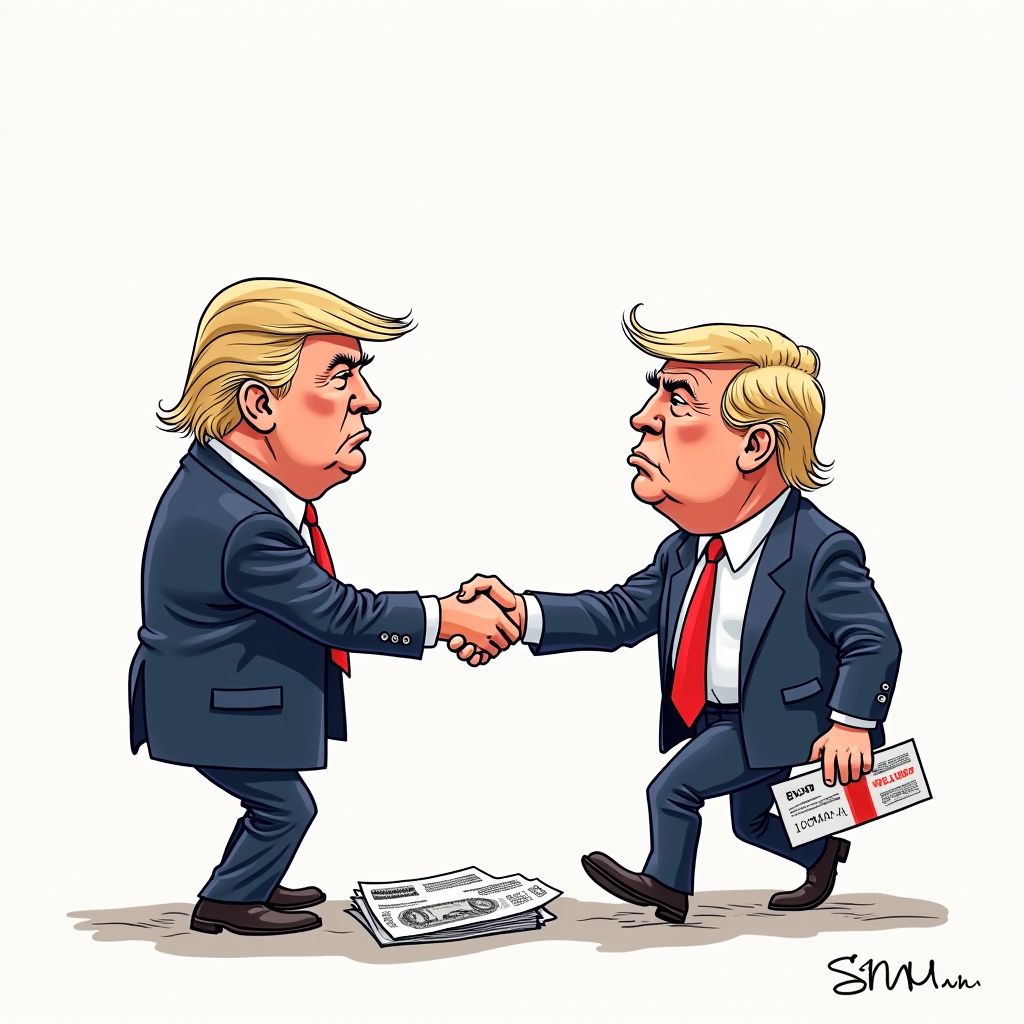
Washington D.C., Saturday, 17 January 2026.
As of January 17, 2026, President Trump has escalated his pursuit of Greenland by announcing a 10 percent tariff on imports from eight European nations, effective February 1. This policy, targeting key allies including the UK, France, and Denmark, explicitly aims to pressure Copenhagen into selling the semi-autonomous territory. The administration has outlined a further increase to 25 percent by June if a “complete and total purchase” is not secured. This maneuver represents a critical pivot in U.S. foreign policy, utilizing economic sanctions—typically reserved for adversaries—against NATO partners to achieve territorial goals. While a bipartisan congressional delegation visits Denmark to mitigate diplomatic fallout, the linkage of trade barriers to sovereignty disputes introduces significant volatility to transatlantic markets and underscores the administration’s view of Greenland as a vital national security asset against Chinese and Russian influence.
Escalation of Economic Pressure
The specific economic measures outlined by President Trump on social media this Saturday, January 17, target a bloc of eight nations: Denmark, Norway, Sweden, France, Germany, the United Kingdom, the Netherlands, and Finland [1]. Effective February 1, 2026, all goods exported from these countries to the United States will face a 10 percent levy [1]. The administration has structured this policy as a coercive escalation; if a deal for the “complete and total purchase” of Greenland is not reached within four months, the tariff rate is scheduled to more than double to 25 percent on June 1 [1][6]. This tiered approach is explicitly designed to force Denmark to the negotiating table by penalizing its closest European allies and trading partners who have supported its sovereignty over the Arctic island [2].
Diplomatic Friction and Market Implications
While the executive branch leverages trade barriers, a bipartisan delegation of U.S. lawmakers is currently in Copenhagen attempting to de-escalate the situation. On Friday, January 16, Senators including Chris Coons and Lisa Murkowski met with Danish and Greenlandic leaders to reassure them of continued American support for the NATO alliance [2][8]. Senator Murkowski publicly pushed back against the acquisition strategy, noting that approximately 75 percent of Americans oppose the idea of purchasing Greenland [8]. Despite these diplomatic efforts, the atmosphere remains tense; on January 17, thousands of protesters gathered for “Hands Off Greenland” rallies across Denmark and in Nuuk, demanding respect for the Danish Realm’s self-determination [6].
Sources
- www.wsj.com
- apnews.com
- apnews.com
- www.cbsnews.com
- www.bbc.com
- www.theguardian.com
- www.cnbc.com
- www.pbs.org