EU Proposes Minimum Price Floors to Replace Tariffs on Chinese EVs
Brussels, Wednesday, 14 January 2026.
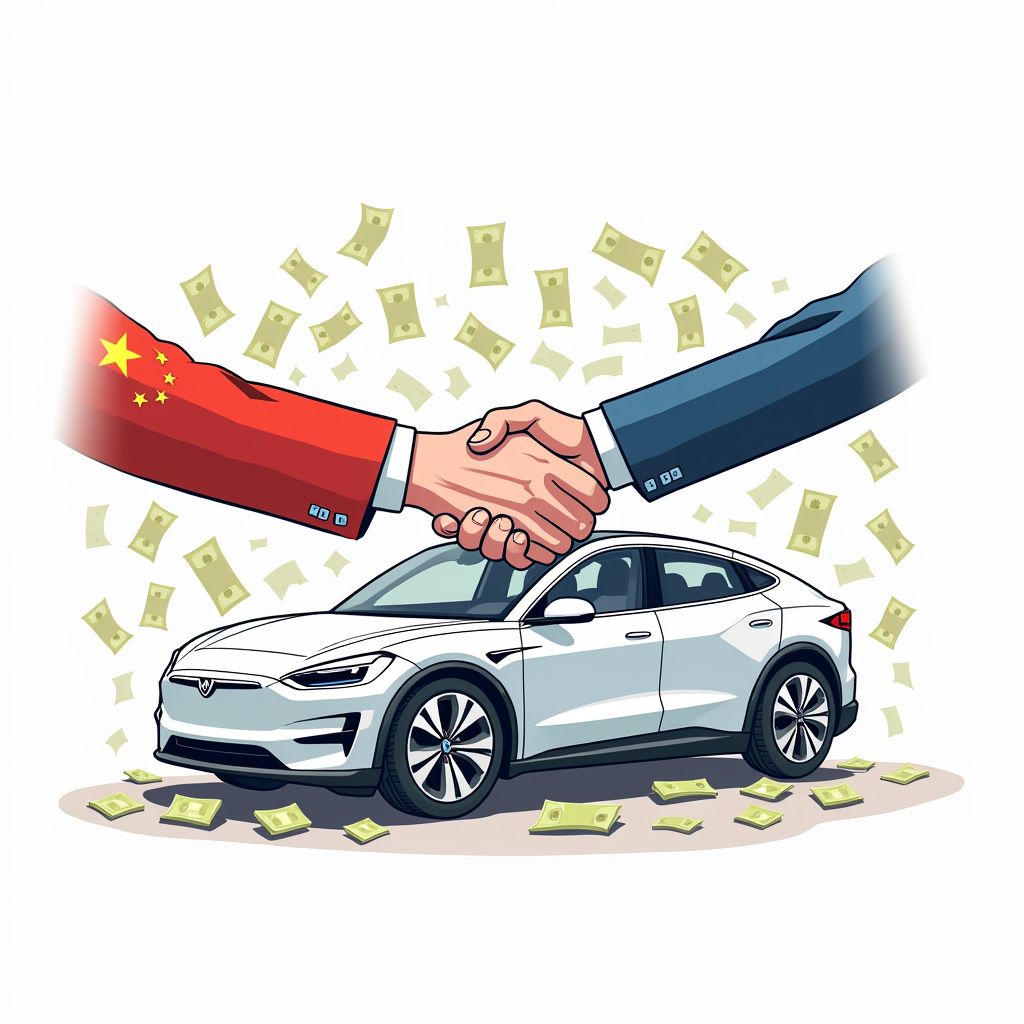
Markets rallied as Brussels introduced a minimum price mechanism allowing Chinese automakers to bypass punitive import duties, signaling a significant de-escalation in the ongoing electric vehicle trade dispute.
A Pragmatic Shift in Trade Relations
On Monday, January 12, the European Commission formally outlined the conditions under which Chinese electric vehicle (EV) manufacturers can substitute import tariffs with minimum price commitments [1]. This regulatory pivot offers a diplomatic off-ramp to the trade dispute that culminated in late 2024 with the imposition of anti-subsidy duties ranging from 7.8% to 35.3% on Chinese-made EVs [7][8]. The new guidance establishes a framework where exporters can agree to sell their vehicles above a specific price floor, a mechanism designed to eliminate the injurious effects of state subsidies while maintaining market access [7]. The China Chamber of Commerce to the EU has characterized this development as a “soft landing” for bilateral trade relations, signaling a move away from the more aggressive trade barriers seen elsewhere, such as the 100% tariffs enacted by the United States [4][8].
Market Reaction and Margin Implications
Financial markets reacted swiftly to the prospect of a managed trade solution. On Tuesday, January 13, shares of major Chinese automakers surged, with BYD jumping 4.8%, Xpeng gaining 5.3%, and SAIC adding 3.6% in trading sessions [2]. The enthusiasm stems from the specific economics of price undertakings versus tariffs. Unlike import duties, which are paid to the government and act as a sunk cost, a minimum price floor allows manufacturers to retain the additional revenue if they raise their prices to meet the threshold. Matthias Schmidt, an analyst at European Automotive, notes that because many manufacturers had already absorbed the cost of tariffs, a shift to minimum prices is more likely to boost their profit margins than drastically alter retail sticker prices [5]. This creates an “artificial bottom” for pricing without necessarily triggering inflationary spikes for consumers [5].
Operational Complexities and Hybrid Growth
The implementation of this system requires intricate compliance measures. The European Commission has stipulated that price undertakings must be practical to monitor and minimize the risk of “cross-compensation,” where a company might offset artificially low prices on one model by inflating prices on another [1]. This concern is particularly relevant as Chinese automakers diversify their exports; in the first three quarters of 2025, volumes of Chinese hybrid imports into the EU were five times higher than in the previous year [1]. To mitigate these risks, the EU indicated it may require commitments on sales volumes or limit the undertakings to specific periods [1]. Furthermore, the Commission will assess investment plans within the bloc, incentivizing companies to localize production rather than solely relying on exports [4].
European Industry Entanglement
The policy shift also reflects the deep integration of European legacy automakers with the Chinese manufacturing ecosystem. The new mechanism is not exclusive to Chinese brands; it also applies to European companies manufacturing in China. For instance, the Commission began reviewing a minimum price and import quota offer from Volkswagen in December 2025 regarding its China-made Cupra Tavascan electric SUV [1][8]. This highlights the nuance of the EU’s strategy: protecting domestic industry from unfair competition while accommodating European firms that rely on Chinese supply chains. Despite the trade friction, the economic stakes remain high, with the value of battery-powered car imports into Europe rising from $1.6 billion in 2020 to $11.5 billion in 2023, representing a roughly 618.75% increase over that period [4].
Sources
- www.reuters.com
- www.bloomberg.com
- www.nytimes.com
- abcnews.go.com
- brusselssignal.eu
- electrek.co
- www.scmp.com
- oilprice.com