Global Ports Deepen Reliance on Chinese Maritime Infrastructure
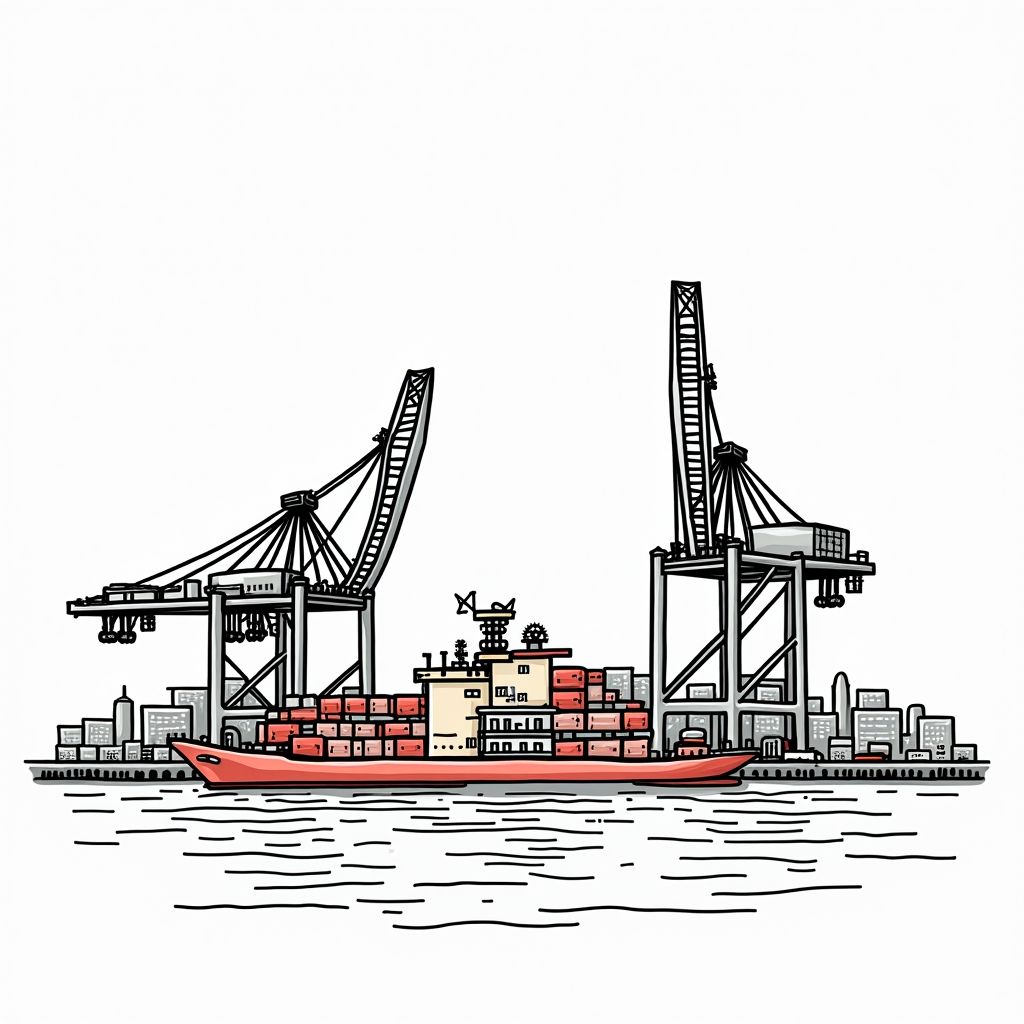
Shanghai, Thursday, 12 March 2026.
Driven by stricter safety standards, international ports are increasingly adopting Chinese maritime equipment. This highlights China’s massive $24 billion infrastructure expansion, fundamentally reshaping global trade and supply chain dynamics.
The Shift to Advanced Loading Technologies
As of March 12, 2026, global port operators are accelerating the replacement of traditional hose-based transfer systems with advanced ship-to-shore marine loading arms [1]. Driven by the need to accommodate mega-capacity tankers and comply with stricter environmental regulations, facilities are increasingly sourcing this critical infrastructure from Chinese manufacturers [1]. Companies such as Lianyungang Hechang Machinery Co., Ltd., which has delivered over 6,000 projects globally since 2009, are at the forefront of this transition [1]. These modern loading arms integrate automatic alignment mechanisms and utilize corrosion-resistant materials, offering the operational stability required for handling hazardous fluids [1]. The global demand for maritime equipment is reflected in a flurry of international procurement activity; for instance, various tenders for marine infrastructure, including parts for rescue boats and dredgers, were issued globally in mid-March 2026 [8].
Redefining the Maritime Map
The proliferation of Chinese marine equipment is part of a much broader, meticulously funded maritime strategy [GPT]. According to a March 2026 report by AidData, Chinese entities have funneled approximately $24 billion in loans and grants into 168 ports across 90 countries between 2000 and 2025 [2][3]. While earlier narratives often framed these investments as “debt traps” targeting developing nations, recent data reveals a different reality [2]. Researchers found that 45% of China’s overseas port investments are actually located in wealthy nations [3].
Domestic Integration and Western Vulnerabilities
China’s international expansion is mirrored by a robust domestic logistics network [GPT]. Along its 18,000-kilometer coastline, China boasts a port with a capacity exceeding 1,000 tons every 50 kilometers on average [4]. To eliminate regional price competition and overlap, the Chinese government has aggressively pursued port group integration, consolidating massive hubs like the Beibu Gulf Port Group and the Shandong Port Group [4]. As of March 11, 2026, nearly all major coastal provinces have achieved this integration, creating highly efficient, centrally managed logistics nodes that support national policies like the Belt and Road Initiative [4].
Sources
- www.einpresswire.com
- maritime-executive.com
- www.whro.org
- www.sciencedirect.com
- wealthinsights.metrobank.com.ph
- jimmysjournal.substack.com
- www.marinelink.com
- www.tendernews.com