Global Power Grids Need Urgent Upgrades to Prevent Energy Crisis
Abu Dhabi, Tuesday, 29 September 2026.
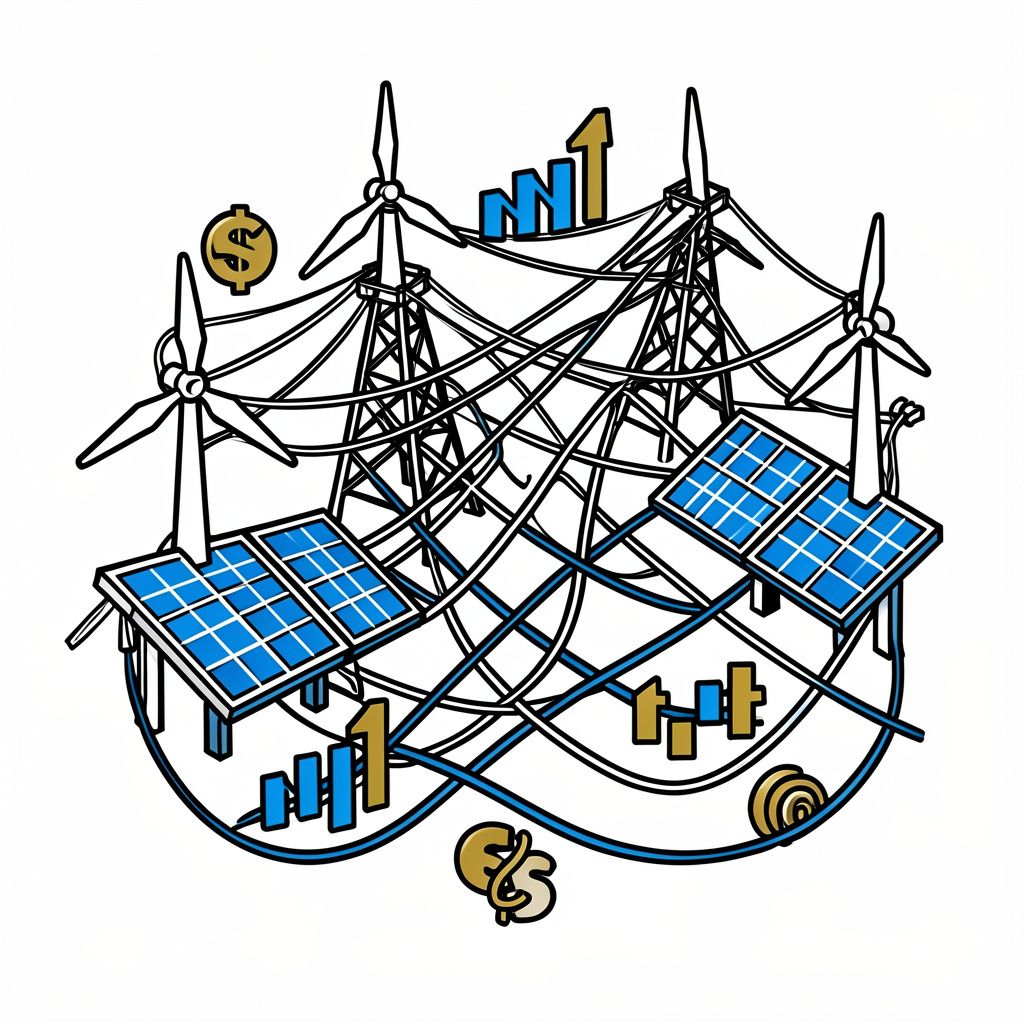
Over 2,500 gigawatts of renewable energy are trapped by outdated transmission lines, leading international leaders to call power grid modernization the world’s most urgent energy security priority.
Grid Bottlenecks Threaten Global Energy Security
On September 29, 2026, Francesco La Camera, Director-General of the International Renewable Energy Agency (IRENA), issued an urgent warning that outdated power networks represent the primary threat to global energy security and decarbonization goals [1]. As electricity demand surges alongside heightened geopolitical instability, billions of dollars in renewable energy investments remain stalled waiting for grid interconnections [1]. For executives, policy leaders, and infrastructure developers, modernizing transmission networks has rapidly evolved from an environmental initiative into a critical economic continuity and national security mandate [1].
The Scale of the Grid Connection Backlog
Global grid constraints have stalled over 2,500 gigawatts of renewable energy projects, a capacity nearly double that of the United States [4]. The International Energy Agency identified 3,000 GW of renewable projects in grid connection queues, with 1,500 GW at an advanced stage—a backlog five times larger than the global solar and wind capacity added in 2022 [1]. In Great Britain alone, the National Energy System Operator reported a grid connection queue exceeding 700 GW, four times the capacity required by 2030, with some shovel-ready projects waiting up to 10 years [1].
Investment Requirements and Economic Impact
Current annual global grid investment stands at approximately $450 billion, but must increase by approximately 50% from this level by 2030 to meet rising demand [4]. The International Energy Agency estimates that more than 80 million kilometers of power grids—equal to the current global total—require addition or refurbishment by 2040 [4]. Failure to modernize could increase global gas imports by over 80 billion cubic metres annually after 2030 compared to climate-aligned scenarios [1]. This represents a critical economic vulnerability as energy markets remain exposed to geopolitical shocks.
Renewables Reshape Energy Security Definition
During the UN General Assembly’s High-Level Week held prior to September 28, 2026, La Camera emphasized that countries have realized centralized energy systems based on fossil fuels do not provide energy security [2]. Approximately 90% of new global power generation capacity added annually is now derived from renewable sources [2]. In China, solar power capacity surpassed coal-fired capacity for the first time in history on July 31, 2026 [3]. Europe’s grid is being rebuilt in real time, with renewables supplying nearly half of the EU’s electricity in 2025, solar overtaking coal, and wind outgenerating gas for the second consecutive year [6].
Global Grids Accelerator Launch
On September 27, 2026, UN Secretary-General António Guterres launched the Global Grids Accelerator to expedite electricity infrastructure investment in Africa and South-East Asia [4]. The initiative aims to aggregate policy expertise, project preparation, finance, and implementation support to convert government priorities into operational projects [4]. The Accelerator will establish operational frameworks and define partner capabilities through the COP31 conference in Antalya and into 2027 [4]. Singapore is scheduled to assume the ASEAN chair in January 2027, with commitments to advance the ASEAN Power Grid and cross-border electricity trade [4].
IRENA’s Strategic Priorities and Targets
IRENA has established a 35 by 35 objective to increase electricity’s share of final energy consumption to 35% by 2035, expected to be a primary topic at COP31 [2]. However, energy efficiency improvement failed for the third consecutive year as of September 28, 2026, necessitating an average annual improvement rate of 5.6% between 2026-2030, exceeding the prior 4% target [1]. La Camera identified three primary priorities: interconnected and flexible grids utilizing AI and digitalization, equitable legal and regulatory environments to address fossil-fuel subsidies, and workforce retraining with multilateral financial institution support for developing nations [1].
Regional Progress and Future Outlook
Five countries generated all their grid electricity from renewables in the latest year on record, with Albania, Nepal, and Ethiopia leading this group [5]. Additionally, 64 countries achieved at least half their grid electricity from renewables according to Stanford University data [5]. La Camera stated that the direction of travel is no longer in question, with the real question being the speed and scale of implementation [3]. As Guterres noted, renewables are booming but the grids that carry clean power are not keeping pace, making grid infrastructure the arteries of the energy transition [4].
Sources
- www.ibtimes.co.uk
- www.developmentaid.org
- europeansting.com
- thecooperator.news
- www.instagram.com
- www.instagram.com