Justice Department Blocks Civil Rights Charges Against Immigration Agent
Minneapolis, Thursday, 3 September 2026.
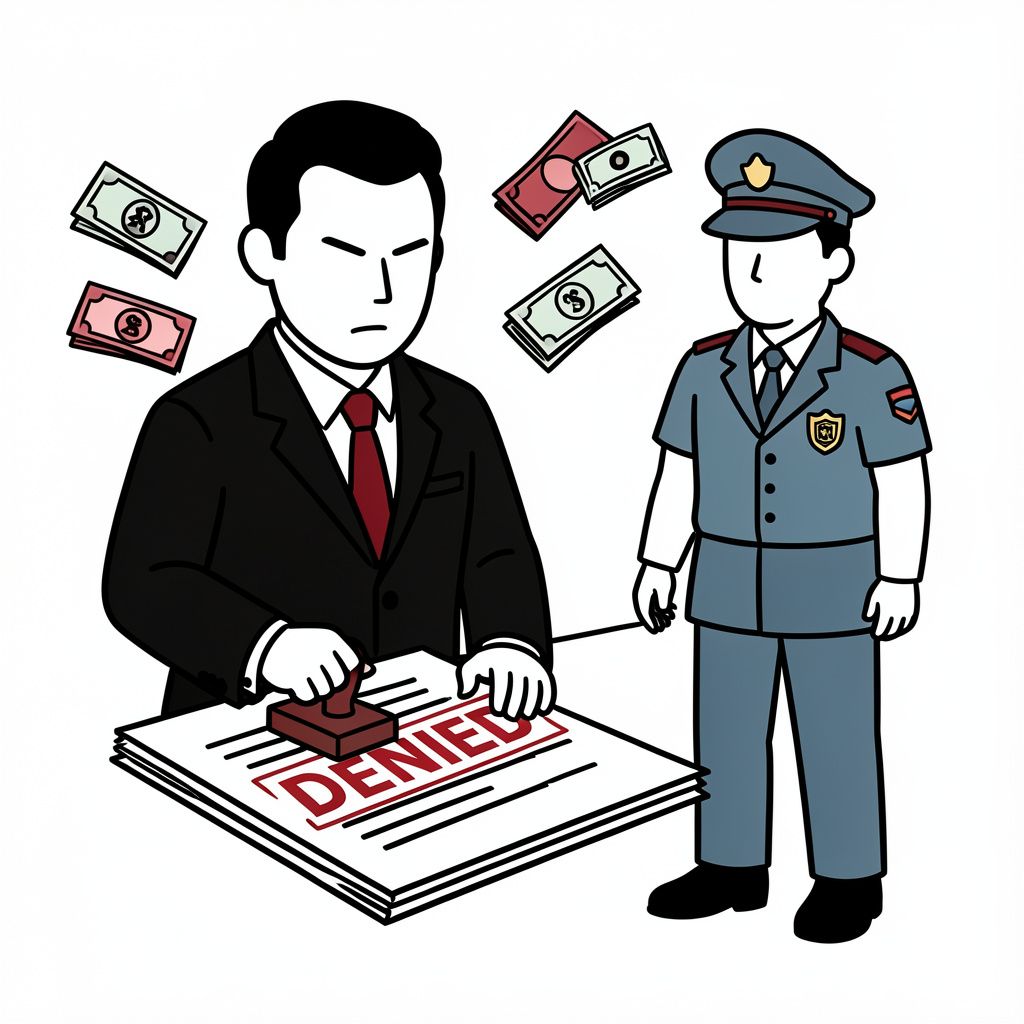
Top Justice Department officials blocked federal civil rights charges against an immigration agent for a Minneapolis shooting, overruling prosecutors despite video evidence contradicting the officer’s initial self-defense claims.
DOJ Blocks Civil Rights Charges
Top Justice Department officials under the Trump administration have blocked federal civil rights charges against an Immigration and Customs Enforcement (ICE) agent involved in a Minneapolis shooting, overriding prosecutorial recommendations [1][7]. On Tuesday, 1 September 2026, Assistant U.S. Attorney Matthew Evans informed victim lawyers that DOJ leadership in Washington, D.C. mandated the agent be charged only with False Statements rather than deprivation of rights under color of law [1]. This decision comes despite Evans arguing that the evidence warranted charges similar to those brought in high-profile police misconduct cases [1].
DOJ Blocks Civil Rights Charges
Assistant U.S. Attorney Matthew Evans stated he objected to the decision in the strongest possible terms, noting that his efforts to pursue justice were insufficient against the directive from Main Justice [1]. An unnamed DOJ official responded that charging decisions are collaborative and adhere to the facts and law of the specific case [1]. The revelation highlights ongoing debates surrounding law enforcement accountability and executive oversight within federal agencies during the current administration [1][7].
Disputed Evidence and Incident Timeline
The incident occurred on 14 January 2026, when ICE agent Christian Castro allegedly shot Venezuelan immigrant Julio Cesar Sosa-Celis in the leg during Operation Metro Surge in Minneapolis [1][5]. State charging documents allege Castro fired into a home knowing it was occupied by several people, including two children [1]. Initially, the Department of Homeland Security claimed self-defense, alleging agents were beaten with a shovel or broomstick, but federal prosecutors dropped assault charges against Sosa-Celis and his roommate the following month [1][2].
Disputed Evidence and Incident Timeline
Video evidence later contradicted the agents’ sworn testimony, revealing the assault claims were false [1][2]. Todd Lyons, then-acting ICE director, acknowledged that video evidence showed the sworn testimony of the two agents appeared to be false [1]. Despite this, federal prosecutors have declined to charge Castro for the Minneapolis shooting itself, though the Minnesota U.S. attorney’s office is actively investigating him for potential charges of lying under oath [2].
Texas Refuses Extradition Request
Following the shooting, ICE ordered Castro to return to his permanent posting in the Rio Grande Valley, Texas, where he was held for 90 days following an extradition request from Minnesota [3][4]. Texas Governor Greg Abbott refused to sign the extradition warrant, initiating an investigation to determine if Castro meets the legal definition of a fugitive [4]. On 26 August 2026, a federal judge ruled that the court cannot compel Governor Abbott to act on the warrant, and Castro was released from a south Texas jail on 27 August 2026 after the 90-day limit expired [2][3].
Texas Refuses Extradition Request
Hennepin County Attorney Mary Moriarty expressed concern that Castro might flee to Mexico, explicitly comparing the DOJ’s refusal to charge the ICE agent to their prior non-cooperation in the Renee Good shooting case [1]. Moriarty stated that if Castro disappears into Mexico, it will be the fault of Governor Abbott [4]. Minnesota Attorney General Keith Ellison affirmed that state officials will continue pursuing justice, guaranteeing that Castro will face justice in Minnesota though the timeline remains uncertain [2].
Ongoing Legal and Political Fallout
As of 3 September 2026, Christian Castro remains suspended from ICE without pay while state-level assault charges filed in May 2026 remain pending [2][3]. Robin Wolpert, attorney for Sosa-Celis, stated that her client put his trust in federal prosecutors who promised to pursue justice, and the decision is devastating [2]. The situation underscores the strain between state and federal authorities, with legal scholars noting that such delays could enable other states to similarly delay extradition requests [3][4].
Ongoing Legal and Political Fallout
The case involves key political figures including Texas Governor Greg Abbott and Minnesota Governor Tim Walz, highlighting a conflict between Republican and Democratic leadership on enforcement [3][4]. While federal charges for the shooting have been quashed, the state-level proceedings continue to face hurdles regarding jurisdiction and cooperation [4]. Observers note that tens of thousands of extraditions are carried out each year without incident, making this standoff an anomaly driven by political views [3].
Sources
- www.propublica.org
- sahanjournal.com
- www.theatlantic.com
- www.startribune.com
- www.linkedin.com
- www.facebook.com
- www.facebook.com