World Inequality Lab Outlines Blueprint for €5,000 Monthly Global Incomes and Climate Stability
Paris, Thursday, 4 June 2026.
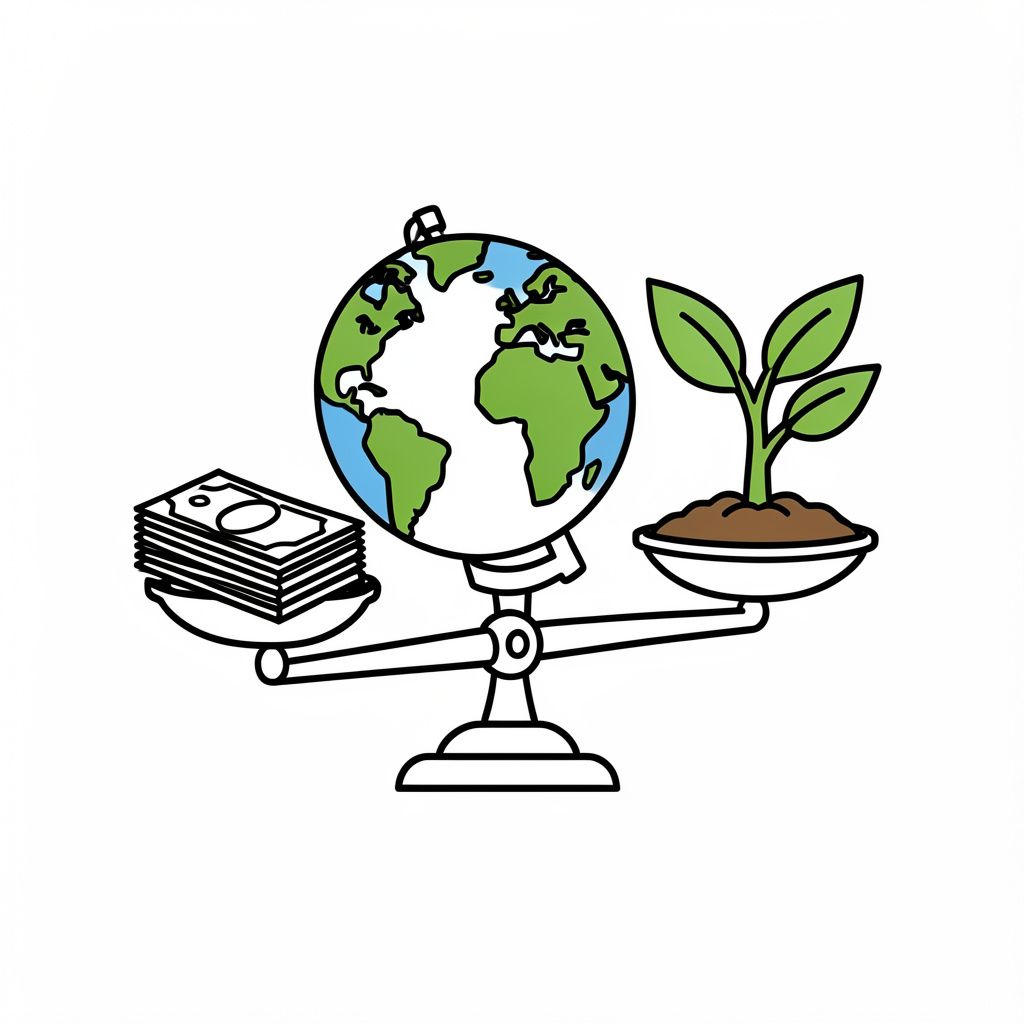
The newly released Global Justice Report outlines a transformative economic framework to achieve €5,000 average monthly incomes worldwide by 2100 while keeping global warming strictly below 1.8°C.
A Three-Pillared Framework for the 21st Century
Published today, June 4, 2026, the “Global Justice Report” is the culmination of two years of rigorous economic research conducted by 45 researchers affiliated with the Paris-based World Inequality Lab [3][4]. The macroeconomic framework rests on three foundational pillars designed to guide the global economy through a transition period from 2026 to 2100: rapid energy system decarbonization, a societal shift toward “sufficiency” to reduce material footprints, and a drastic compression of both domestic and global wealth inequalities [2][3]. By mathematically linking the survival of planetary habitability with the eradication of extreme wealth concentration, the researchers argue that reducing global inequality is an absolute prerequisite for maintaining deep decarbonization [3].
Funding the Transition and Global Governance
To finance this unprecedented economic overhaul, the report proposes the creation of a “Global Justice Fund” (GJF) [2]. Between 2026 and 2060, this central institution would oversee annual expenditures averaging 10.3% of global Gross Domestic Product (GDP)—the standard measure of the value added created through the production of goods and services [GPT] [2]. Revenue generation would rely heavily on progressive taxation, specifically targeting the top 1% of the global population with income taxes of up to 90%, alongside global wealth taxes reaching up to 20% on billionaires [2]. This aggressive redistribution aims to slash the billionaire class’s share of global wealth from 6.4% down to a mere 0.05% by 2100, while simultaneously boosting the bottom 50%’s wealth share from 2% to 30% [2]. This calculation reveals a staggering targeted increase in the bottom half’s wealth share of 1400 percent over the next eight decades [2].
Rethinking Human Development and Well-being
Beyond wealth redistribution, the report advocates for a massive reallocation of global labor and resources toward human development. As of June 2026, total global spending on education and health accounts for just 13% of world GDP, characterized by stark regional disparities [2]. For instance, per capita education spending currently sits at a mere €210 in Sub-Saharan Africa compared to €4,140 in North America and Oceania [2]. By 2100, the framework projects raising global health and education spending to 38% of world GDP [2]. This would increase the share of global working hours dedicated to these critical sectors from 11% to 43%, converging per capita spending to €14,400 for health and €8,400 for education worldwide [2].
Methodological Rigor and Future Outlook
The feasibility of these projections is anchored in the World Inequality Lab’s robust methodological framework, which integrates national accounts, household surveys, and fiscal data to correct systematic underestimations of top wealth that are common in OECD and World Bank metrics [1]. Guided by the 2020 Distributional National Accounts guidelines, the researchers utilize historical data to prove their models; for example, they highlight the Nordic countries’ successful compression of their P99/P10 income ratios from 32 in 1900 down to 3.9 in 1990 to demonstrate that drastic inequality reduction does not necessitate sacrificing economic productivity [1][2].