How One Breakthrough Could Slash U.S. Power Blackouts by 80%
Tokyo, Monday, 22 June 2026.
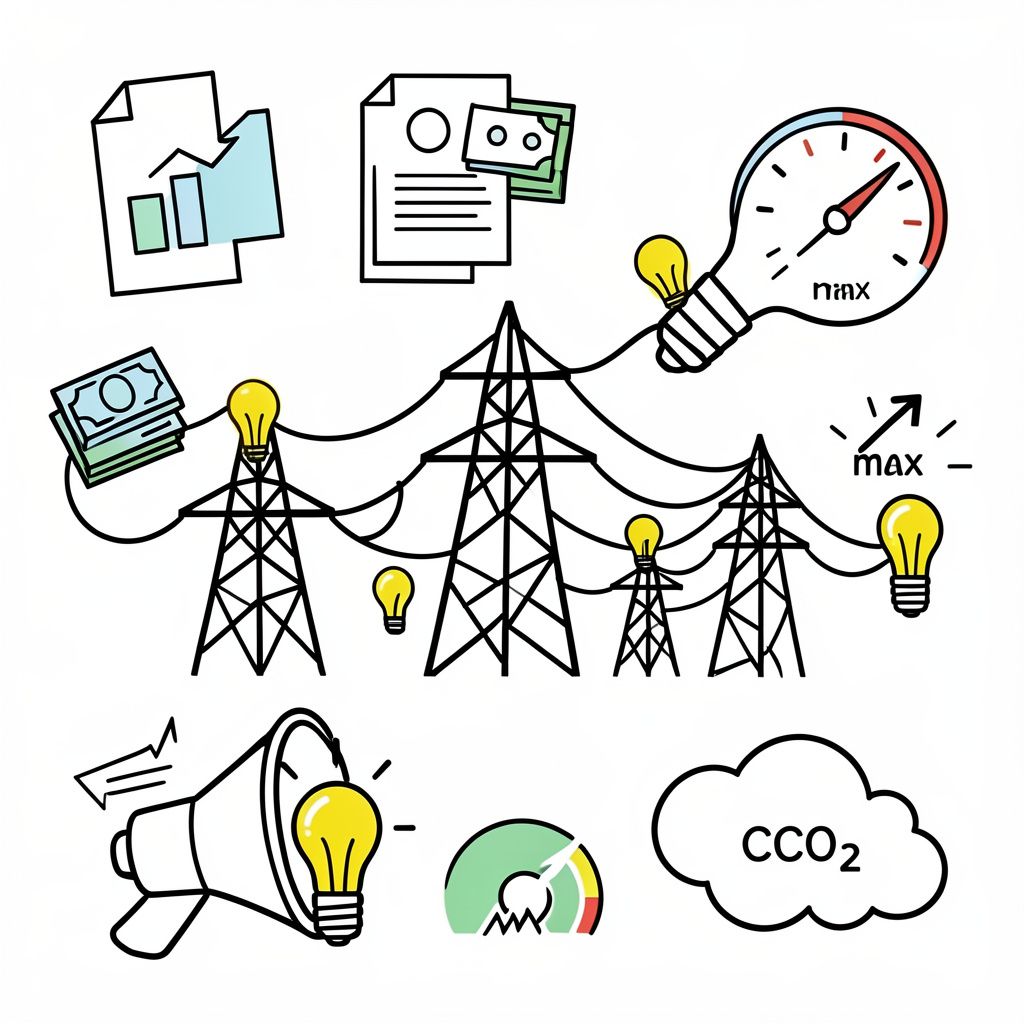
A groundbreaking partnership between Nitride Global and OmniPower aims to modernize America’s power grid using ultra-wide bandgap semiconductors—potentially cutting blackouts from 800 hours to near zero by 2030. This technology could unlock 62 TWh in annual energy savings, enough to power 5 million homes, while avoiding 32 million tons of CO₂ emissions. The key? Aluminum Nitride, a material so efficient it could quadruple power transmission capacity without new infrastructure. With the U.S. lagging behind China and the EU in grid modernization, this collaboration might be the game-changer needed to meet surging electricity demand from AI, EVs, and manufacturing.
The Grid Crisis: America’s 800-Hour Blackout Threat
The United States faces an escalating power grid crisis that could leave Americans in the dark for up to 800 hours annually by 2030, according to projections from the U.S. Department of Energy [1]. This alarming figure represents a 400% increase from current outage levels, driven by surging electricity demand from artificial intelligence data centers, electric vehicles (EVs), and advanced manufacturing [1]. In 2026 alone, U.S. electricity consumption reached 4,239 billion kilowatt-hours (kWh), a record high that existing grid infrastructure struggles to accommodate [1]. The situation is particularly dire in regions like California and Texas, where renewable energy integration has created new stability challenges [GPT].
The HVDC Solution: Why America Lags Behind
High Voltage Direct Current (HVDC) technology offers a proven solution to grid instability, yet the U.S. has fallen significantly behind global competitors in its adoption. While China operates 60 HVDC transmission lines and the European Union maintains 30, the U.S. has just five such systems in operation [1]. This disparity stems from both regulatory hurdles and technological limitations in existing semiconductor materials [1]. HVDC systems are particularly effective for long-distance power transmission, suffering only 3-5% energy loss over 1,000 kilometers compared to 6-10% for traditional alternating current (AC) systems [GPT]. The technology’s ability to connect asynchronous grids and integrate renewable energy sources makes it essential for modern power infrastructure [1].
The Aluminum Nitride Breakthrough: A Materials Revolution
Nitride Global Incorporated (NGI), based in Wichita, Kansas, has developed a revolutionary semiconductor material that could transform HVDC technology: Aluminum Nitride (AlN) [1]. This ultra-wide bandgap (UWBG) semiconductor offers unprecedented performance characteristics, including 50% lower thermal resistance and the ability to handle four times the current voltage of conventional silicon-based devices [1]. The company’s proprietary Aluminum Oxynitride (AlON) packaging technology further enhances these capabilities, reducing the number of semiconductor dies required per power module by half [1]. Oak Ridge National Laboratory projects that advanced wide bandgap semiconductors like AlN could reduce data center power consumption by more than 17% [1].
The Partnership: Combining Expertise for Grid Modernization
The Memorandum of Understanding (MOU) signed between Nitride Global and OmniPower on 22 June 2026 represents a strategic convergence of complementary technologies and expertise [1]. Nitride Global brings its leadership in AlN and AlON materials, while OmniPower contributes its Grid-to-Chip (G2C) Partnership model that unites government agencies, utilities, data centers, and private capital [1]. This collaboration targets the development of 20 kV-class AlN/AlON HVDC power cells, which would enable a 90% reduction in submodules per converter arm compared to current systems [1]. The partnership is backed by Infrastructure Masons, an organization representing over 6,000 members and $1.5 trillion in infrastructure assets [1].
The Potential Impact: 62 TWh and 32 Million Tons of CO₂
The energy savings potential of this technology is staggering. The partnership projects annual savings of 62 terawatt-hours (TWh) of electricity, equivalent to powering 5 million U.S. homes for an entire year [1]. This represents approximately 1.5% of the nation’s total electricity consumption in 2026 [1.463]. The environmental benefits are equally significant, with an estimated 32 million tons of carbon dioxide (CO₂) emissions avoided annually [1]. To put this in perspective, that’s equivalent to removing 7 million gasoline-powered vehicles from the road each year [GPT]. The efficiency gains stem from AlN’s 65% performance improvement over other semiconductor materials in power conversion applications [1].
The Economic Equation: Cost Savings and Infrastructure Preservation
Beyond energy savings, the technology promises substantial economic benefits. By quadrupling power transmission capacity through existing infrastructure, the AlN-based HVDC systems could eliminate the need for costly new transmission line construction [1]. The U.S. Department of Energy estimates that grid modernization could save American consumers up to $50 billion annually in avoided blackout costs and energy waste [GPT]. The partnership’s approach addresses the fundamental challenge identified by OmniPower CEO Henry Lee: “Modernizing America’s grid is a race we cannot lose… NGI’s AlN and AlON technologies represent exactly the kind of materials breakthrough that can make HVDC not just viable at national scale, but economically compelling” [1].
The Global Context: Why This Partnership Matters
This collaboration comes at a critical moment in global energy infrastructure development. China’s dominance in HVDC technology, with 60 operational systems and plans for 20 more by 2030, threatens to create a significant technological gap [GPT]. The European Union’s aggressive grid modernization efforts, including the North Sea Wind Power Hub project, further highlight the strategic importance of HVDC technology [GPT]. The Nitride Global-OmniPower partnership represents one of the most promising U.S. efforts to close this gap through fundamental materials science innovation rather than incremental improvements [1]. With global electricity demand projected to grow by 50% by 2040, according to the International Energy Agency, such breakthroughs are essential for meeting future energy needs while reducing environmental impact [GPT].