Trump Grants Pardon to Tina Peters, Sparking Constitutional Debate Over State Authority
Washington, Friday, 12 December 2025.
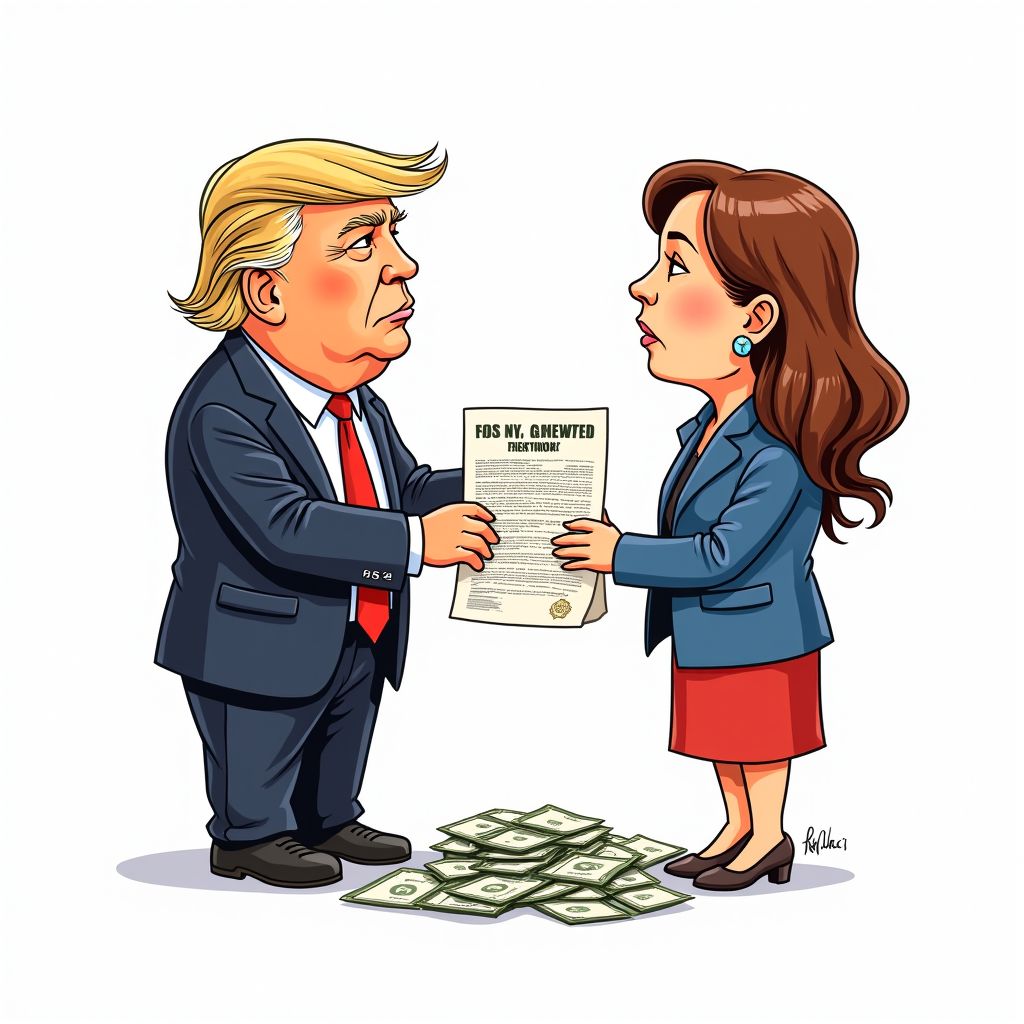
President Trump announced a pardon for Tina Peters, yet the move appears legally unenforceable as presidential clemency cannot override her nine-year state sentence for election tampering.
Presidential Decree Meets State Jurisdiction
On Thursday, December 11, 2025, President Donald Trump announced on Truth Social that he had issued a “full pardon” to Tina Peters, the former Mesa County Clerk currently imprisoned in Colorado [1]. Trump justified the clemency by characterizing Peters’ actions as “attempts to expose Voter Fraud” during the 2020 presidential election [1]. However, legal experts and state officials were quick to clarify that the President’s constitutional pardon power is limited to federal offenses and does not extend to state-level convictions [2][6]. Consequently, the proclamation is widely regarded by legal analysts as symbolically significant but legally unenforceable regarding her current incarceration [2][3].
The Conviction and Sentence
Peters, 70, is currently serving a nine-year prison sentence following her conviction in August 2024 on seven of ten charges, including four felonies [1][5]. A Colorado jury found her guilty of tampering with voting equipment, attempting to influence a public official, and conspiracy to commit criminal impersonation [2]. The charges originated from a 2021 security breach in which Peters facilitated unauthorized access to voting machine software and circulated confidential election data [3]. Despite the presidential announcement, she remains in the custody of the Colorado Department of Corrections [4].
Constitutional Clash and State Response
Colorado’s Democratic leadership immediately rejected the validity of the pardon. Governor Jared Polis affirmed that no president has jurisdiction over state law, stating that his administration will “abide by court orders” regarding her sentence [1]. Colorado Attorney General Phil Weiser condemned the move as an “act of intimidation” with no precedent in American law, asserting it would not hold up against constitutional scrutiny [1][4]. Senator Michael Bennet (D-Colo.) reinforced this stance, declaring that “Trump’s corrupt and political attempts” would not override the state’s judicial system [1].
Legal Maneuvers and Federal Friction
The pardon announcement follows a series of failed legal attempts to secure Peters’ release. On December 1, 2025, U.S. Magistrate Judge Scott Varholak rejected her bid to be released on bond while her case is under appeal, ruling she had not made a sufficient case to overturn her state sentence [5][7]. This was followed by a denial from a federal appeals court on December 3 [4]. The Trump administration had previously sought to intervene; in mid-November 2025, officials sent a letter to the Colorado prison system requesting Peters be transferred to federal custody, a request the state declined to honor [5].
Humanitarian Concerns and Political Implications
Peters’ legal team has intensified calls for her release, citing deteriorating prison conditions and threats to her safety. Her attorney, Peter Ticktin, reported that Peters is held in a small cell formerly used for laundry equipment and has faced attacks from other inmates [7]. The defense also alleges medical neglect regarding a degenerative spinal condition and the denial of appropriate bedding [7]. While the Justice Department indicated in March 2025 that it would review the case for political motivation, the standoff remains a stark illustration of the tension between federal executive assertions and state judicial sovereignty [1][5].
Sources
- www.axios.com
- www.timesnownews.com
- www.democracydocket.com
- www.9news.com
- abcnews.go.com
- coloradonewsline.com
- www.washingtonexaminer.com