Mount Etna Eruption Triggers Flight Chaos and Financial Losses in Sicily
Catania, Saturday, 15 August 2026.
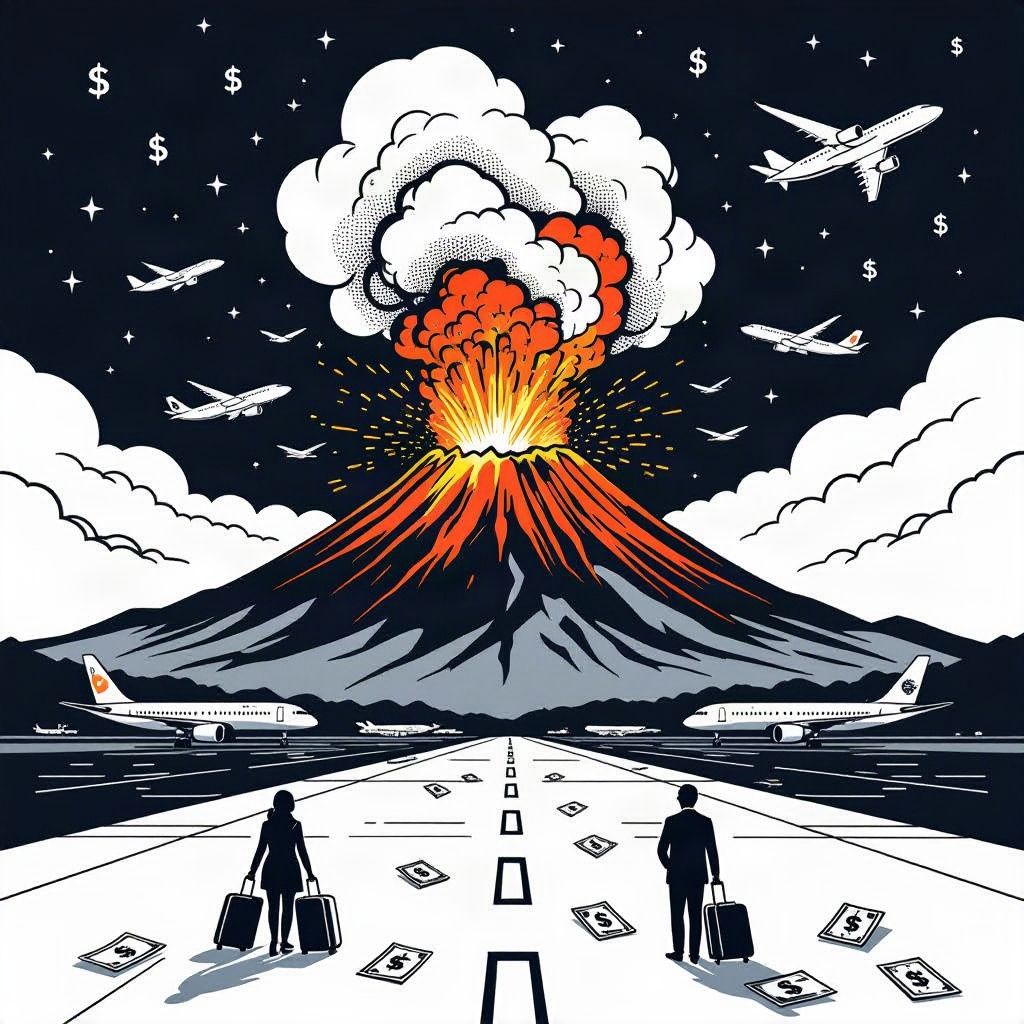
Mount Etna’s severe eruption caused the worst flight disruptions in two decades across Sicily, stranding thousands of peak-season travelers and costing the local tourism sector up to $29 million.
Airport Operations Resume Amidst Chaos
On Saturday, 15 August 2026, Catania Airport reopened sectors C1 and B3 at 14:00 local time, following a downgrade of the volcanic alert from Red to Orange [3]. Prior to this resumption, flights had been suspended until at least 2pm local time, marking the most significant disruption the hub has faced in over twenty years [2].
The closure stranded thousands of travelers during the peak summer season, with airport management advising passengers to verify flight status before arriving [3][5]. Approximately 700 flights were canceled out of 1,974 scheduled, representing 35.461 percent of operations during the peak week [1][2].
Economic Impact on Tourism Sector
The financial repercussions extend beyond immediate travel inconveniences, with Sicilian business associations estimating tourism revenue losses between $15 million and $29 million [1]. Alternative data from local associations suggests damages range from 12.8 to 24 million euros, highlighting the variance in economic impact assessments [5].
Regarding passenger rights, airlines are generally not legally obliged to provide compensation for cancellations caused by volcanic eruptions, as these are classified as extraordinary circumstances [2]. Travelers redirected to other hubs such as Palermo and Trapani faced additional logistical challenges during the Ferragosto holiday [1].
Volcanic Activity and Infrastructure Debate
Geological monitoring indicates that while explosive activity is decreasing, the duration of the eruption remains unpredictable, with experts stating it could end in days or continue for a month [1][3]. A magnitude 3.9 earthquake occurred near Linguaglossa on the same day, underscoring the ongoing seismic activity in the region [3].
The crisis has reignited debates regarding the airport’s proximity to the volcano, located approximately 30 kilometres south of the summit [2]. Civil Protection Minister Nello Musumeci remarked that the airport, rather than the volcano, is out of place, referencing long-standing proposals to relocate the facility [4][5].