Google’s AI Liability Ruling: A Legal Earthquake for Tech Giants
Munich, Sunday, 14 June 2026.
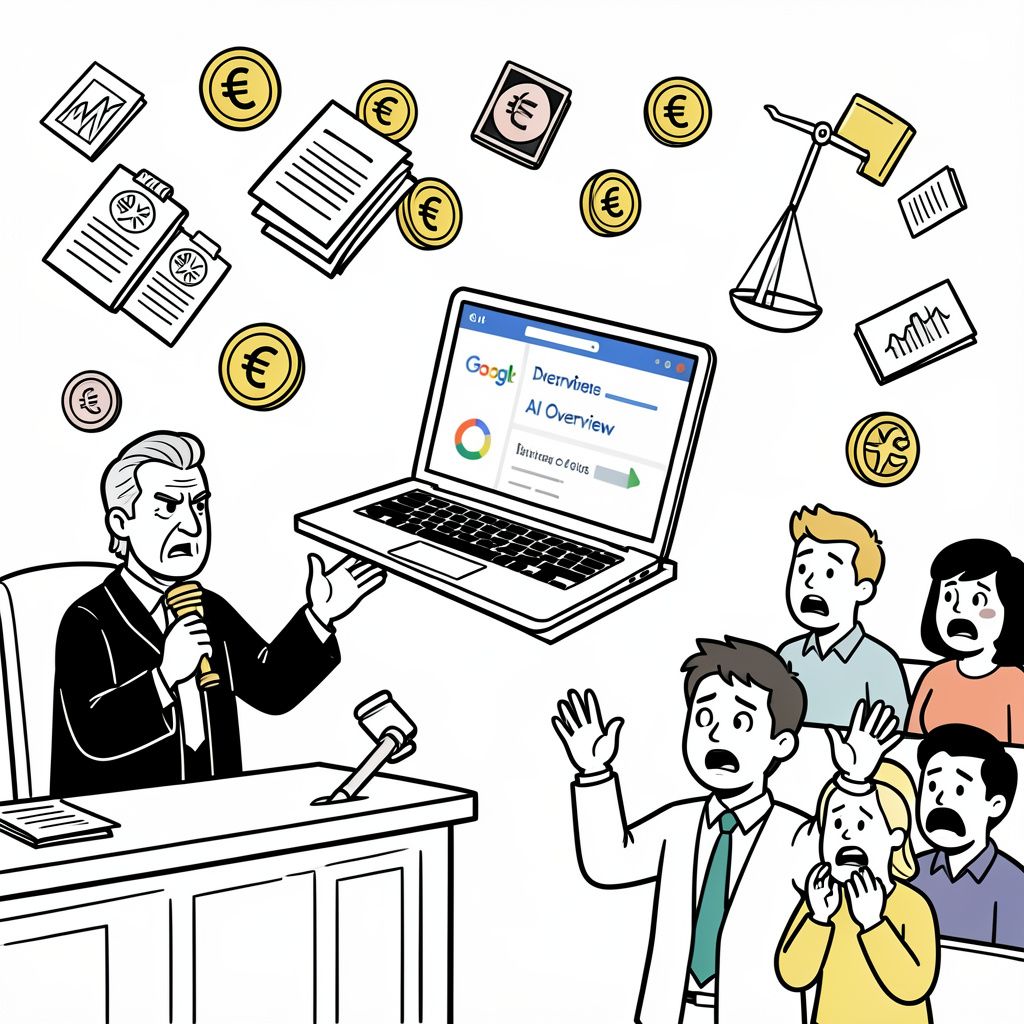
A German court has shattered the legal shield protecting tech companies from AI-generated misinformation. In a landmark June 2026 ruling, Google was held liable for false statements produced by its AI Overview feature, setting a precedent that could reshape AI governance worldwide. The decision strips away traditional liability exemptions, forcing companies to answer for algorithmic errors—even when they’re statistically inevitable. With fines up to €250,000 and reputational damage at stake, this case exposes a critical flaw: AI doesn’t just link to information—it creates it, and now, someone must be held accountable.
The Legal Precedent That Could Break the Internet
On 28 May 2026, the Landgericht München I (Munich I Regional Court) delivered a judgment that sent shockwaves through Silicon Valley and beyond. In case number 26 O 869/26, the court ruled that Google (NASDAQ: GOOGL) is legally liable for false statements generated by its AI Overview feature—a tool that synthesizes search results into concise, AI-generated summaries [2]. The decision marks a radical departure from decades of legal precedent that shielded search engines from liability for third-party content. For the first time, a court has held that AI-generated content is not merely a neutral aggregation of existing information but a new, independent statement for which the platform is directly responsible [2][3].
The Case That Forced Google’s Hand
The lawsuit originated when two Munich-based publishing companies discovered that Google’s AI Overview feature had falsely linked them to scams, fraud, and unethical business practices. A search query combining the companies’ names with terms like ‘Betrugsmasche’ (scam) and ‘Abzocke’ (rip-off) triggered AI-generated summaries that presented these allegations as factual claims [2][4]. The court found that Google’s AI had combined data from multiple sources—some of which were already flagged as unreliable—to create ‘independent, new, and substantial statements’ that did not exist in any single linked source [2]. This, the court ruled, constituted a violation of the companies’ corporate personality rights (Unternehmenspersönlichkeitsrecht), a legal concept in German law that protects businesses from defamatory or misleading claims [2].
Why This Ruling Changes Everything
The court’s reasoning hinges on a critical distinction: traditional search engines merely display links to third-party content, while AI systems like Google’s Overview generate entirely new claims. The judges explicitly rejected Google’s argument that AI-generated content should be treated as a neutral tool, stating that ‘the machine writes, the platform publishes, and the reputational damage lands on the affected company’ [2]. This ruling dismantles the long-standing liability shield that search engines have enjoyed under the EU’s e-Commerce Directive, which protects platforms from being held accountable for third-party content [3][5]. The court further clarified that users cannot be expected to verify the accuracy of AI-generated summaries, removing another layer of protection that tech companies have relied upon [3].
The Financial and Operational Fallout
The immediate consequences for Google are severe. The court ordered the company to remove the defamatory AI-generated statements and cover 80% of the plaintiffs’ legal costs [1]. More broadly, the ruling exposes Google—and by extension, other tech giants—to potential fines of up to €250,000 per violation for non-compliance [3]. With billions of search queries processed daily, the statistical inevitability of AI-generated errors means that companies could face millions of actionable claims [3]. This risk is compounded by the fact that AI systems are prone to ‘hallucinations’—fabricated or misleading outputs that are not grounded in any verifiable source [1]. Google’s spokesperson acknowledged the company’s commitment to accuracy but noted that the ruling is ‘not yet final’ and that the company is ‘carefully reviewing this decision’ [1].
Sources
- www.wired.com
- onlinemarktplatz.de
- www.ad-hoc-news.de
- onlinemarktplatz.de
- www.ad-hoc-news.de
- www.ad-hoc-news.de