Trump Announces Two-Year Kennedy Center Closure for $200 Million Renovation
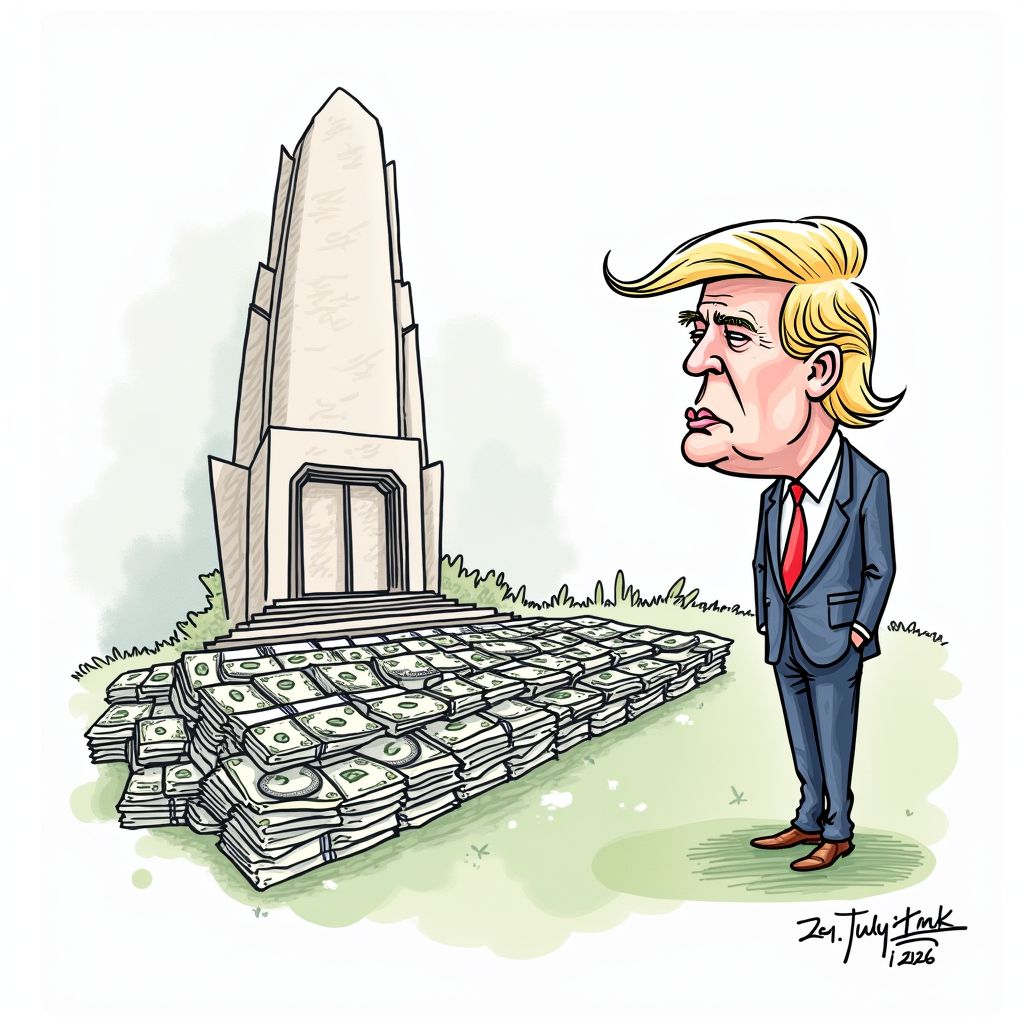
Washington, Tuesday, 3 February 2026.
Amid mass artist cancellations over a controversial name change, President Trump has ordered the $200 million venue closure to begin on July 4, 2026.
Strategic Closure and Renovation Scope
President Donald Trump has officially announced that the John F. Kennedy Center for the Performing Arts will suspend operations for a two-year period beginning July 4, 2026, to facilitate extensive renovations [1][6]. The closure, timed to coincide with the nation’s 250th anniversary, aims to rehabilitate a facility the President has described as “tired, broken, and dilapidated” [1][6]. While speaking to reporters on Monday, February 2, President Trump clarified that the venue would not be demolished entirely, stating, “I’m not ripping it down. I’ll be using the steel,” and affirmed that the basic structure would remain intact [4]. The project is estimated to cost upwards of $200 million, a figure intended to transform the site into a “World Class Bastion of Arts, Music, and Entertainment” [1][4]. This decision reverses a prior pledge made by the President in October 2025, in which he assured the public that the center would remain open during construction [1].
Financial Commitments and Leadership Changes
The financial framework for this overhaul involves significant federal funding, with Congress having appropriated a historic $257 million to address decades of deferred maintenance [5]. Richard Grenell, installed by the President as the Kennedy Center’s leader, defended the operational pause as a fiscal and strategic necessity, arguing that a temporary closure “just makes sense” to allow for more comprehensive renovations and a faster completion timeline [1]. This structural overhaul follows a contentious administrative shift in December 2025, when the center’s board voted to rename the institution “The Donald J. Trump and the John F. Kennedy Memorial Center for the Performing Arts” [5]. However, the closure schedule presents immediate logistical conflicts; for instance, the National Symphony’s contract is set to expire in March 2026, and productions such as Shear Madness were booked through October 2026 [3].
Artist Exodus and Programming Disruptions
The administration’s aggressive restructuring has precipitated a significant backlash from the artistic community, resulting in a wave of high-profile cancellations. Following the renaming initiative and the President’s installation of himself as chairman, the Washington National Opera decided to sever its relationship with the center after more than 50 years [6]. Additionally, renowned composer Philip Glass and other performers have withdrawn from scheduled engagements, citing direct conflict with the center’s new direction [1][5]. Maria Shriver, niece of President John F. Kennedy, publicly suggested that the sudden closure is a reaction to this loss of talent, stating that the President determined a rebuild was necessary because “since the name change no one wants to perform there any longer” [1][4].
Political Fallout and Legal Challenges
Beyond the cultural sector, the overhaul has ignited a political and legal firestorm regarding the separation of powers and historical preservation. Representative Joyce Beatty has initiated legal action, asserting that the President has “acted with total disregard for Congress,” which holds the sole authority to rename the federally chartered living memorial [1]. The Kennedy family has also voiced strong opposition; Jack Schlossberg, President Kennedy’s grandson, condemned the renovations on social media, characterizing the move as an attempt by President Trump to “take the Kennedy Center for himself” and “demolish the building” [3]. Despite these objections, the administration maintains that the project—including the demolition of the White House East Wing in October 2025 for related projects—is part of a broader vision for the capital’s cultural infrastructure [1][3].