Pakistan Declares Open War on Afghanistan Following Airstrikes on Kabul and Kandahar
Kabul, Friday, 27 February 2026.
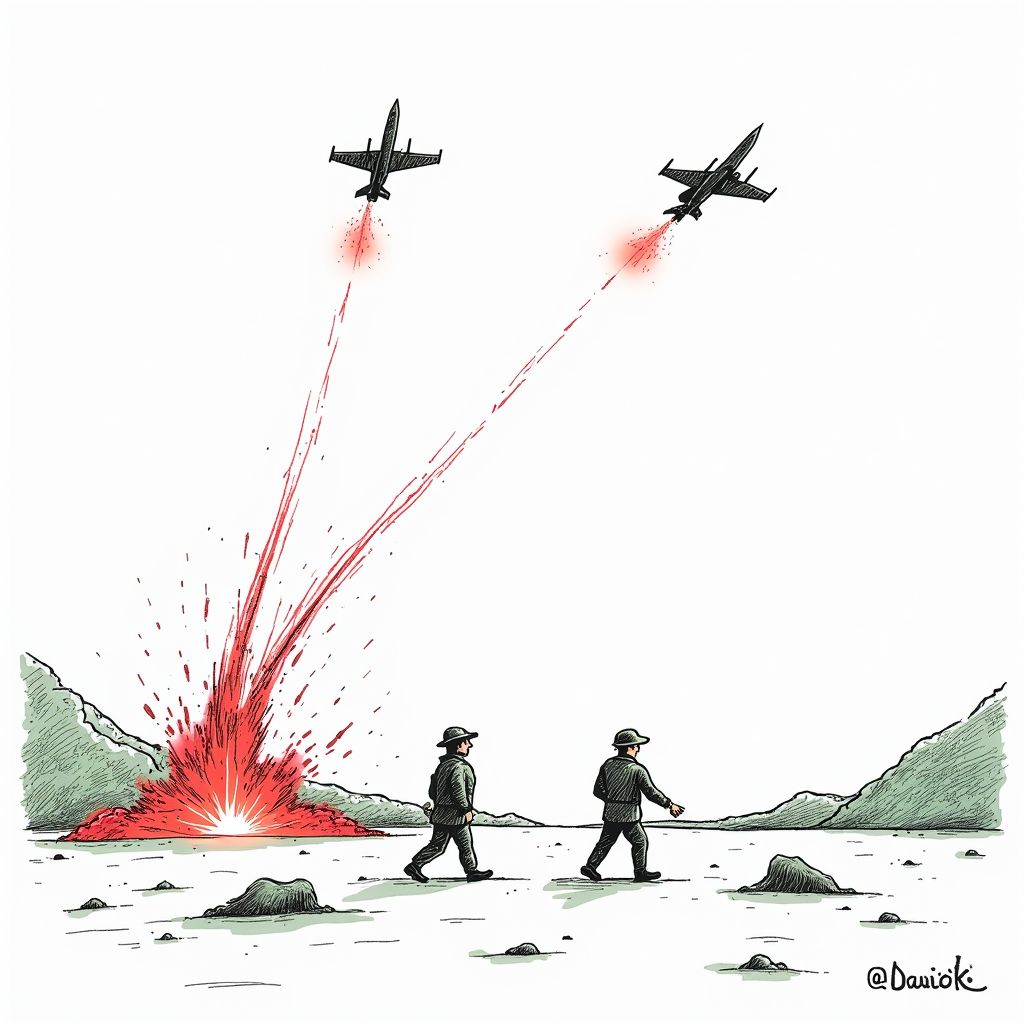
In a drastic escalation of regional tensions, Pakistan has formally declared “open war” on the Afghan Taliban government, launching widespread airstrikes on Kabul, Kandahar, and Paktia early Friday. Defense Minister Khawaja Asif announced the end of Islamabad’s patience, initiating “Operation Ghazab lil Haq” in response to alleged cross-border terrorism. While Pakistani officials claim to have neutralized 133 Taliban fighters and destroyed critical military infrastructure, Kabul reports inflicting heavy casualties on Pakistani forces along the Durand Line. This direct bombardment of the Afghan capital marks a significant departure from previous border skirmishes, effectively shattering the Qatar-mediated ceasefire established in late 2025. As both nations mobilize for full-scale military operations, the conflict poses an immediate threat to South Asian stability and regional security architectures.
Strategic Offensive and Conflicting Narratives
Operational details emerging from Islamabad indicate a coordinated military effort under the banner of “Operation Ghazab lil Haq,” involving both aerial bombardment and ground maneuvers [6]. The offensive began in the early hours of Friday, with reports confirming that explosions were heard in the Afghan capital of Kabul starting at approximately 1:50 a.m. local time [2]. While Pakistani Defense Minister Khawaja Asif stated that the country’s patience had “run out” regarding cross-border terrorism [1], the Taliban’s defense ministry has countered with claims of a robust defense, asserting that their forces have captured 19 Pakistani military posts along the border [3]. Prime Minister Shehbaz Sharif has publicly backed the military’s actions, stating that Pakistan is fully capable of thwarting aggressive intentions [3].
Assessing the Toll of Escalation
The disparity in casualty reporting highlights the volatile nature of the information war accompanying the kinetic conflict. Pakistani sources report the elimination of 133 Taliban fighters and the destruction of over 80 tanks, artillery pieces, and armored personnel carriers during the initial strikes [3][6]. Conversely, Afghan officials claim to have killed 55 Pakistani soldiers during the retaliatory exchanges, a figure that Islamabad has not confirmed [3][5]. This surge in violence follows a week of intensifying clashes; notably, Pakistan confirmed it had already conducted airstrikes on February 19, which the Taliban claimed resulted in at least 18 fatalities, including women and children [3][4].
The Collapse of Diplomatic Safeguards
This open declaration of war signifies the total breakdown of the fragile ceasefire agreement brokered by Qatar and Turkey in October 2025 [5][7]. The diplomatic failure has exacerbated the security dilemma along the 2,611-kilometer Durand Line, a border Afghanistan has historically refused to formally recognize [5]. The hostilities complicate an already dire humanitarian landscape; the region has seen massive population movements, with data indicating that 2.98 million Afghans returned to their home country between the start of last year and the present [1]. As the conflict intensifies, former US special representative Zalmay Khalilzad has described the situation as a “terrible dynamic” that necessitates immediate third-party intervention to prevent further regional destabilization [3].
Sources
- www.npr.org
- www.aljazeera.com
- www.bbc.com
- www.cnn.com
- www.theguardian.com
- sundayguardianlive.com
- gbcode.rthk.hk