Wall Street Faces New Threats as the $3 Trillion Private Lending Market Cracks
New York, Friday, 20 March 2026.
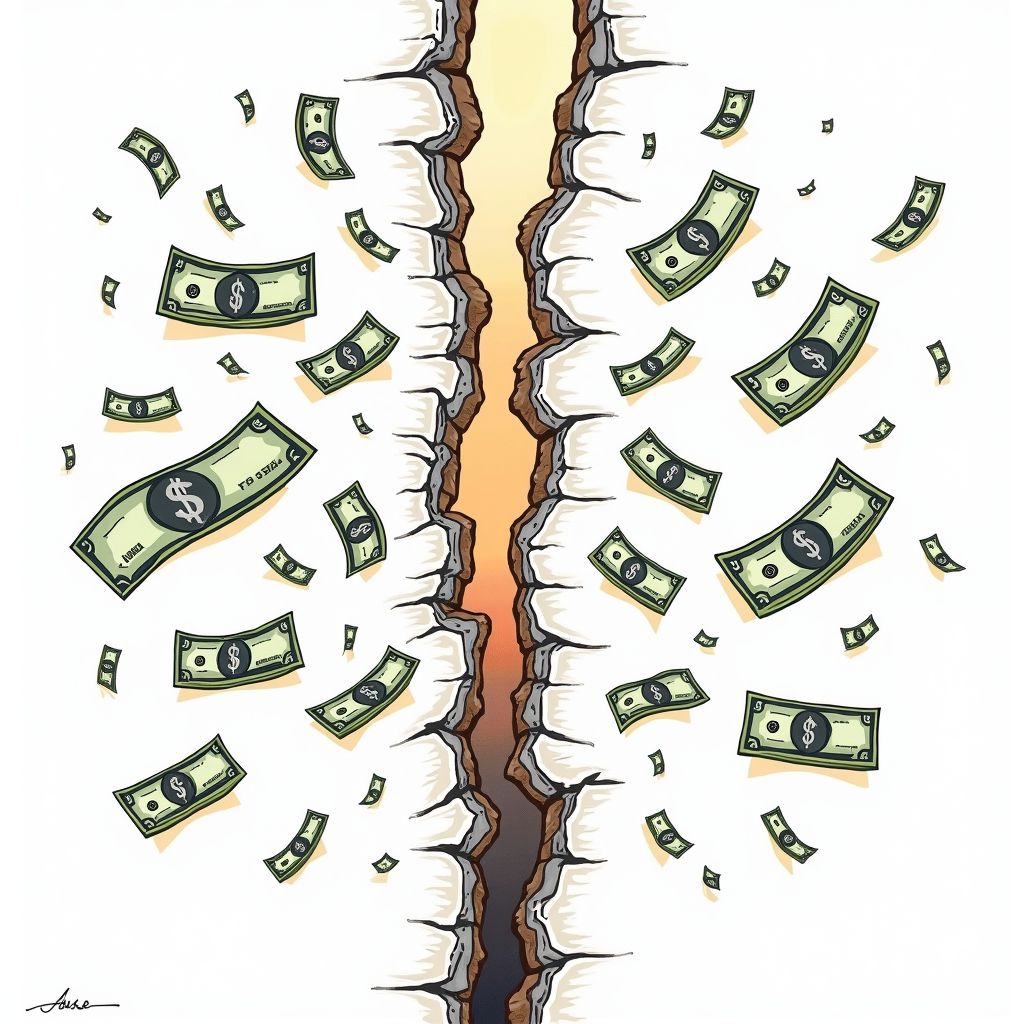
Wall Street faces a potential crisis as major funds block investor withdrawals in the $3 trillion private lending sector, where a staggering 40% of borrowers are bleeding cash.
The Anatomy of a Slow-Motion Crisis
Over the past two decades, private credit has evolved into a massive alternative lending ecosystem, expanding nearly twenty-fold as traditional banks retreated from risky lending due to stricter regulations [2]. Today, estimates of the market’s size vary, with Morgan Stanley valuing the sector at approximately $3 trillion [1], while Moody’s projects assets under management to exceed $2 trillion in 2026 and approach $4 trillion by 2030 [3]. Private credit essentially involves non-bank entities—such as private equity firms—extending loans directly to businesses, often featuring customized terms and floating interest rates [1][2]. However, the foundational stability of this sector is now showing severe fractures. JPMorgan Chase CEO Jamie Dimon sounded the alarm during an October 2025 conference call, famously remarking, “When you see one cockroach, there’s probably more” [1][3].
A Liquidity Squeeze and Gated Funds
The core vulnerability of private credit lies in its illiquidity. Unlike publicly traded corporate bonds, private loans are rarely traded, typically carrying terms of three to seven years [2]. Because fund managers or third-party firms dictate the valuation of these loans, the stated prices often fail to reflect real-time market declines [2]. When panic sets in, investors rush for the exits, but the underlying assets cannot be quickly liquidated [2]. This structural mismatch has forced several major funds to “gate” or limit withdrawals. In February 2026, overwhelming redemption requests prompted Blue Owl to restrict investor withdrawals, while BlackRock Inc. capped withdrawals from its HPS Corporate Lending Fund at 5% after requests nearly doubled that threshold [2]. Similarly, Blackstone Inc. was forced to allow record redemptions of 7.9% from its flagship BCRED fund [2].
Echoes of 2008 and Systemic Contagion Risks
The fundamental health of the borrowers is perhaps the most pressing concern. Currently, an estimated 40% of private credit borrowers are operating with negative free cash flow, a dramatic deterioration from the 25% recorded in 2021 [2]. With traditional United States banks having lent approximately $300 billion to private credit companies, the potential for systemic contagion is no longer a fringe theory [1]. Some market observers are drawing direct parallels to the macroeconomic conditions that precipitated the 2008 financial crisis [2]. Financial author Rick Bookstaber notes that every crisis features a moment when tightly coupled interconnections turn an obscure risk-mitigation product into a source of widespread damage, reminiscent of the early warnings surrounding subprime mortgages in 2006 [4].
Regulatory Scrutiny and the Threat to Confidence
Regulators globally are beginning to take defensive postures. The ripples of the U.S. private credit strain have reached Asia, where the Hong Kong Monetary Authority recently initiated a blitz to assess private banks’ exposure to these distributed funds [3]. In the United States, the stakes are exceptionally high for everyday citizens, particularly following a 2025 executive order that permitted retail investors to allocate retirement funds into private credit vehicles [2]. If the underlying assets continue to sour, the financial fallout will not be confined to institutional investors and Wall Street billionaires, but will directly impact the retirement savings of the broader public [2].