Why CNN Anchor Kaitlan Collins Suddenly Canceled Her HBO Appearance
Washington, Sunday, 22 November 2026.
Collins skipped HBO’s season finale on Friday to confront Donald Trump in Washington about his Putin alliance, sparking intense online controversy after being caught on a hot microphone.
A Last-Minute Scramble in Washington
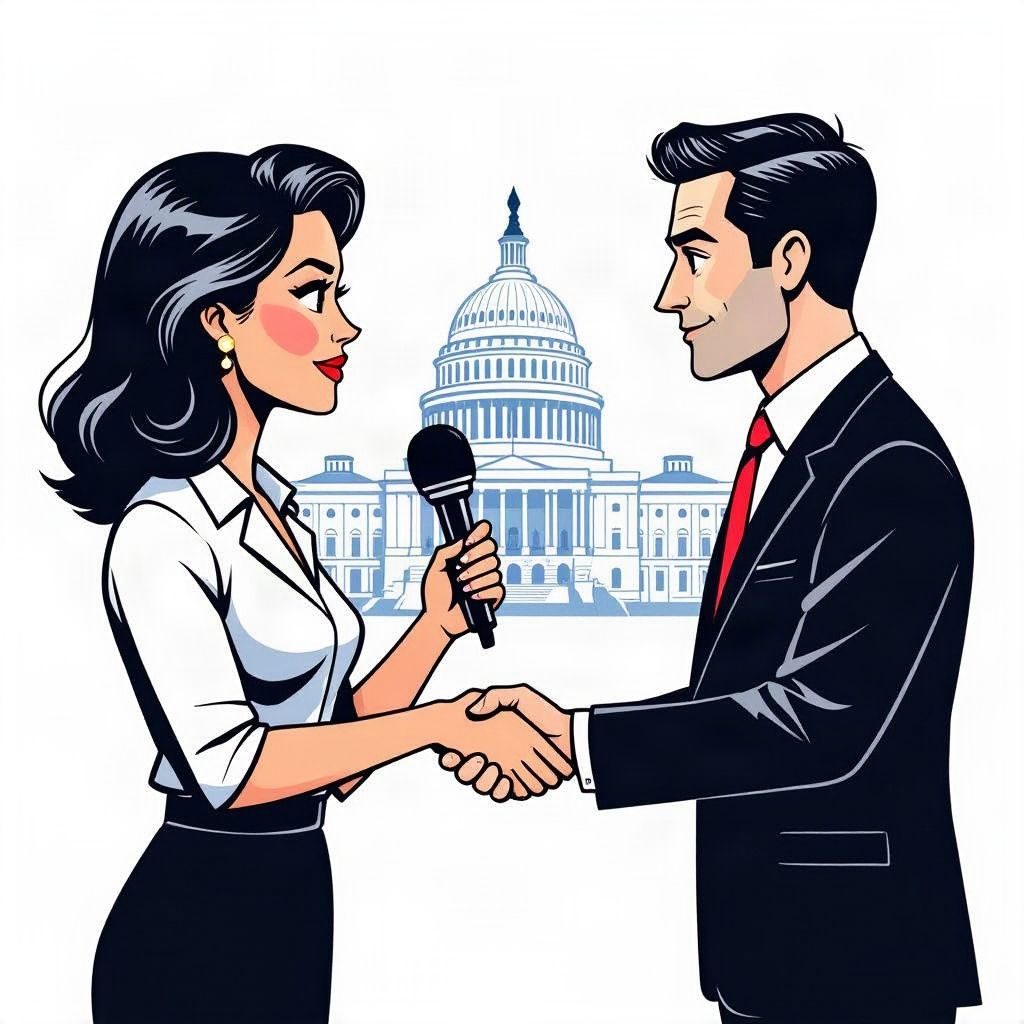
CNN’s chief White House correspondent Kaitlan Collins found herself at the center of a media storm on Friday, 20 November 2026, when a scheduled appearance on HBO’s Real Time with Bill Maher was abruptly canceled. The cancellation came just hours after HBO’s official press release announced her as a panelist for the season finale, which was taped in Los Angeles and aired that evening at 22:00 EST [1][2][3]. Collins’ absence was not due to a scheduling conflict of her choosing; instead, she was detained in Washington, D.C., covering a White House press conference featuring President Donald Trump, where she seized the opportunity to question him about his relationship with Russian President Vladimir Putin [1][3].
From Promotional Spotlight to Overnight Absence
The rapid shift from Collins’ inclusion to her exclusion underscores the unpredictable nature of breaking news and the logistical challenges faced by both news networks and entertainment programs. HBO’s official promotional materials for the Real Time finale initially featured Collins as a guest alongside Democratic Texas Rep.-elect Bobby Pulido, only to remove her name by Thursday evening, 19 November 2026 [2][3]. She was replaced on the panel by MS NOW correspondent Jacob Soboroff, who stepped in to fill the void on short notice [1][2][3]. Collins addressed her absence on social media platform X the following day, expressing gratitude for Maher’s team’s understanding while reiterating her commitment to covering the White House [1].
A Hot Mic Incident Fuels Online Controversy
Collins’ White House coverage took an unexpected turn when she was overheard on a live hot mic complaining about the lighting conditions during Trump’s press conference. In audio captured by media observers, she remarked, ‘Is it not bad that there’s zero lighting in here? All the lights are off. Does it not look super dark on camera?’, later clarifying that the lights had been turned off at the president’s request [2][3][5]. The comments, which aired during the live broadcast, sparked immediate backlash from supporters of the former president, including MAGA influencer Charles Downs, who accused Collins of behaving like ‘a total diva’ and criticized the ‘entitled’ attitude of mainstream media [2][5].
Business Implications: A Media Ecosystem Under Strain
The incident highlights the growing pressures on high-profile journalists who must balance entertainment commitments with real-time news coverage, particularly during periods of heightened political activity. For HBO, owned by Warner Bros. Discovery, the last-minute substitution of Collins with Soboroff demonstrates the fragility of cross-network promotions and talent scheduling in an era where news cycles can shift within hours [1][3]. Meanwhile, CNN’s decision to prioritize Collins’ White House coverage over her HBO appearance underscores the network’s focus on solidifying its position as a leading source for real-time political journalism, even at the cost of cross-platform collaborations [1][3]. The fallout from the hot mic incident also raises questions about the long-term impact on Collins’ public image, particularly as she navigates a high-profile career spanning both traditional and digital media platforms [2][5].
Rescheduling and Repercussions
While Collins’ spokesperson confirmed that her appearance on Real Time with Bill Maher is being rescheduled, the timeline and details of the new appearance remain unspecified as of Sunday, 22 November 2026 [2][3][5]. The delay may provide an opportunity for HBO to leverage the incident for promotional purposes, particularly given the viral nature of the hot mic moment and the ensuing social media debate. For Collins, the episode serves as a reminder of the delicate balance between her roles as a journalist, a public figure, and a television personality, all while operating in an increasingly polarized media landscape [1][2][3].
Sources
- deadline.com
- www.thedailybeast.com
- www.thewrap.com
- x.com
- www.thedailybeast.com
- www.facebook.com
- www.tiktok.com
- www.youtube.com