EU Diplomats Rebut US Narrative of Civilizational Decline at Munich Security Conference
Brussels, Sunday, 15 February 2026.
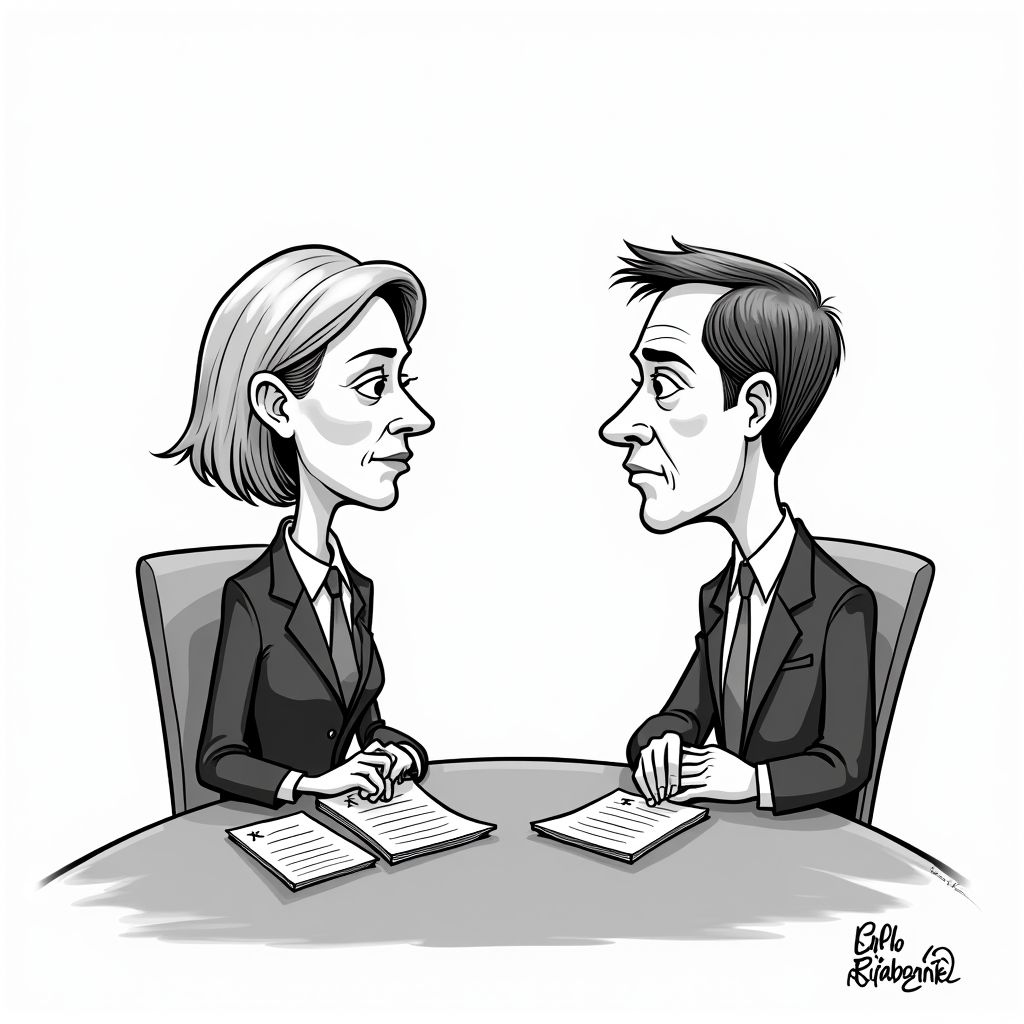
On February 15, 2026, a significant diplomatic divergence emerged at the Munich Security Conference as European Union Foreign Policy Chief Kaja Kallas formally rejected US Secretary of State Marco Rubio’s assertion that Europe faces “civilizational erasure.” Addressing the assembly, Kallas countered the Trump administration’s rhetoric by highlighting the bloc’s enduring geopolitical appeal and economic resilience. She dismantled the narrative of a “woke, decadent” Europe by noting that aspiring member states—and surprisingly, 40% of Canadians surveyed—actively seek to join the Union. Kallas further contrasted EU prosperity with Russian stagnation, pointing out that Polish citizens are now roughly 70% richer than their Russian counterparts, a stark reversal from 1990. This exchange underscores a deepening ideological rift between Washington and Brussels, signaling a shift where Europe is increasingly prioritizing strategic independence and internal defense capabilities over traditional reliance on American validation.
The Ideological Divide
The friction at the Munich Security Conference stems from a stark contrast in worldviews between the Trump administration and European leadership. US Secretary of State Marco Rubio, who addressed the conference prior to Kallas, characterized the current geopolitical landscape as one where the United States has no interest in overseeing the “managed decline” of the West [6]. This rhetoric aligns with a US national security strategy released in December 2025, which posited that Europe is being weakened by factors such as immigration, declining birth rates, and a dilution of national identity [6]. Kallas directly addressed these characterizations on Sunday, February 15, asserting that the narrative of a “woke, decadent Europe” facing erasure is factually incorrect [3][4]. She argued that the European model remains robust, citing not only internal cohesion but also external interest, specifically noting that during a visit to Canada the previous year, she was informed that over 40 percent of Canadians expressed interest in their country joining the EU [4].
Economic Vitality vs. Stagnation
To substantiate her defense of the European project, Kallas utilized comparative economic data to illustrate the bloc’s success relative to its eastern adversary. She highlighted the post-Soviet economic divergence, noting that while Russians were twice as rich as Poles in 1990, the trajectory has shifted dramatically; today, citizens of Poland—an EU member state—are roughly 70 percent richer than Russians [4]. This economic vitality is bolstered by the Union’s extensive commercial reach, which Kallas described as the largest free trade network in the world, covering close to 80 countries [4]. These figures were presented to counter the narrative of decline, suggesting that integration into the European market remains a potent engine for growth and stability [4].
Reassessing the Russian Threat
Beyond economic indicators, the High Representative offered a sober analysis of the security landscape, dismantling the image of Russia as an unstoppable superpower. Kallas pointed to the heavy toll of the ongoing conflict, stating that after more than a decade of hostilities—including four years of full-scale war in Ukraine—Russia has suffered 1.2 million casualties [3][4]. Despite this massive expenditure of human capital, Russian forces have barely advanced beyond the territorial lines established in 2014 [3][4]. Kallas argued that Russia is fundamentally broken: its economy is in shreds, it has been disconnected from European energy markets, and its own citizens are fleeing the country [3][4]. Consequently, she identified the primary danger not as battlefield dominance, but the risk that Russia might gain more through diplomatic negotiations than it could achieve militarily [4].
A Redefined Alliance
The diplomatic exchanges in Munich signal a potential recalibration of the transatlantic alliance. While Rubio affirmed that the US remains a “child of Europe,” he emphasized that Washington would not support “weak” allies, demanding reciprocity and seriousness from European partners [6]. In response, European leaders are accelerating efforts to reclaim agency, with Kallas announcing that she is working with European Commission President Ursula von der Leyen on a new comprehensive security strategy [4]. This approach includes diversifying partnerships beyond the traditional US axis; the EU has established 10 new security and defense partnerships this year alone, including agreements with India and Australia [4]. As the conference concludes, the message from Brussels is clear: Europe intends to assemble its own strength rather than rely solely on American protection [4].
Sources
- www.thestar.com
- www.ctvnews.ca
- www.theguardian.com
- www.eeas.europa.eu
- www.brusselstimes.com
- uk.news.yahoo.com