Fatal Aviation Accident Scatters Central Bank Currency Across Bolivian Highway
La Paz, Saturday, 28 February 2026.
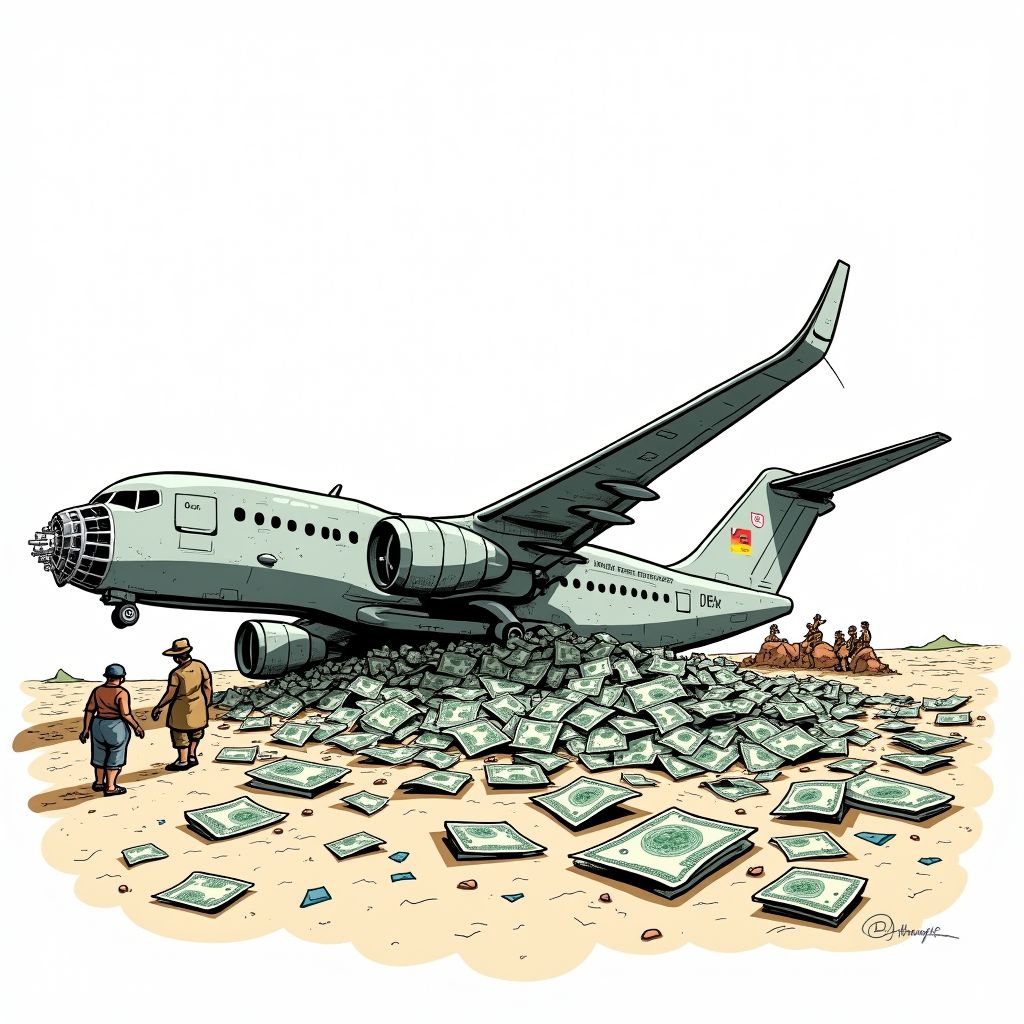
A logistical operation to transport unissued banknotes turned tragic Friday when a military plane crashed in El Alto, claiming at least 15 lives. Bystanders rushed to loot the wreckage, unaware the scattered currency holds no legal value.
Catastrophic Failure at El Alto
On Friday evening, a Bolivian Air Force C-130 Hercules cargo plane, identified as registration FAB-81, crashed while attempting to land at El Alto International Airport, resulting in at least 15 confirmed fatalities and leaving 30 others injured [2][5][6]. The incident occurred at approximately 18:20 local time when the aircraft, arriving from Santa Cruz, overshot the runway and collided with traffic on a nearby thoroughfare [1][4]. The crash site on Avenida Bolivia became a scene of devastation, with reports indicating that the military transport impacted at least a dozen vehicles, including public transport minibuses and a tractor-truck, before coming to a halt [4][6][8].
Operational Failures and Environmental Factors
Preliminary investigations suggest that severe weather conditions were a primary catalyst for the disaster. A hailstorm earlier in the afternoon had left the runway icy, causing the heavy transport aircraft to hydroplane and lose braking efficacy upon touchdown [4][7]. Unable to stop within the airport’s perimeter, the plane skidded approximately one kilometer beyond the runway, breaching the boundary and entering the urban infrastructure of El Alto [6]. The sheer kinetic energy of the C-130, a model typically praised for its robustness in heavy lift operations, proved fatal as it plowed through the crowded arterial road [7][8].
Currency Shipment Sparks Civil Disorder
The tragedy was compounded by immediate civil unrest due to the nature of the aircraft’s cargo: a massive shipment of banknotes destined for the Central Bank of Bolivia [1][3]. As the fuselage ruptured, bills were scattered across the crash site, prompting bystanders to rush toward the burning wreckage in an attempt to loot the currency [3][5]. Security forces, including police in riot gear, were forced to deploy tear gas and water cannons to disperse the crowds and secure the area, prioritizing the containment of the scene over the recovery of the paper money [2][3].
Economic Reality of the Lost Cargo
Despite the desperate scramble for cash, the looted notes hold no actual financial value. Central Bank President David Espinoza clarified that the banknotes were newly printed and had not yet entered circulation [2]. Crucially, they lacked the necessary serial numbers to be considered legal tender, rendering them effectively worthless paper [2]. The Ministry of Defense warned that possession or attempted use of these bills would constitute a crime [1]. As authorities continue to investigate the crash and manage the temporary closure of the airport, the focus remains on the significant loss of life and the operational risks highlighted by transporting sensitive assets during adverse weather conditions [1][6].
Sources
- www.bbc.com
- www.ndtv.com
- www.bloomberg.com
- www.infobae.com
- eldeber.com.bo
- www.france24.com
- www.reduno.com.bo
- www.pulzo.com