US Signals Shift in Peace Terms to End War with Iran
Washington, Wednesday, 7 October 2026.
US Vice President JD Vance indicated Washington will accept a meaningful reduction in Iran’s nuclear enrichment capacity rather than a total shutdown to end the eight-month war.
Diplomatic Shift Following Expulsion
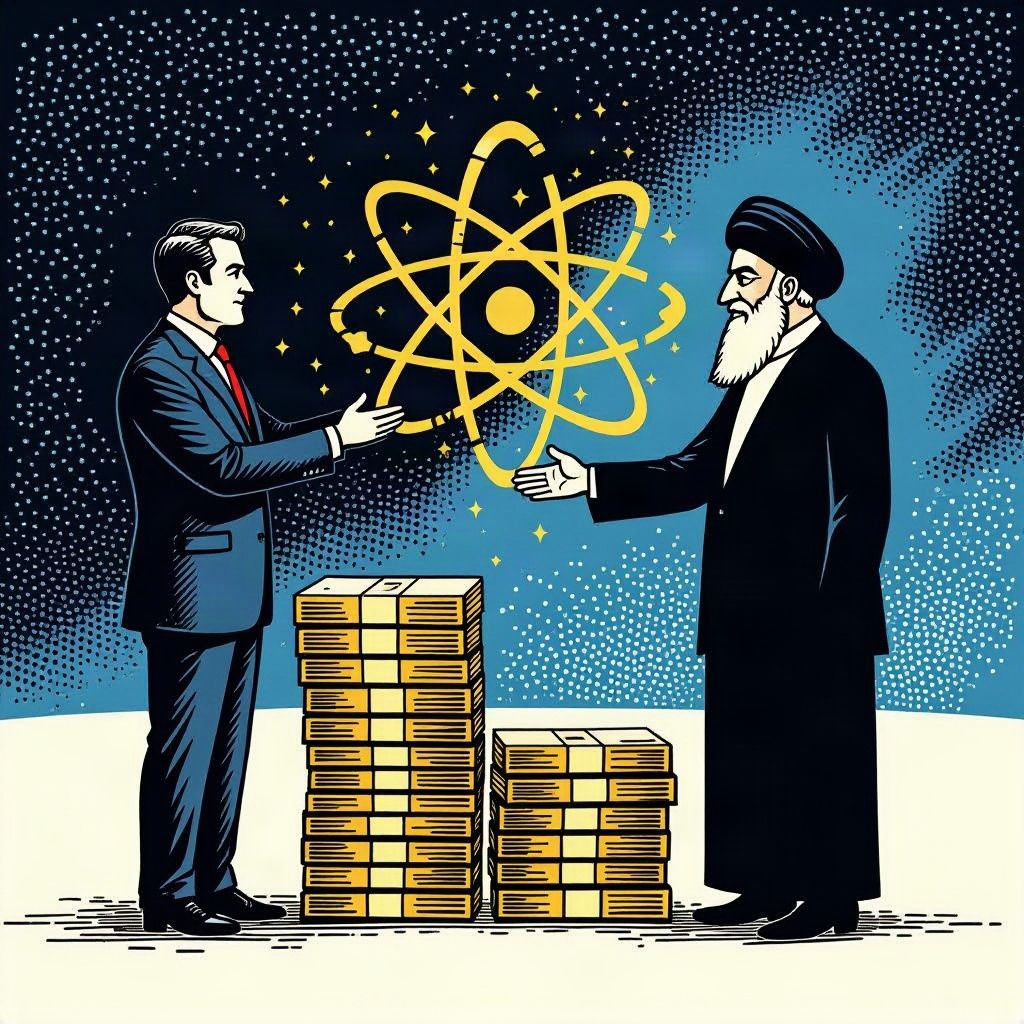
Following the abrupt expulsion of Iran’s diplomatic delegation from New York due to deadlocked talks, the United States has outlined a revised framework for peace [1]. As of 7 October 2026, Vice President JD Vance indicated Washington would accept a meaningful reduction in Iran’s nuclear enrichment capacity rather than demanding a total shutdown to end the conflict [2][3]. This marks a potential shift from previous US demands that Tehran abandon enrichment entirely, suggesting room for compromise amidst ongoing hostilities [2][4]. The war, now in its eighth month, has intensified pressure on both nations to find a resolution, though significant obstacles remain [2][3].
Nuclear Enrichment Thresholds
Central to the new US conditions is the question of uranium enrichment levels, with Vice President Vance questioning the necessity of 60 percent enriched fuel if Iran does not intend to build a nuclear weapon [2][5]. International Atomic Energy Agency data from May 2025 indicated Iran had enriched uranium to 60 percent, which remains below the 90 percent threshold generally considered weapons-grade material [2]. Vance stated that showing commitment to non-proliferation requires avoiding highly enriched fuel, calling it a basic threshold issue [2][6]. Conversely, Iranian officials maintain that their nuclear program is not the primary barrier to peace, citing sanctions and regional conflicts as deeper concerns [2][3].
Uncertainty Over Iranian Leadership
US officials have expressed uncertainty regarding who holds decision-making authority in Tehran following the death of Supreme Leader Ayatollah Ali Khamenei in joint US-Israeli strikes earlier in the conflict [3][4]. Vice President Vance noted it is not totally clear how the country makes decisions, though contacts continue with President Masoud Pezeshkian and Foreign Minister Abbas Araghchi [3][5]. Iranian Foreign Ministry spokesperson Esmaeil Baghaei rejected these claims on 4 October 2026, citing contradictory positions and mixed messaging from Washington as the actual problem [3][4]. This ambiguity complicates negotiations, with President Donald Trump previously stating that not knowing who is running Iran is a major issue [3][6].
Economic Stakes and Regional Stability
The ongoing conflict is incurring a monthly cost of approximately $3 billion, influencing domestic political pressure on Republicans ahead of the November 2026 midterms [4][5]. While US Secretary of State Marco Rubio claimed Iran has lost complete control of the Strait of Hormuz, incidents such as a projectile strike on a Panama-flagged tanker on 6 October 2026 suggest continued volatility in the waterway [2][3]. Gulf oil exports excluding Iran reached over 81 percent of pre-war levels in September 2026, yet energy markets remain sensitive to diplomatic developments [2][3]. For global business leaders, these heightened diplomatic hurdles indicate potential prolonged volatility in energy sectors if negotiations stall [2][6].
Sources
- wsnext.com
- www.aljazeera.com
- www.cbsnews.com
- nypost.com
- www.the-independent.com
- timesofindia.indiatimes.com