Ford Replaces the Shelby Mustang Badge to Cut Millions in Licensing Costs
Dearborn, Wednesday, 29 April 2026.
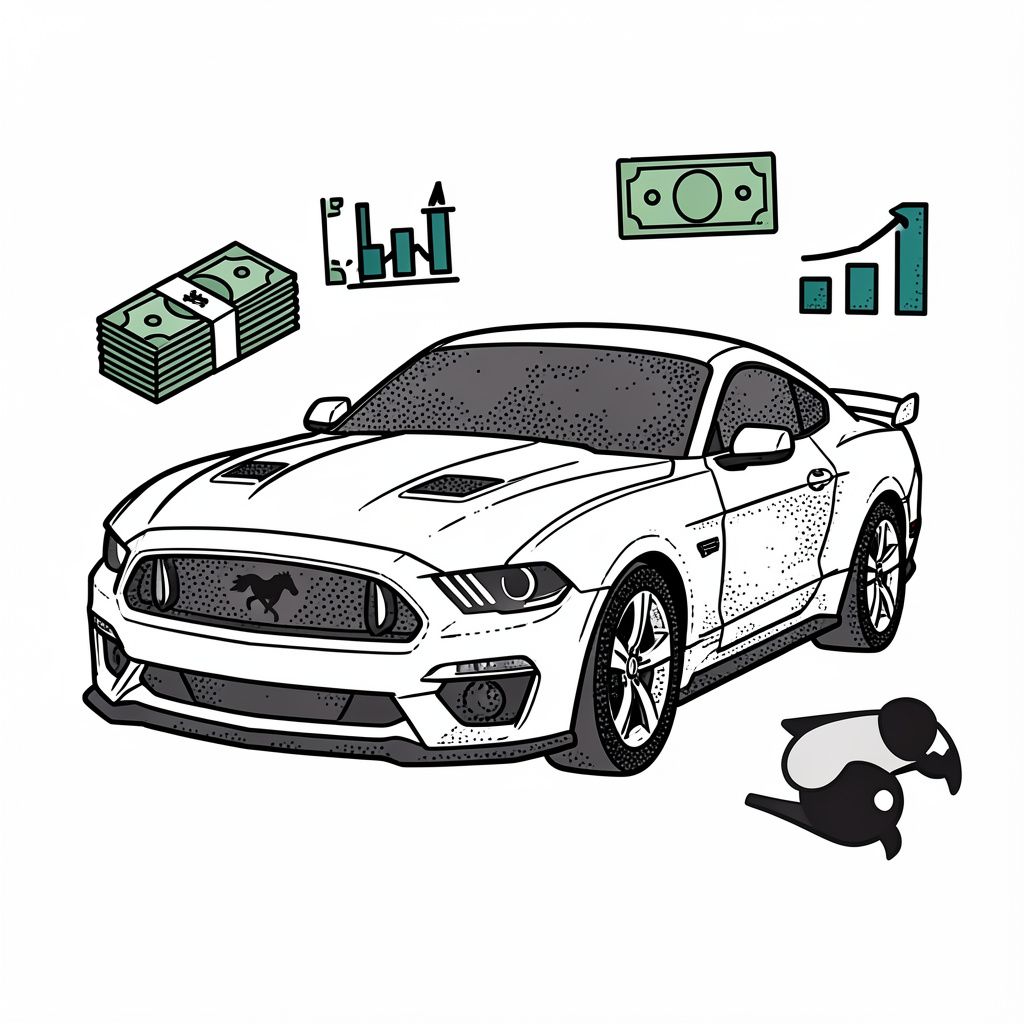
Ford is retiring the iconic Shelby Mustang badge for its new Dark Horse line, a strategic move saving over $30 million in licensing fees while boosting in-house profit margins.
The Financial Mechanics Behind the Badge
For decades, the Shelby nameplate has been synonymous with the pinnacle of factory-built Ford Mustangs [1]. However, the trademark is owned by Nevada-based Shelby American, meaning Ford Motor Company does not own the rights to the name [1]. To attach the legendary moniker to its vehicles, Ford reportedly paid a licensing fee of approximately $800 [alert! ‘The exact $800 figure is based on industry insider claims and remains officially unconfirmed by Ford’] for every Shelby-branded Mustang that rolled off the assembly line [1][2]. While $800 might seem like a marginal cost on a high-performance sports car, the cumulative expense over high-volume production runs represents a substantial capital outflow [2].
Enter the Dark Horse Era
Ford has officially confirmed the transition to the Dark Horse sub-brand for its S650 generation Mustangs [1][2]. The naturally aspirated variant of the Dark Horse produces 500 horsepower [4][5]. However, the new flagship replacing the GT500 is the Dark Horse SC. Officially confirmed on April 20, 2026, this model features a supercharged 5.2-liter Predator V8 engine delivering 795 horsepower and 660 lb-ft of torque [3].
Motorsport Synergy and Brand Control
Beyond mere cost-cutting, the pivot to the Dark Horse nomenclature is deeply rooted in Ford’s broader corporate strategy to align its production cars with its global racing initiatives [2]. The automaker is repositioning its high-performance tier as a direct product of Ford Racing [2]. The Dark Horse name is now intrinsically linked to factory-backed motorsports programs, including the Mustang GT3 and GT4, as well as Ford’s expanding involvement in Formula One [1][2][3].
The Future of Shelby and Ford’s Strategy
As for the Shelby moniker, the brand is not disappearing from the automotive landscape. Shelby American will continue to operate independently and has already announced plans to return to racing with a Mustang built for the Trans Am series [2]. The nameplate is expected to shift toward an aftermarket and independent identity, allowing Shelby to maintain its racing heritage without relying on Ford’s factory production lines [2].