Oil Markets Surge as US Deploys Naval Armada and Tightens Iran Sanctions
Washington D.C., Saturday, 24 January 2026.
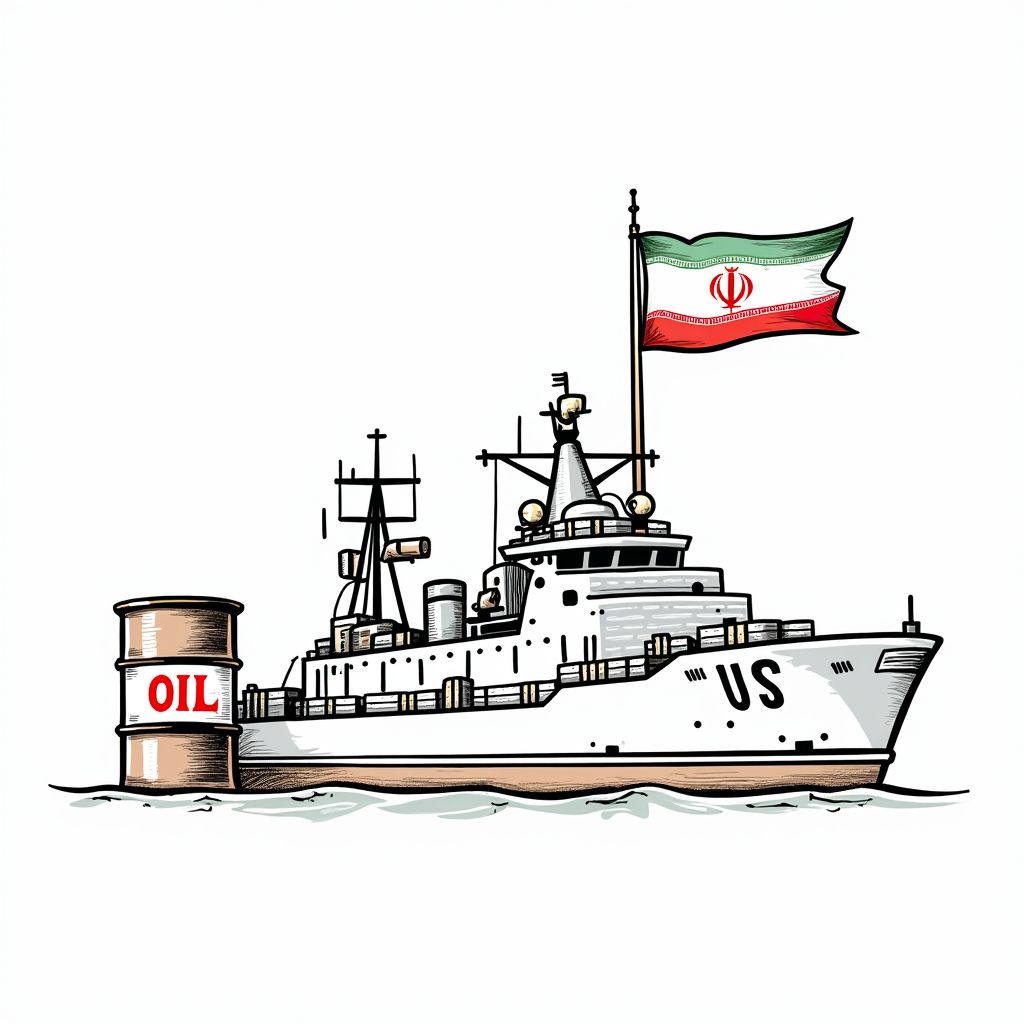
Crude futures rallied nearly 3% Friday as President Trump dispatched a naval armada to the Middle East, escalating geopolitical risks while targeting Iran’s shadow banking network with new sanctions.
Market Reaction and Supply Constraints
By the market close on Friday, January 23, Brent crude futures had jumped $1.82 to settle at $65.88 a barrel, marking a 2.8% increase and the highest valuation since January 14 [1]. West Texas Intermediate (WTI) crude mirrored this volatility, gaining $1.71, or 2.9%, to finish at $61.07 per barrel [1]. While the geopolitical standoff was the primary catalyst, traders were also reacting to supply shocks in Central Asia. Chevron confirmed on Friday that production at Kazakhstan’s Tengiz oilfield—a massive producer accounting for nearly half of the nation’s output—had not yet resumed following a fire earlier in the week [1]. Analysts at JP Morgan estimate the disruption could keep output significantly below the usual 1.8 million barrels per day for the remainder of January [1].
Targeting the Shadow Fleet
The White House’s strategy relies heavily on economic strangulation alongside military signaling. On Friday, the U.S. Treasury Department announced a fresh wave of sanctions targeting the logistical and financial networks that sustain the Iranian regime. The measures explicitly designated nine vessels and eight firms involved in the transport of Iranian petroleum products [1]. Furthermore, the Office of Foreign Assets Control (OFAC) zeroed in on the “shadow banking” systems that Tehran uses to bypass global financial restrictions. These sanctions identified 18 individuals and entities linked to Bank Melli and Shahr Bank, accusing them of laundering oil revenues to fund the violent suppression of domestic protests [6][7]. Ali Larijani, a high-ranking official and Secretary of the Supreme Council for National Security, was also personally sanctioned for his role in the crackdown [6].
Naval Armada and War Rhetoric
Tensions escalated sharply after President Trump confirmed that a U.S. naval “armada” is currently en route to the Middle East. As of Friday morning, the USS Abraham Lincoln carrier strike group, which includes approximately 5,000 sailors, Marines, and fighter squadrons, was positioned in the Indian Ocean [3]. While President Trump told reporters aboard Air Force One that the fleet was deploying “just in case” and that he hoped its use would not be necessary, the messaging has put the region on high alert [2][3]. In a direct response to the deployment, a senior Iranian official warned that Tehran would treat any attack—whether limited or surgical—as an “all-out war,” threatening immediate retaliation against aggressors [5].
Human Rights Crisis Deepens
The militarization of the conflict stems directly from the humanitarian crisis unfolding within Iran. Protests that began in late December 2025 have been met with lethal force; activists estimate the death toll has surpassed 5,000, with nearly 27,000 individuals detained [2][4]. Although President Trump had previously suggested that U.S. threats had successfully paused the execution of detainees, Iran’s top prosecutor explicitly denied this claim on Friday, calling it “completely false” and asserting that the judiciary takes no instruction from foreign powers [2]. With diplomatic avenues narrowing and military assets converging on the Strait of Hormuz—a chokepoint for global energy transit—markets are bracing for potential disruptions that could further inflate oil prices [4].
Sources
- www.reuters.com
- globalnews.ca
- www.cbsnews.com
- www.cnbc.com
- news.sky.com
- www.jpost.com
- www.iranintl.com