Logistical Failure Traps Hundreds of Lufthansa Passengers Overnight on Tarmac
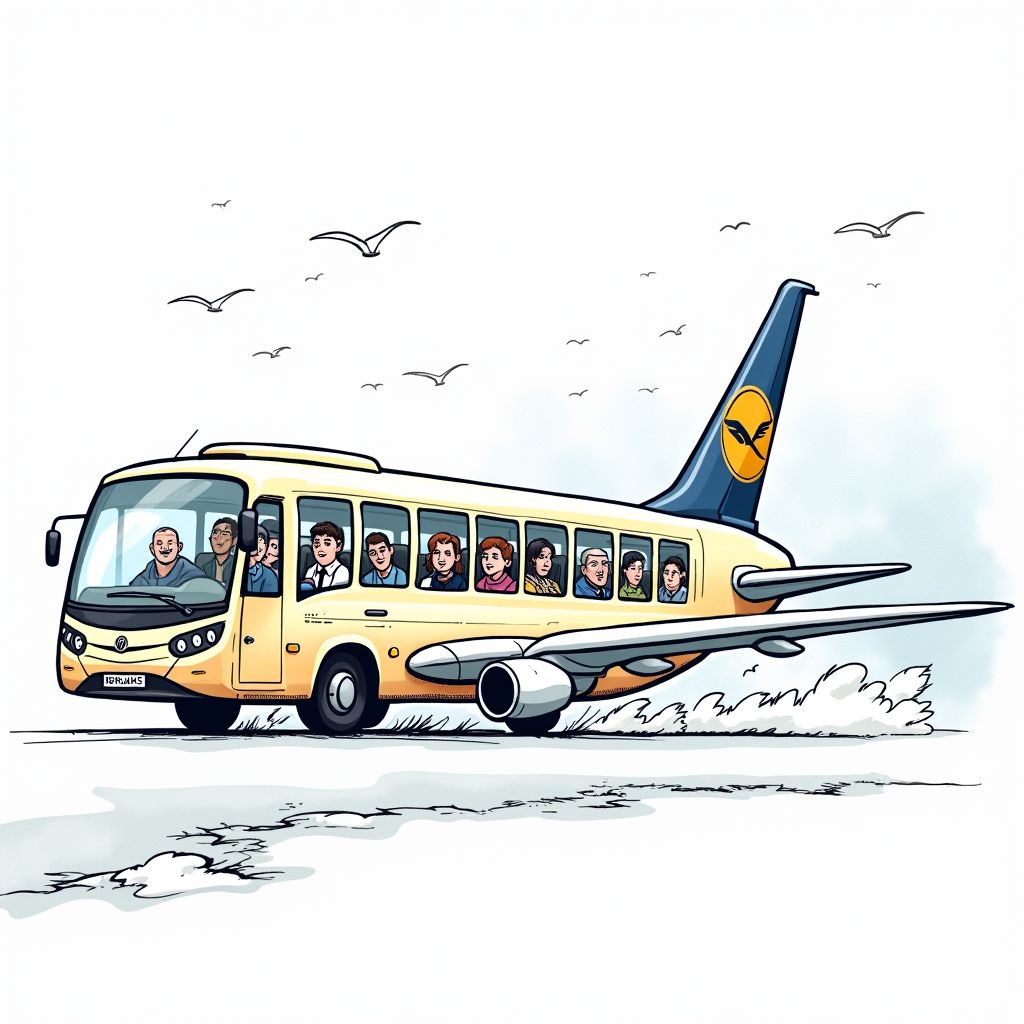
Munich, Monday, 23 February 2026.
Operational paralysis at Munich Airport forced 500 passengers to sleep aboard parked aircraft, as a critical lack of bus drivers prevented deplaning during a severe winter storm.
Systemic Gridlock and Resource Scarcity
The operational breakdown began on the evening of Thursday, February 19, 2026, when severe winter weather and heavy snowfall disrupted flight schedules at Munich Airport [1][6]. While airport authorities initially granted special permission for some flights to depart after the standard night curfew—which typically restricts operations past midnight—conditions deteriorated rapidly [3][4]. Consequently, aircraft that had already completed boarding and were ready for takeoff were denied departure clearance [3]. With terminal parking positions fully saturated by grounded flights, the affected aircraft were directed to remote parking stands on the tarmac [1][3]. It was at this critical juncture that the logistics chain collapsed; Lufthansa reported that passengers could not be deplaned because the airport operator, FMG (Munich Airport GmbH), failed to provide sufficient apron buses or drivers to transport them back to the terminal [1][6].
The Human Toll of Operational Rigidity
The resulting deadlock left approximately 500 to 600 passengers trapped aboard five specific flights, including routes to Singapore, Copenhagen, Gdansk, Graz, and Venice [1][6]. The ordeal was particularly acute for the 123 passengers on Flight LH 2446 bound for Copenhagen [1][2]. Scheduled to depart at 21:30, the Airbus A320 remained stranded on the tarmac for eight hours [2]. Despite the flight being officially canceled shortly before midnight, passengers, including families with small children, were not evacuated until the early hours of the morning [2][6]. Reports suggest a severe resource shortage, with one account claiming that only a single bus driver was on duty at the airport during the chaotic night [1]. Passengers described a scene of helplessness, where flight crews informed them that airport staff were unreachable and that bus drivers had simply finished their shifts and gone home [2][6].
Corporate Fallout and Accountability
The incident has triggered a wave of recriminations between the airline and airport authorities. Lufthansa, a major aviation group with annual revenues of $21.4 billion [8], publicly attributed the fiasco to the airport’s infrastructure failure, stating that crews attempted to comfort passengers with the limited food and drink available onboard [1]. Conversely, an airport spokesman admitted that bus capacities on the aprons were limited and that all terminal parking was occupied, yet the lack of contingency for such a foreseeable winter event has drawn sharp criticism [1][3]. Pilot Mirko Miesen described the event as a “scandal,” highlighting the severity of the operational mismanagement [5]. As passengers seek compensation for the ordeal, the event serves as a stark case study in the fragility of just-in-time airport logistics when faced with compounding variables of weather, regulation, and labor shortages [1].
Sources
- www.ndtv.com
- www.aerotelegraph.com
- www.instagram.com
- www.focus.de
- www.n-tv.de
- www.merkur.de
- www.zoominfo.com