McDonald's Faces Lawsuit Over Allegations of Using Artificial Intelligence to Inflate Fast-Food Prices
Chicago, Thursday, 8 October 2026.
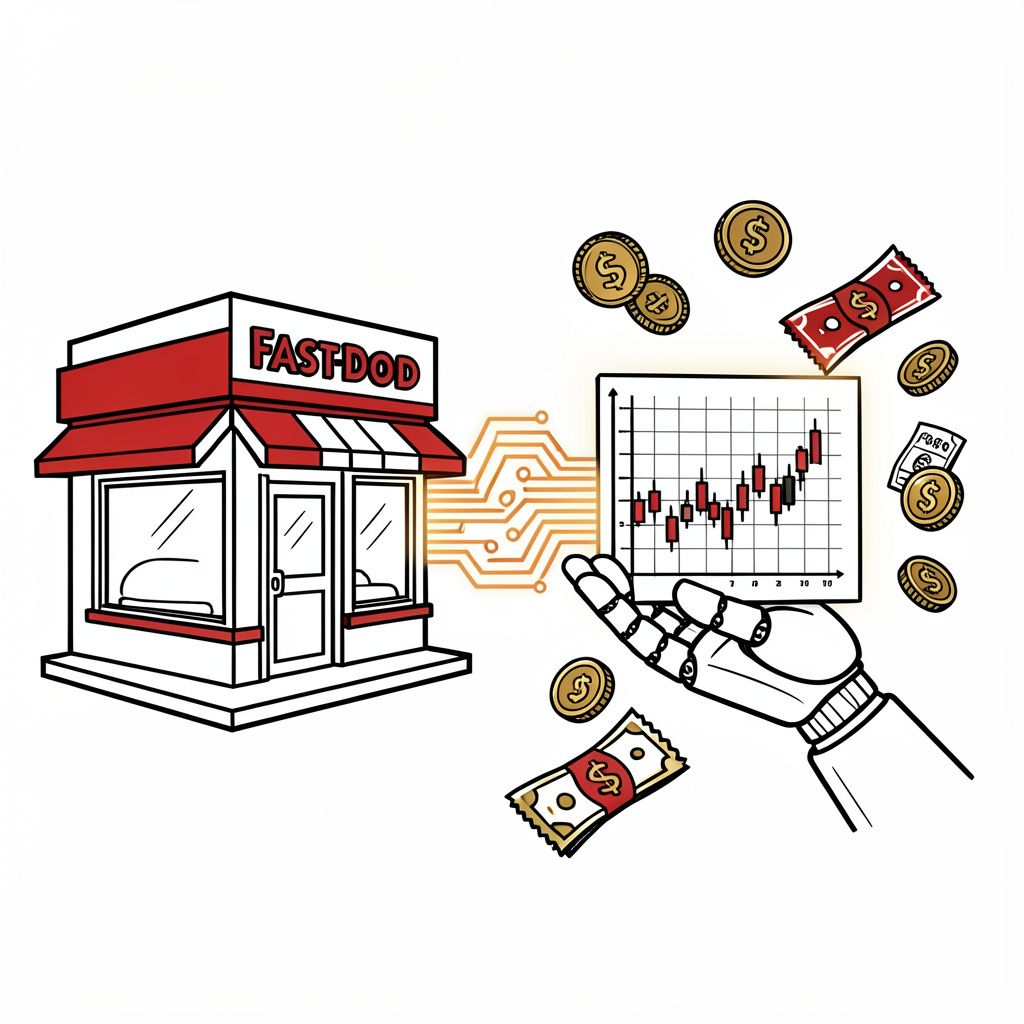
A new class-action lawsuit alleges McDonald’s used artificial intelligence pricing tools to coordinate menu prices across franchises, raising major antitrust concerns regarding algorithmic price-fixing in the fast-food industry.
The Core of the Antitrust Allegations
On October 2, 2026, a federal class-action antitrust lawsuit was filed against McDonald’s Corporation (NYSE: MCD) [GPT] in the U.S. District Court for the Northern District of Illinois [1][3][4]. Initiated by Michael Thomas, a resident of DeKalb, Illinois, the lawsuit alleges that the fast-food giant utilizes an artificial intelligence-enhanced pricing tool to coordinate nonpublic sales and transaction data among independent franchisees [1][2]. The plaintiff contends that this centralized system facilitates illegal algorithmic price-fixing, effectively raising prices for consumers who are already financially stretched [1][2].
Independent Operators Under Pressure
According to the complaint, McDonald’s operates approximately 14,000 locations across the United States, of which roughly 95% are owned by independent franchisees [1][5]. Legally, these franchisees are supposed to operate as independent businesses that compete against one another and company-owned stores on pricing [4][5]. However, the lawsuit argues that the centralized pricing tool aggregates confidential, real-time transaction data from millions of daily purchases to generate location-specific pricing recommendations, thereby stifling competition [3][4][5].
The Mandate and Corporate Coercion
While McDonald’s has utilized machine-learning pricing algorithms since at least 2019—following its $300 million acquisition of AI firm Dynamic Yield—the legal complaint alleges a significant shift in corporate policy [2][4][5]. The lawsuit claims that as of January 2026, McDonald’s made participation in its AI-driven pricing programs mandatory for franchise operators [4]. Furthermore, the company allegedly monitors deviations from its recommended prices and uses compliance as a key metric when evaluating franchise renewals or expansion opportunities [4][5].
McDonald’s Vows Defense
McDonald’s has vigorously rejected these allegations. On September 29, 2026, and in subsequent statements through October 7, 2026, corporate spokespeople characterized the lawsuit as ‘speculative and uninformed’ and ‘filled with inaccuracies’ [1][2][3]. The company maintains that its pricing tools are entirely optional and only provide market context, emphasizing that independent franchisees retain complete autonomy to set their final menu prices [1][2][3]. During an investor conference call in August 2026, Chairman and CEO Chris Kempczinski supported this stance by noting that only 60% of U.S. franchisees follow the company’s pricing guidance [1].
Price Discrepancies and Public Backlash
The real-world impact of these pricing algorithms is central to the plaintiff’s arguments. A price review of the McDonald’s mobile application in September 2026 revealed significant pricing disparities [4]. For instance, the review identified a price variance of 21.09 percent for a Big Mac between two company-operated locations in Fresno, California, situated just 3.22 kilometers (2 miles) apart, where prices were set at $5.69 and $6.89 [4]. Additionally, anecdotal evidence highlights value meals costing approximately $15 in Manhattan’s financial district compared to $9 in Brooklyn’s Crown Heights [2].
Inflationary Trends and Regulatory Scrutiny
The lawsuit links the deployment of these AI tools to a broader upward trend in consumer costs. According to a 2024 company fact sheet, the average price of McDonald’s menu items increased by approximately 40% between 2019 and 2024 [2][3][5]. While McDonald’s has historically pointed to rising operational costs as the primary driver of these increases, the lawsuit asserts that the AI pricing platform is the true mechanism behind the inflated prices [5]. This litigation comes at a time of heightened regulatory scrutiny, with Lindsay Owens of the Groundwork Collaborative reporting that at least 90 pieces of legislation targeting algorithmic price-fixing have been introduced in the United States so far in 2026 [2].
Legal Remedies and Class Certification
The lawsuit, formally titled Michael Thomas v. McDonald’s, asserts four specific legal claims, including violations of Section 1 of the Sherman Antitrust Act, the Illinois Antitrust Act, and the Illinois Consumer Fraud and Deceptive Business Practices Act [4][5]. The plaintiff is petitioning the federal court to certify the class-action status, which would allow consumers nationwide to join the litigation [1][3][5]. The lawsuit seeks triple damages, the disgorgement of allegedly ill-gotten gains, and a permanent injunction to halt the pricing coordination program [1][5].
An Uncertain Outlook
As of October 8, 2026, the court has not yet certified the class, and there is no active claims process or settlement fund available to customers [4][5]. The legal battle is expected to be closely watched by the wider retail and fast-food sectors as a test case for how antitrust laws apply to modern, automated pricing algorithms [GPT].