Copyright Expiration of 1930 Works Unlocks Major Commercial Assets for Media Adaptation
Washington D.C., Saturday, 27 December 2025.
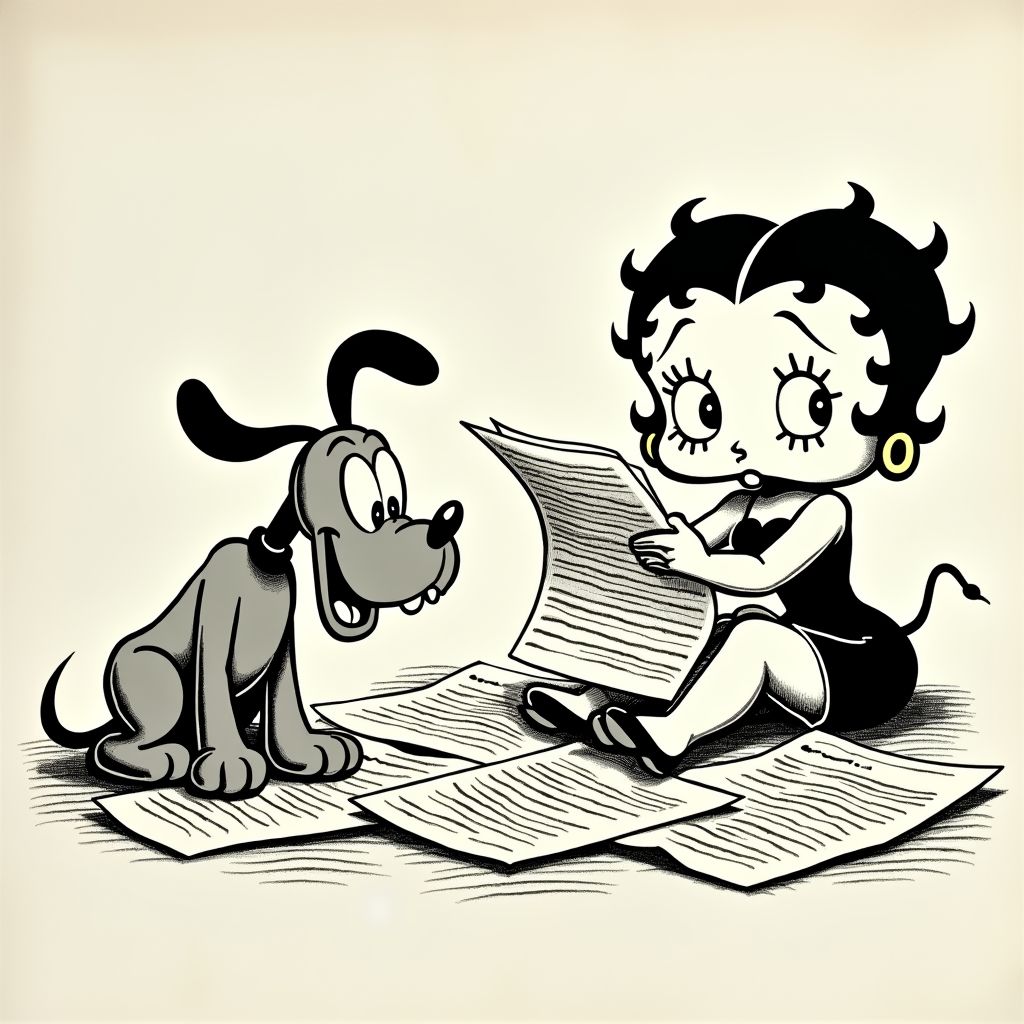
On January 1, 2026, a significant tranche of intellectual property enters the public domain as U.S. copyright protections for 1930 creative works expire. This legal transition eliminates licensing costs for high-value assets, including the original Betty Boop, Disney’s Pluto (originally Rover), and William Faulkner’s As I Lay Dying. This shift offers media entities immediate opportunities for unrestricted commercial adaptation, a trend already visible in announced projects like a Minnie Mouse slasher film and a Betty Boop horror adaptation. While this opens avenues for creative remixing, legal scholars note an impending collision between these legacy works and generative AI technologies. For investors and publishers, this represents a strategic moment to capitalize on established cultural equity without the traditional barrier of royalty fees.
A Wealth of Cultural Capital Unlocked
The incoming wave of public domain works represents a massive transfer of cultural capital from private holding to public access. On January 1, 2026, copyright protection will lift for a diverse array of 1930 creations, 95 years after their initial publication [2]. This year’s release is particularly notable for its depth in literary and animated assets. Key properties include the first four volumes of the Nancy Drew Mystery Stories, Dashiell Hammett’s noir foundational text The Maltese Falcon, and Watty Piper’s The Little Engine That Could [1][2][3]. In the realm of animation, the original 1930 iteration of Betty Boop—who debuted in the film Dizzy Dishes—and Disney’s Pluto, who first appeared as “Rover” in The Chain Gang, will become available for use without permission or payment [2][3]. Jennifer Jenkins, director of Duke University Law School’s Center for the Study of the Public Domain, has characterized this as her “favorite crop of works yet,” highlighting the opportunity to analyze how the styles of studios like Fleischer and Disney became imprinted on the industry’s DNA [1].
The Commercial Rush: From Classics to Horror
The market response to these expirations is immediate and often subversive. Following the trend established in January 2025 when Steamboat Willie entered the public domain and inspired indie slasher films, the 1930 cohort is already being eyed for similar genre pivots [2]. As of late 2025, a Minnie Mouse slasher film is slated for release in 2026, and a horror movie featuring Betty Boop was reported to be in the works as of November [1]. This phenomenon underscores a broader business strategy where creators leverage the high brand recognition of legacy characters to produce low-budget, high-attention content. Beyond cinema, the Internet Archive is actively encouraging this remix culture through a short film contest with submissions due by January 7, 2026, culminating in a screening of selected works later in the month [2].
Sound Recordings and Pre-Code Cinema
While 1930 marks the cutoff for creative works, a distinct timeline applies to sound recordings, which open to the public after 100 years. Consequently, recordings from 1925 will also become free to use in 2026, including seminal tracks like Bessie Smith’s “The St. Louis Blues” featuring Louis Armstrong and Marian Anderson’s “Nobody Knows the Trouble I’ve Seen” [3]. Simultaneously, 1930 musical compositions—distinct from the recordings—such as “Georgia on My Mind” and the Gershwins’ “I Got Rhythm” will enter the public domain [1][3]. In film, the expiration covers titles released prior to the strict enforcement of the Hays Code (1934–1968), meaning movies like Morocco, The Blue Angel, and the Marx Brothers’ Animal Crackers will be available uncensored, preserving content that includes themes later banned from Hollywood productions [1][3].
Legal Nuances and the AI Frontier
Investors and creators must navigate significant legal nuances; specifically, only the 1930 versions of characters enter the public domain, while modern iterations and trademarks remain protected [3]. For instance, while the 1930 advertisements for Sinclair Oil featuring their dinosaur mascot are entering the public domain, later statues and branding materials remain under copyright [4]. Furthermore, this year’s Public Domain Day arrives as the legal system grapples with the role of artificial intelligence. Legal scholars note that AI is on a “collision course” with copyright law, “gobbling up” protected works for training data [3]. As Jenkins observes, the ability to freely use these human-created works from 1930 offers a striking contrast to current debates regarding content generated by chatbots and algorithms [1].