Four US Reservists Killed in Kuwait Drone Strike as Conflict with Iran Widens
Shuaiba, Wednesday, 4 March 2026.
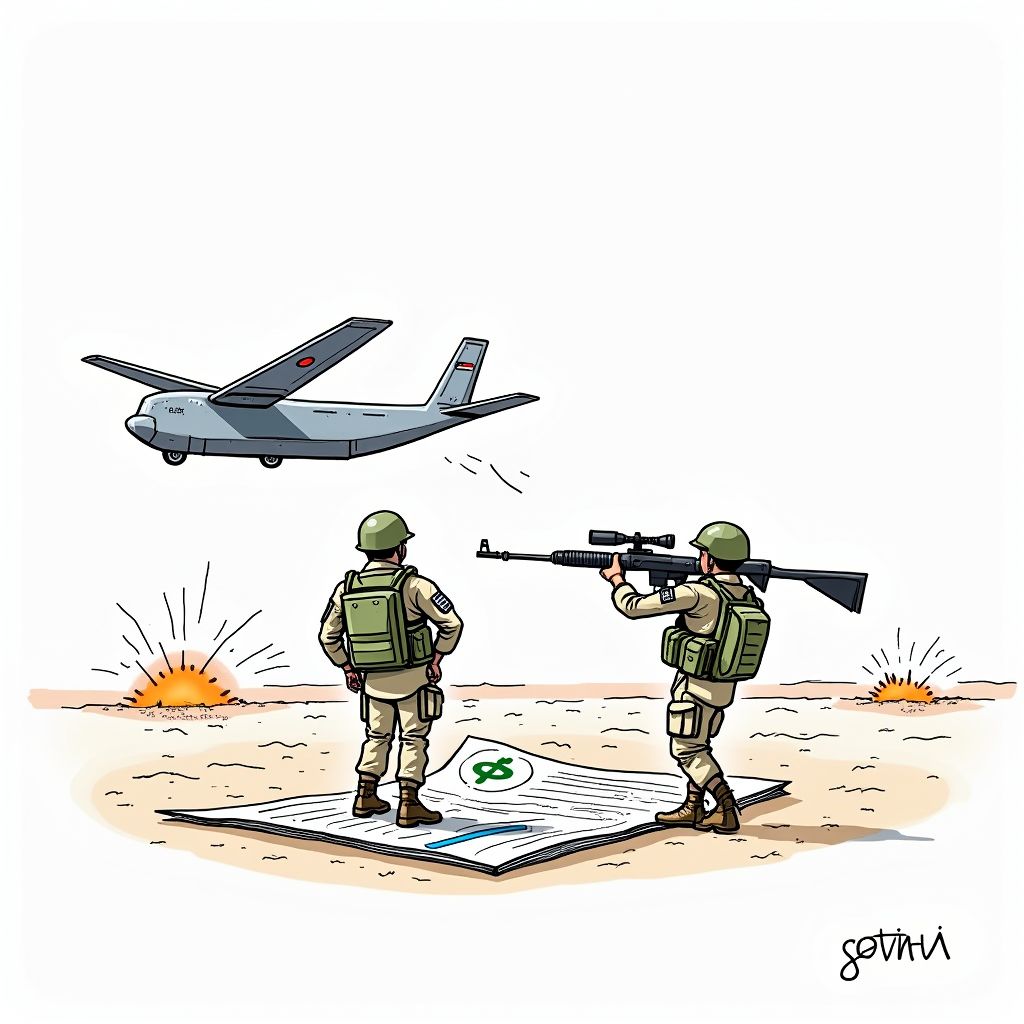
Four US Army Reservists were killed at a critical Kuwaiti logistics hub, marking the first American combat casualties in a rapidly escalating conflict threatening global energy security.
Identities of Fallen Reservists Confirmed
On Tuesday, March 3, the Pentagon identified the four U.S. Army Reserve soldiers killed in a drone strike on a command center at Port Shuaiba, Kuwait [2][5]. The attack, which occurred on Sunday, March 1, marks a lethal escalation in the conflict initially detailed in our previous report on Operation Epic Fury, where Iran targeted military installations across five Gulf nations [2]. The casualties were identified as Captain Cody A. Khork, 35, of Winter Haven, Florida; Sergeant 1st Class Noah L. Tietjens, 42, of Bellevue, Nebraska; Sergeant 1st Class Nicole M. Amor, 39, of White Bear Lake, Minnesota; and Sergeant Declan J. Coady, 20, of West Des Moines, Iowa [1][2]. All four were assigned to the 103rd Sustainment Command, a unit responsible for logistics and supply chain operations, highlighting the vulnerability of support personnel in this widening theater of war [2][5].
Critical Energy Infrastructure Targeted
The strike on Port Shuaiba—a vital industrial hub—forced the Kuwait Ports Authority to suspend operations at the facility on March 1 after debris fell nearby [3]. This attack is part of a systematic Iranian campaign to dismantle the energy infrastructure of U.S. allies. On March 3, Iranian attack drones struck oil storage infrastructure in Fujairah, United Arab Emirates, causing a large fire [4]. From an analytical perspective, the strike on Fujairah is particularly critical because it is the only major oil export terminal in the UAE that bypasses the Strait of Hormuz [4]. With traffic in the Strait already slowed and suffering a backlog of ships, the disruption of this alternative export route compounds the risk to global energy transit [4].
Military Escalation and Diplomatic Fallout
In response to the aggression, the U.S. and Israel have intensified their joint campaign, “Operation Epic Fury.” As of March 4, U.S. Central Command reported that 50,000 troops and two aircraft carriers have engaged in the conflict, striking nearly 2,000 targets and destroying 17 Iranian ships in the last 100 hours [4]. Conversely, Iran has launched over 500 ballistic missiles and 2,000 drones at U.S. forces and allies [4]. Amidst the kinetic action, diplomatic tensions have flared; President Trump threatened a trade embargo on Spain on March 3 after Madrid refused U.S. military access to its bases, and explicitly stated it is “too late” for negotiations with Tehran [4][6]. Furthermore, the U.S. State Department has urged Americans to leave 14 Middle Eastern countries, admitting that no formal evacuation plan was executed because the conflict escalated “very quickly” [6].