Upcoming Federal Policy Changes Will Increase the Cost of Student Debt Relief
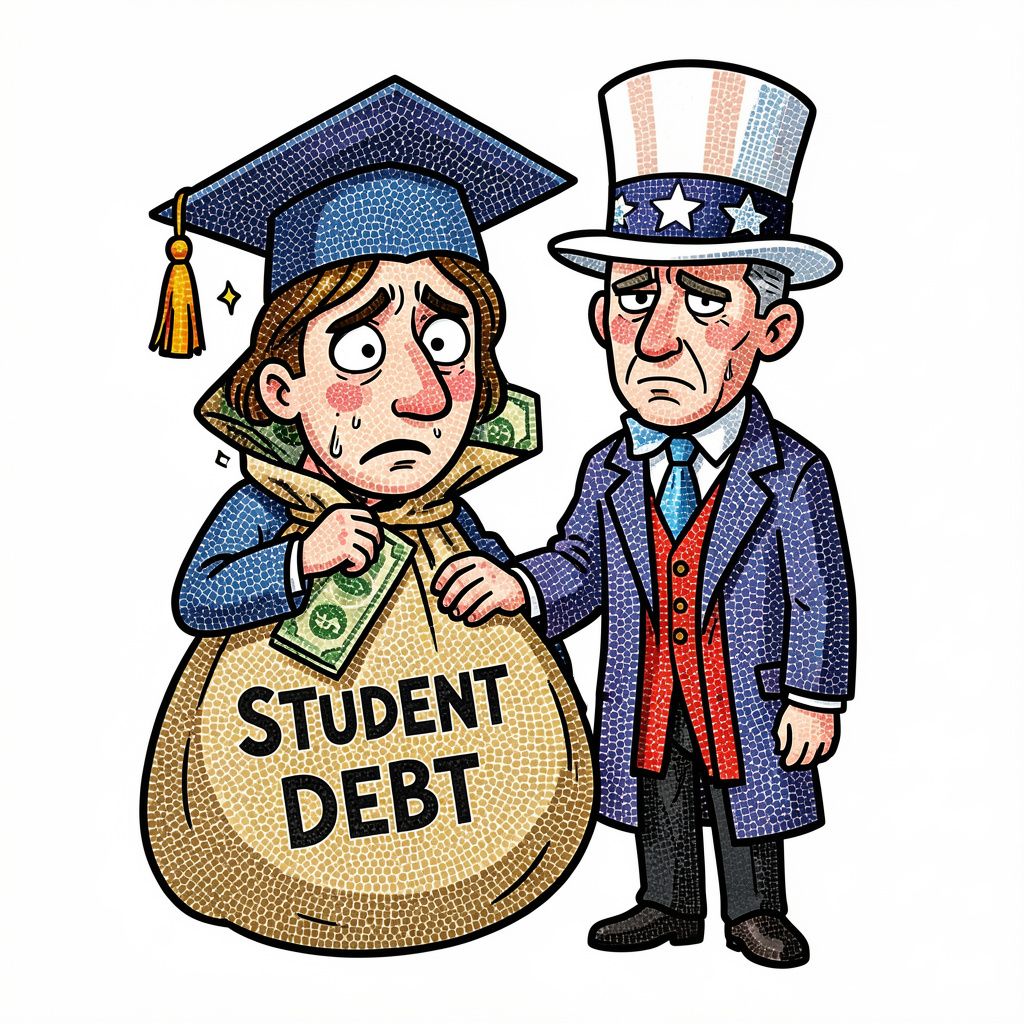
Washington D.C., Friday, 10 April 2026.
Starting July 1, 2026, sweeping federal policy changes will make public service student debt relief significantly more expensive, threatening to disrupt recruitment across government and non-profit sectors.
The Transition to the Repayment Assistance Plan
Approximately 40 million Americans currently hold student loans, representing a collective 1.6 trillion dollars in debt [4]. For many of these borrowers, the path to financial relief is undergoing a fundamental restructuring. Stemming from tax and spending legislation passed by congressional Republicans and President Donald Trump, the federal government is overhauling its income-driven repayment frameworks [2]. A cornerstone of this shift is the new Repayment Assistance Plan (RAP), which officially launched on April 7, 2026 [2]. Any borrower taking out a new federal student loan or consolidating an existing one on or after July 1, 2026, will be restricted to either the standard repayment plan or the RAP [2]. Crucially, while previous income-driven plans offered loan forgiveness after 20 or 25 years, the RAP extends this horizon to 30 years. For borrowers previously on a 20-year track, this represents a 50 percent increase in the time required to achieve debt cancellation [2].
The Rising Cost of the PSLF Buyback Option
The Public Service Loan Forgiveness (PSLF) program, originally signed into law by President George W. Bush in 2007, was designed to cancel the federal student debt of government and non-profit workers after 120 qualifying monthly payments [1]. Under the Biden administration, a buyback provision was introduced, permitting borrowers to retroactively pay for months missed due to deferment or forbearance to maintain their progress toward the 10-year forgiveness threshold [1]. However, a newly rolled-out policy from the Trump administration fundamentally alters the mathematical reality for these public servants [1]. The Education Department will no longer calculate buyback offers using the generous terms of the SAVE plan if the borrower’s deferment or forbearance occurred on or after July 1, 2024 [1].
Ideological Battles and Employer Disqualification
Beyond individual payment calculations, the fundamental definition of a qualifying public service employer is facing a contentious legal redefinition. Under the original statute passed nearly two decades ago, almost all 501(c)(3) non-profit organizations and domestic government entities were automatically eligible employers for the PSLF program [3]. However, regulations published by the Trump administration in 2025 empower Secretary of Education Linda McMahon to unilaterally disqualify employers if they are deemed to engage in activities with a substantial illegal purpose [2][3]. The Education Department explicitly listed disqualifying activities to include aiding federal immigration law violations, providing certain gender-affirming healthcare to transgender youth, and facilitating violence to influence federal policy [3].
New Borrowing Caps and Tax Implications
As the landscape of loan forgiveness narrows, the front-end rules for acquiring federal student debt are also tightening. Effective July 1, 2026, the federal government will establish a new absolute borrowing limit of 257,000 dollars [4]. Graduate PLUS loans will be entirely eliminated and replaced by strict caps [4]. Standard graduate students will be limited to 20,500 dollars per year, while professional students will be capped at 50,000 dollars annually—a difference of 29500 dollars per year [4]. Parent PLUS loans will similarly face a new annual cap of 20,000 dollars per student and an aggregate limit of 65,000 dollars, though a legacy provision will protect current borrowers [4]. Furthermore, the tax and spending legislation will bar Parent PLUS borrowers from accessing the new RAP entirely [2].