Cheesecake Factory Becomes Political Flashpoint Ahead of Critical Midterm Elections
Washington, Tuesday, 27 October 2026.
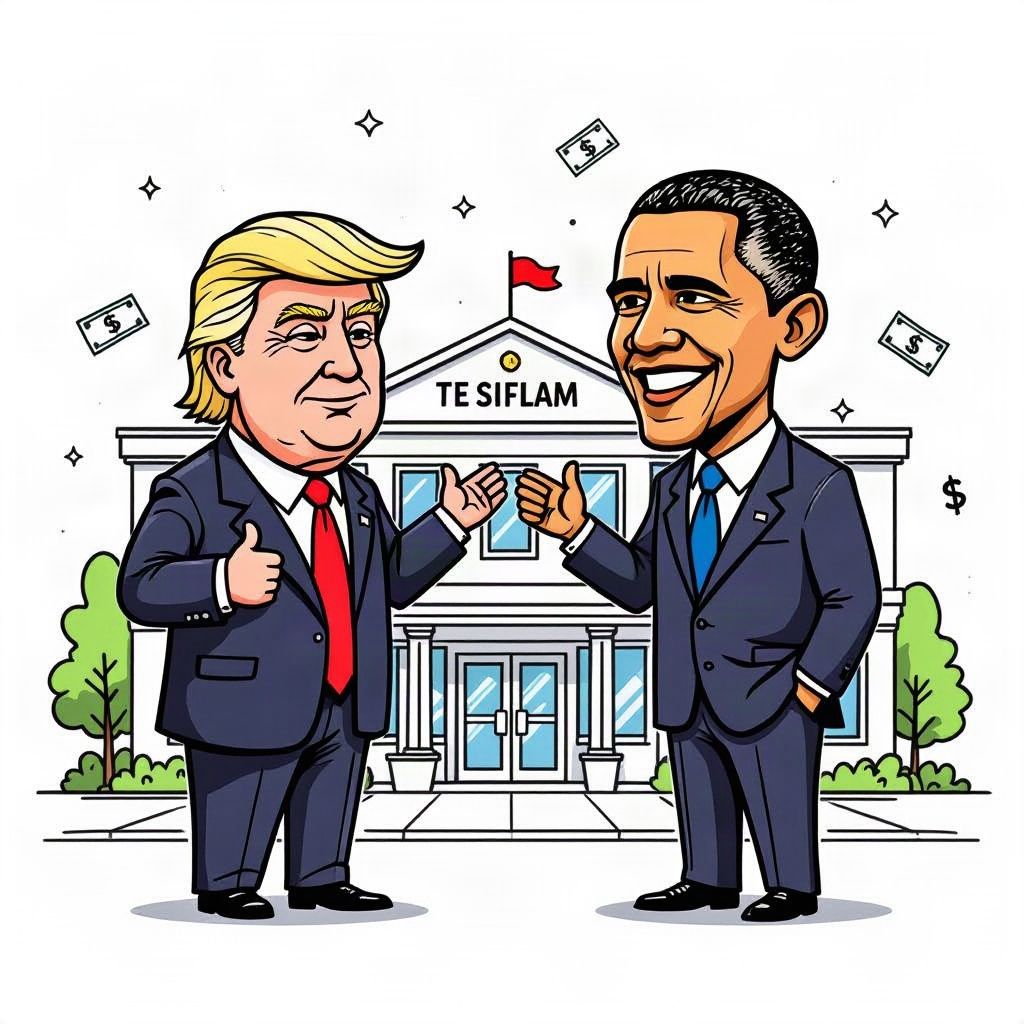
A sharp political dispute between Donald Trump and Barack Obama over White House renovations unexpectedly placed The Cheesecake Factory in the national spotlight ahead of its critical quarterly earnings report.
Escalation of a Political Feud Turns into a Brand Spotlight
The political feud between former President Donald Trump and former President Barack Obama escalated sharply on Monday, 25 October 2026, when Trump responded to Obama’s remarks comparing the White House’s interior renovations to a Cheesecake Factory restaurant [1][2][5][8]. Speaking to reporters at Joint Base Andrews before departing for a campaign rally in Mississippi, Trump dismissed Obama’s critique with a series of pointed remarks, stating, ‘For you to say it’s a Cheesecake Factory — that just shows why you were a lousy president’ [1]. Trump went on to assert that Obama’s administration had allowed the White House to fall into disrepair, emphasizing that the renovations were necessary to maintain the building as a ‘symbol of America’ [1]. Obama’s initial jab, delivered during campaign stops in Ohio and Detroit on 24 October 2026, mocked Trump’s focus on aesthetics, remarking, ‘He’s got the White House looking like Saddam Hussein opened a Cheesecake Factory’ [2][5][8][10].
Treasury Secretary’s Dining Move Adds Fuel to the Fire
In a symbolic gesture, U.S. Treasury Secretary Scott Bessent visited a Cheesecake Factory in Washington, D.C., on Monday, 26 October 2026, to publicly endorse the restaurant in response to Obama’s comments [1][2]. Bessent, who ordered a $22.95 French Dip Cheeseburger and recommended the Cheeseburger Spring Rolls, stated, ‘This is the man who built the museum [that] looks like Darth Vader’s tomb’ [1][2]. His visit was widely reported as a deliberate counter to Obama’s criticism, with Bessent urging those critical of the restaurant to ‘give it a try’ [1][2]. The timing of Bessent’s lunchtime outing coincided with the growing political salience of the brand, which has seen its stock more than double throughout 2026, according to MarketWatch data [8].
White House Spokesperson Defends Renovations as Political Symbolism
White House spokesperson Davis Ingle doubled down on the administration’s defense of the renovations on 25 October 2026, framing the upgrades as part of President Trump’s broader vision to ‘glorify’ the People’s House and ensure its longevity [8]. Ingle’s statement criticized Democrats as ‘America Last losers’ and praised Trump as the ‘Builder-in-Chief,’ asserting that no other president had done more to beautify the interior of the White House [8]. The renovations, which include the construction of a new ballroom, repairs to the North Portico columns, and the addition of gold fixtures in the Oval Office, have been a recurring theme in Trump’s political messaging [2][8]. Political analyst Nate Silver characterized the backlash to Obama’s remarks as ‘performative,’ highlighting the broader cultural and political divide over aesthetics and symbolism [8].
Market Impact and Historical Context of a Political Brand
The political dispute has thrust The Cheesecake Factory (NASDAQ: CAKE) into an unusual role as a cultural symbol amid its upcoming third-quarter earnings report, scheduled for Tuesday, 27 October 2026 [1][2][8]. The chain’s stock has surged throughout 2026, reflecting both strong financial performance and heightened consumer interest driven by its newfound political prominence [8]. Critics and supporters alike have weighed in on the controversy, with conservative commentator Scott Jennings accusing Obama of elitism for his remarks, while others argued that the White House should not resemble a casual dining establishment regardless of intent [3][10]. The debate underscores how brands can become inadvertent participants in political narratives, particularly during high-stakes election cycles [GPT].
Sources
- nypost.com
- www.cnbc.com
- www.theatlantic.com
- www.facebook.com
- www.yahoo.com
- www.axios.com
- www.nbcchicago.com
- www.facebook.com