Why Wealthy Investors Are Trading Equities for Luxury Handbags
New York, Monday, 23 November 2026.
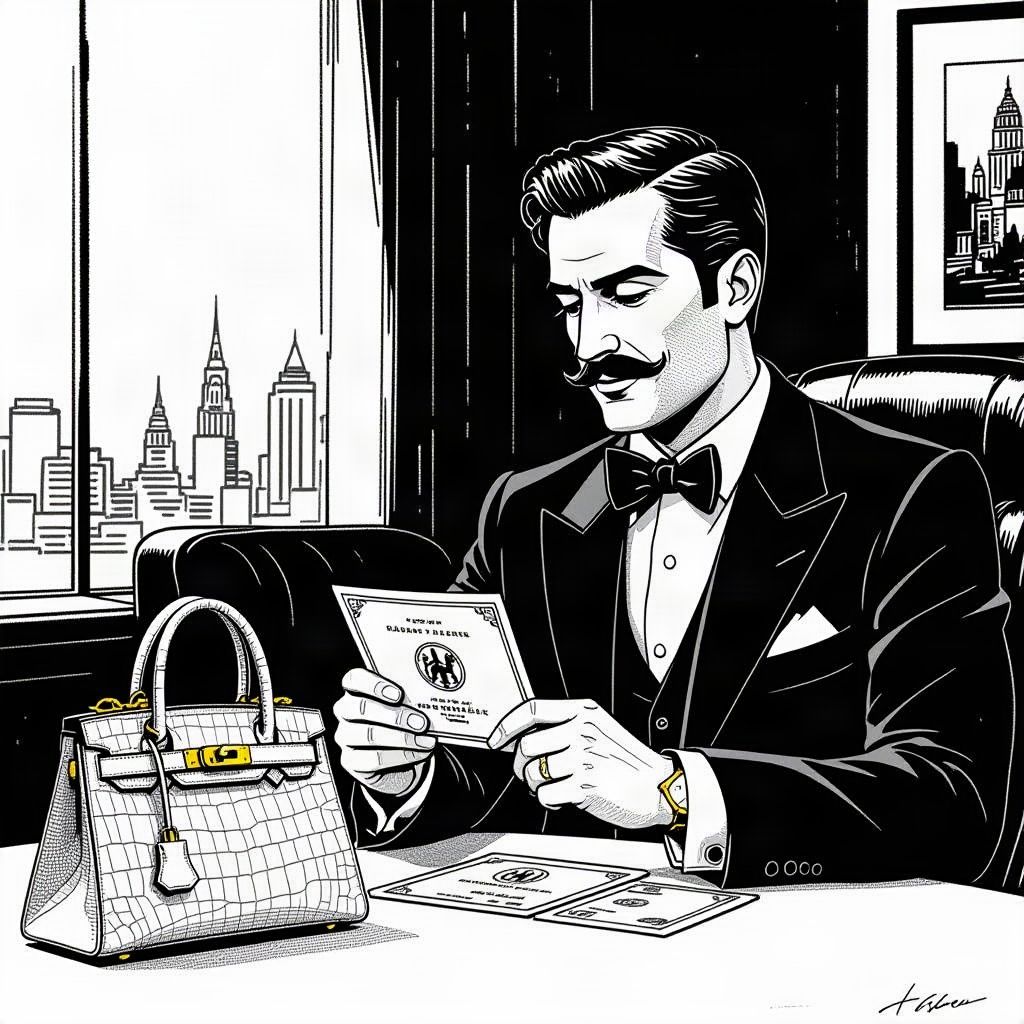
As luxury equities slump, wealthy investors are shifting toward tangible assets like Hermès Birkin bags, which command $35,000 resale values against a $13,500 retail price as non-correlated stores of value.
The Luxury Equity Dilemma and Investor Flight
Global luxury equities have faced sustained downward pressure throughout 2026, with major conglomerates LVMH and Kering particularly affected by their exposure to aspirational shoppers and China’s economic slowdown [1]. The luxury retail market is grappling with a 20% ultra-high net worth tax in China and lingering impacts from the war in Iran [1]. This sector weakness has accelerated a strategic shift among asset managers and high-net-worth individuals toward tangible alternative investments that demonstrate non-correlated value characteristics [1]. Hermès, despite its stock being down 40% year-to-date, has shown resilience in its core leather goods division with a 10.8% year-over-year increase in the last quarter [1]. Analysts note that Hermès’ relative outperformance stems from its strict production controls and dominant position in the ultra-luxury segment [alert! ‘While Hermès stock declined, its underlying business metrics show strength relative to peers’].
The Birkin Bag as Alternative Investment Vehicle
Within this shifting landscape, Hermès Birkin bags have emerged as a particularly compelling asset class. A basic 25 or 30 centimeter Birkin retails at approximately $13,500 plus tax, yet commands resale prices around $35,000 in the secondary market [1]. This represents a 159.259 = 159.3% premium to retail price [1]. Dana Auslander, founder of the alternative asset fund Luxus which specializes in Birkin and Kelly bag resale, reported that her fund achieved a 23.8% net return over a 15-month period ending May 2025 [1]. Investment in these funds requires accredited investor status with minimum investments of $100,000 [1]. The attraction lies not just in returns but in the bags’ status as hard luxury collectibles with strong cultural cachet and inherent scarcity.
Market Dynamics and Wealth Distribution Effects
The pivot toward tangible luxury goods coincides with unprecedented wealth creation events. The November 2026 Anthropic IPO, which raised $81 billion and minted thousands of new millionaires among its 5,000+ employees, has expanded the pool of investors seeking alternative store-of-value assets [1]. This follows a period of significant wealth concentration, with ultra-wealthy collectors driving prices for high-end assets including dinosaur skeletons selling in the $40 million range [1]. The luxury resale market has benefited from this wealth effect, with platforms like The RealReal and eBay reporting record earnings prior to November 2026 [1]. Analysts suggest that while luxury conglomerates struggle with declining aspirational demand, the ultra-luxury segment where Birkin bags operate remains comparatively resilient.
Future Outlook and Investment Considerations
Looking ahead to 2027 and beyond, market participants plan to evaluate full-year results following the holiday retail season before building small stock positions [1]. Projections suggest that revenue growth in elite collector segments could reach 75% by 2028, though this remains contingent on broader economic conditions [1]. The emergence of agentic commerce tools like Muse and Instinct may impact luxury purchasing behaviors, with initial research showing strong interest in premium items like gold Birkin bags [1]. However, experts caution that retail investors should be wary of serving as ‘guinea pigs’ for emerging alternative asset classes [1]. The current environment presents both opportunities and risks, as the concentration of wealth among ultra-high-net-worth individuals continues to drive demand for non-traditional stores of value.