Deadly Halloween Gun Violence Threatens Vital Urban Commercial Districts
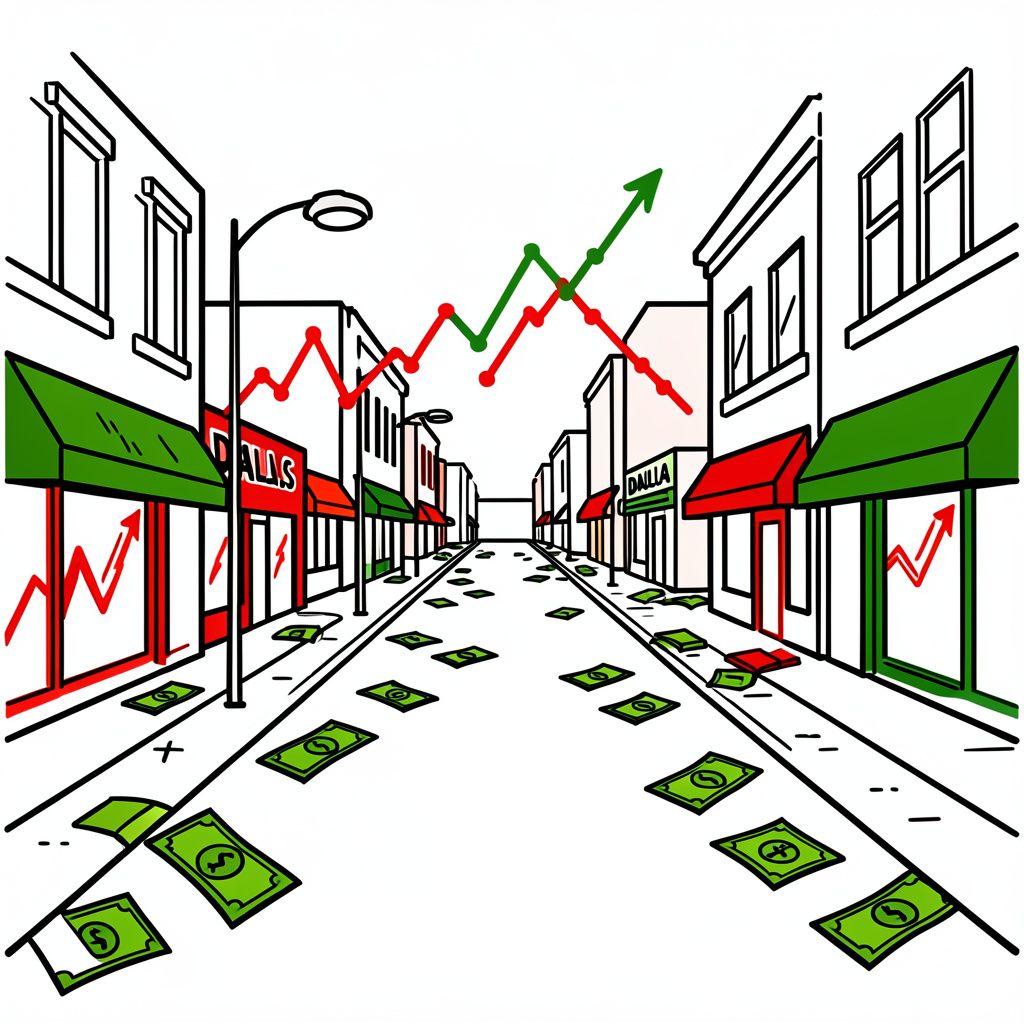
Dallas, Monday, 2 November 2026.
Coordinated holiday violence claimed at least 24 lives nationwide, notably disrupting Dallas’s entertainment district and jeopardizing critical fourth-quarter consumer spending across American cities.
Wave of Holiday Violence Disrupts Urban Centers
A coordinated wave of gun violence over Halloween weekend claimed at least 24 lives and injured nearly 100 people across major U.S. metropolitan areas, according to preliminary reports compiled by national news outlets. The violence included mass-casualty incidents in Dallas, where three separate shootings in the Deep Ellum entertainment district resulted in four deaths and 15 injuries [1][2][5]. In California, a shooting at a Spirit Halloween store in Fairfield killed a 31-year-old pregnant woman and wounded six others, prompting the cancellation of a shopping center’s trick-or-treating event [3]. Meanwhile, Delaware experienced two mass shootings within hours, including one near its largest university that injured six people [3][5].
Political Responses and Public Safety Concerns
Public officials across affected cities condemned the violence and emphasized the need for enhanced public safety measures. Dallas Mayor Eric L. Johnson stated, ‘Public safety must always remain our top priority,’ while acknowledging the city’s efforts to investigate the incidents [2]. In Delaware, Governor Matt Meyer declared, ‘This is not normal. We must never accept gun violence as a part of life in Delaware’ [3]. Birmingham Mayor Randall Woodfin echoed similar sentiments, emphasizing the city’s commitment to balancing public safety with community traditions [3]. Meanwhile, Dallas Police Chief Daniel C. Comeaux confirmed that at least one suspect had been taken into custody, though investigations into potential connections between the shootings were ongoing [1][2][5].
Economic Implications for Urban Commercial Districts
The violence poses significant economic risks to urban commercial districts during the critical fourth-quarter spending period. Retailers in areas such as Dallas’s Deep Ellum and California’s shopping centers face potential revenue losses due to canceled events and reduced foot traffic. Experts note that high-profile incidents during holiday weekends can deter consumers from visiting entertainment districts, particularly when violence is perceived as escalating [GPT]. The timing is particularly concerning as retailers rely heavily on Halloween and subsequent holiday sales to meet annual revenue targets. While specific financial impacts are not yet quantified, historical trends suggest that prolonged safety concerns can lead to measurable declines in consumer spending within affected areas [GPT].
Broader Context and Historical Trends
Halloween weekend violence follows a pattern observed in previous years, with criminologists noting that October 31st ranks as one of the most violent days of the year. According to analysis by Northeastern University’s James Alan Fox, Halloween is the third-most violent day nationally, following only July 4th and January 1st, with minors particularly vulnerable [1]. The combination of alcohol consumption, costume disguises, and widespread access to firearms creates a volatile environment, as noted by experts interviewed by The New York Times [1]. The 2026 incidents occurred against a backdrop of nearly 400 mass shootings recorded nationwide in the year prior to November, highlighting the persistent challenge of gun violence in the United States [3].
Sources
- www.nytimes.com
- abcnews.com
- www.cnn.com
- www.pbs.org
- www.nbcnews.com
- www.facebook.com
- www.facebook.com
- www.nbcdfw.com